
Governors Adopt Tool to Track Disease Outbreak Readiness
Nigerian governors have adopted a new health security scorecard to help states measure outbreak preparedness, identify gaps and strengthen accountability ahead of future public health emergencies.

The Nigeria Governors’ Forum has adopted a new health security scorecard designed to track how ready each state is for disease outbreaks and other public health emergencies. The tool was launched in Abuja in partnership with the Nigeria Centre for Disease Control and Prevention, the World Bank and Resolve to Save Lives Nigeria, with officials saying it will help governors make more informed decisions on health security.
At the heart of the initiative is a push for a single, standardised way of assessing preparedness across all 36 states. The scorecard is intended to combine separate health security indicators into one framework, reducing duplication and making it easier for policymakers to see where systems are strong and where they are vulnerable.
Officials said the new approach is meant to solve a common problem in public health governance: fragmented reporting. When states use different metrics, it becomes difficult to compare performance or hold institutions accountable. The scorecard is meant to produce clearer evidence, improve transparency and help states focus on the most urgent gaps in surveillance, response and preparedness.
The validation workshop in Abuja brought together health experts and development partners who described the scorecard as a practical tool for improving outbreak readiness. The NCDC said the workshop was aimed at identifying weaknesses in state health security systems and creating a stronger accountability structure for measuring performance. That matters because the early stages of an outbreak are often when systems either contain a threat or allow it to spread.
The scorecard is also meant to support evidence-based planning. Rather than relying on assumptions or one-off interventions, states will be able to use the assessment results to decide where to invest, whether in laboratories, emergency coordination, surveillance systems, workforce training or community response capacity. In that sense, the tool is not just diagnostic; it is meant to guide future spending and policy choices.
A key benefit of the scorecard is accountability. By giving governors and policymakers a common framework for reviewing preparedness, the tool can make it easier to track progress over time and compare what is being done across different states. That can be especially valuable in a country where public health readiness often varies widely from one state to another.
The initiative also fits into a wider global push for stronger health security after recent outbreaks showed how quickly weak systems can be overwhelmed. State-level preparedness is especially important because outbreaks are often first detected and managed locally before they become national emergencies. If local systems are better equipped, the chances of faster response and lower spread improve significantly.
Beyond disease control, the scorecard was also linked to universal health coverage. That connection reflects the idea that health security is not separate from routine healthcare; strong systems for surveillance, coordination and emergency response also support broader, more reliable health services.
Overall, the adoption of the scorecard signals a move toward more data-driven health governance in Nigeria. If states use it consistently, the tool could improve readiness, strengthen accountability and give leaders a clearer picture of what is needed before the next outbreak arrives.
Sponsored

Related stories
 Health
Borno Hires 2,000 Health Workers, Still Faces Staff Shortage
Borno State has recruited nearly 2,000 doctors, nurses and other health professionals in two years, but the head of its contributory health agency says manpower gaps persist as demand grows under the state health insurance scheme.
 Health
Lassa Fever Kills 268 in Nigeria as Cases Hit 1,138
Nigeria has recorded 1,138 confirmed Lassa fever cases and 268 deaths across 24 states in 2026, with the case fatality rate rising to 23.6 per cent—significantly higher than the 18.6 per cent recorded during the same period in 2025. The NCDC has identified five states accounting for 88 per cent of all confirmed cases, as it intensifies preparedness efforts ahead of the peak transmission season.
 Health
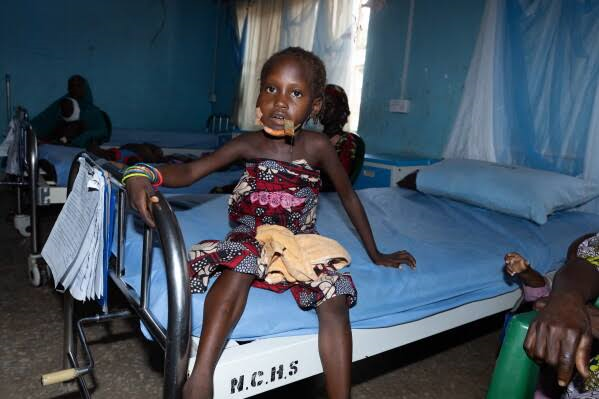
MSF Calls for Routine Noma Surveillance in Nigeria
Doctors Without Borders says noma, a fast-moving and often fatal facial infection linked to malnutrition and poverty, remains largely missing from Nigeria's routine child health programmes despite its 2023 recognition as a neglected tropical disease.
 Health
Oyo Rejects Diphtheria Outbreak Claims, Accuses APC
The Oyo State Government has dismissed claims by the Senator Sharafadeen Alli Campaign Organisation that diphtheria has affected 16 local government areas, describing the allegation as false and politically motivated. Commissioner for Health Dr. Oluwaserimi Ajetunmobi confirmed that while suspected cases have been recorded in 10 LGAs, none have been confirmed, and accused the APC campaign group of distorting immunisation data to score political points.
Comments (0)
Leave a comment
All comments are moderated before publishing. Your email is never published.