
Food Security: FG Distributes Fertilizers to Edo Farmers
The Federal Government has flagged off the distribution of 8,000 bags of fertilizer to more than 12,000 profiled small-scale farmers in Edo State to boost production and support food security.
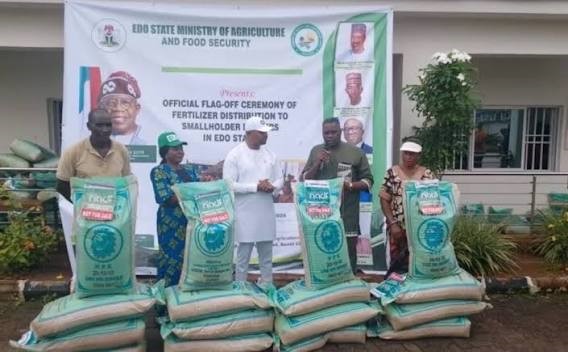
The Federal Government has begun distributing fertilizer to small-scale farmers in Edo State as part of its strategy to strengthen food security and raise agricultural productivity. The intervention, flagged off in Benin City, covers more than 12,000 profiled farmers across the state’s three senatorial districts.
According to the Edo State Commissioner for Agriculture and Food Security, Dr Jerry Uwangue, the state has received 8,000 bags of fertilizer for transparent distribution to genuine farmers. He said the ministry had visited all 18 local government areas to profile beneficiaries before the rollout began. That profiling exercise was meant to ensure that the inputs go directly to active farmers rather than middlemen or politically connected beneficiaries.
Uwangue said the distribution would be open and televised, with agricultural desk officers in each local government area overseeing the process. He urged farmers to remain in their local councils, where they would be reached through the official distribution network. That instruction reflects a broader effort to make input support more accountable and data-driven.
The fertilizer distribution is part of the Federal Government’s Renewed Hope Agenda and Edo State’s SHINE agricultural transformation plan. By working together, both governments are trying to reduce production costs for farmers at a time when input prices, transportation costs and inflation have made farming more expensive and less predictable.
The intervention is significant because fertilizer remains one of the most important inputs in crop production. In a state like Edo, where many farmers cultivate maize, cassava, rice and vegetables, access to fertilizer can influence yield, harvest quality and income. If used properly, the support can help farmers improve output during the wet season and reduce dependence on expensive commercial supplies.
The programme also fits into a wider pattern of federal fertiliser support in the South-South. The National Agricultural Development Fund recently flagged off the distribution of 80,640 bags of fertilizer to smallholder farmers across the zone, including Edo State, under its Farm Input Support Programme. That broader intervention shows that the Edo rollout is part of a regional strategy, not an isolated event.
Past farming season interventions in Edo have followed a similar model. In 2024, the state government began distributing agricultural inputs to smallholder farmers, including cassava stems, maize seeds, herbicides, pesticides, livestock vaccines and fertilisers. Those programmes were designed to support vulnerable farmers and improve food production at the local level.
The state has also used farmer profiling and district-level allocation in previous support exercises. In one 2024 initiative, 471 farmers across Edo Central Senatorial District benefited from input support, including 801 bags of NPK fertilizer and 141 bags of urea. That suggests Edo has been gradually building an input-distribution system that links support to farmer registration and local agricultural planning.
For the current programme, the scale is larger. More than 12,000 farmers are expected to benefit, and the commissioner said the state is still profiling more farmers. That means the current number may rise before the final distribution is complete. The emphasis on transparency also suggests the government is aware of the risks of diversion and leakage, which have weakened similar schemes in the past.
The initiative is also timely because agriculture is central to food supply and rural livelihoods in Edo. Many smallholders operate on thin margins and cannot easily absorb the cost of fertiliser when prices rise sharply. By providing inputs directly, the government hopes to improve yields, support household incomes and stabilise local food markets.
The challenge, however, is not just distribution but usage. Fertilizer must be applied correctly, at the right time and in the right quantity for farmers to see the full benefit. That is why extension support, follow-up monitoring and farmer education are just as important as the bags themselves.
If implemented well, the fertilizer support could help Edo farmers produce more this season and reduce the pressure of rising food prices on consumers. It also reinforces the broader federal and state message that food security will depend on getting real inputs into the hands of real farmers, at the right time and through a system that can be trusted.
Sponsored

Related stories
 Agriculture
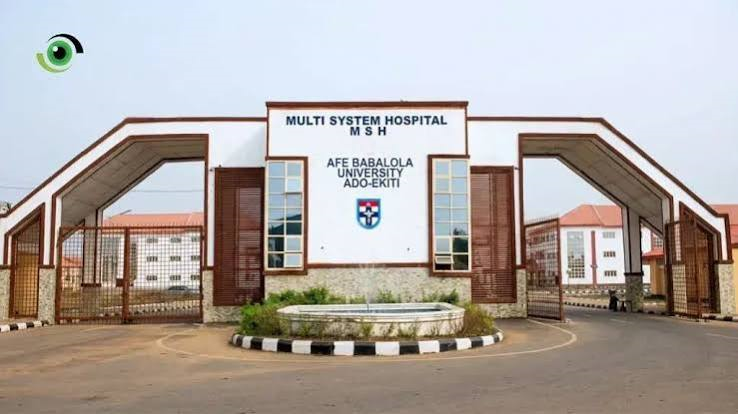
Babalola’s Farmer Support Hits N98m
Legal icon Aare Afe Babalola has disbursed N11.2 million to 81 outstanding farmers across Ekiti State's 16 local government areas, bringing total awards under his annual agricultural scheme since 2015 to N98 million.
 Agriculture
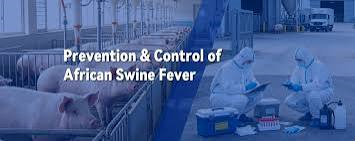
FG Launches African Swine Fever Control Campaign in Southwest
The Federal Government has launched a major African Swine Fever control and biosecurity campaign at the Oke-Aro Pig Farm Estate, distributing protective kits to farmers and pledging comprehensive training to prevent future outbreaks. The intervention by the Livestock Productivity and Resilience Support Project (L-PRES) targets one of Nigeria's largest pig production clusters, which has suffered devastating losses from the highly contagious disease in the past.
 Agriculture
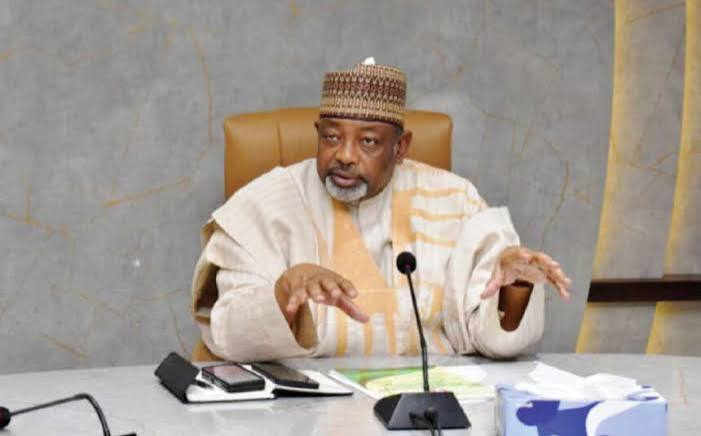
Kyari: More Farmland Won’t Feed 400 Million Nigerians
Agriculture Minister Abubakar Kyari says Nigeria must treat agricultural extension as critical infrastructure, disclosing that over 100,000 farmers already receive weekly digital advisories as the country's population heads toward 400 million by 2050.
 Agriculture
Farmland Expansion Alone Won’t Feed Nigeria
Agriculture Minister Abubakar Kyari says Nigeria must shift to demand-driven, AI-enabled agricultural extension services to boost farm yields, warning that expanding farmland alone can no longer feed the country's growing population.
Comments (0)
Leave a comment
All comments are moderated before publishing. Your email is never published.