
FG Reviews Impact of ₦235bn Health Fund as Out-of-Pocket Costs Remain High
The National Health Insurance Authority says the Federal Government is assessing whether the ₦235 billion released through the Basic Healthcare Provision Fund in three years is delivering results, as many Nigerian households still bear heavy medical costs.
The Federal Government is stepping up efforts to assess the impact of its health financing interventions, as high out-of-pocket spending continues to leave many Nigerian households exposed to heavy medical bills.
The National Health Insurance Authority (NHIA) disclosed this in a statement issued on Sunday, ahead of the inaugural Nigeria Health Financing Research and Learning Forum, which opens in Abuja on Monday, September 28, 2026. According to the Authority, the government has released ₦235 billion through the Basic Healthcare Provision Fund (BHCPF) over the past three years, making it increasingly important to establish whether such investments are producing measurable improvements in healthcare delivery.
The forum is themed "Evidence and Learning for Nigeria's Health Financing Future: Building a Locally Led Research and Learning Ecosystem." Discussions will centre on how evidence should guide decisions on which treatments and services receive public funding, how healthcare providers should be paid, and where limited resources can deliver the greatest impact.
The Authority said the meeting will also examine the use of Health Technology Assessment in health financing decisions. It disclosed that it has already conducted assessments covering kidney replacement therapy, colorectal cancer screening, and treatment for advanced liver cancer, as part of efforts to base funding choices on evidence rather than assumption.
The review comes despite a reported rise in health insurance coverage. The NHIA puts the number of Nigerians enrolled in various health insurance schemes at more than 23 million. However, it acknowledged that continued high out-of-pocket expenditure means many households still face substantial financial pressure whenever they need treatment, raising questions about how far expanded coverage has translated into real financial protection.
The forum is being held against the backdrop of a wider health sector reform programme coordinated by the Federal Ministry of Health and Social Welfare under the Coordinating Minister, Prof. Muhammad Ali Pate. According to the NHIA, the reforms are aimed at expanding access to healthcare, strengthening financial protection, improving patient outcomes, and ensuring that public spending delivers better value.
The BHCPF was established under the National Health Act 2014 as a catalytic federal financing mechanism to support primary healthcare and other essential health interventions. It operates through four gateways: the National Primary Health Care Development Agency, which supports primary healthcare facilities, essential supplies, and frontline service readiness; the NHIA, which finances a basic package of care for poor and vulnerable Nigerians; the Nigeria Centre for Disease Control and Prevention, which handles disease surveillance and outbreak response; and an emergency medical treatment gateway covering emergency care and transportation.
Speaking at a recent World Health Forum event, Pate, represented by a director in the ministry, Uzoma Nwankwo, disclosed that a cumulative ₦339 billion has been disbursed through the fund since its establishment. Of that total, ₦235 billion, about 70 per cent, was released in the last three years alone. Pate stressed that the increased funding places greater responsibility on implementing agencies to demonstrate measurable results, and that the four gateways must work together rather than in isolation. He noted that primary healthcare delivery largely falls within the responsibility of state and local governments, making the federal fund a supporting rather than standalone financing instrument.
Earlier this year, the Federal Government also approved a ₦32.8 billion BHCPF disbursement to states, and reported encouraging preliminary findings from the 2026 Mini Demographic and Health Survey, including improvements in antenatal care attendance, skilled birth attendance, childhood immunisation, and HIV interventions. Officials cited those findings as early evidence that reforms are translating into better health outcomes.
The inaugural forum now offers a platform to test that claim more rigorously. With disbursements rising sharply, the central question for policymakers, researchers, and health financing stakeholders is whether the money is reducing what Nigerians pay from their own pockets when they fall ill, and whether locally generated evidence can guide where the next naira should go.
Sponsored

Related stories
 Health
Borno Hires 2,000 Health Workers, Still Faces Staff Shortage
Borno State has recruited nearly 2,000 doctors, nurses and other health professionals in two years, but the head of its contributory health agency says manpower gaps persist as demand grows under the state health insurance scheme.
 Health
Lassa Fever Kills 268 in Nigeria as Cases Hit 1,138
Nigeria has recorded 1,138 confirmed Lassa fever cases and 268 deaths across 24 states in 2026, with the case fatality rate rising to 23.6 per cent—significantly higher than the 18.6 per cent recorded during the same period in 2025. The NCDC has identified five states accounting for 88 per cent of all confirmed cases, as it intensifies preparedness efforts ahead of the peak transmission season.
 Health
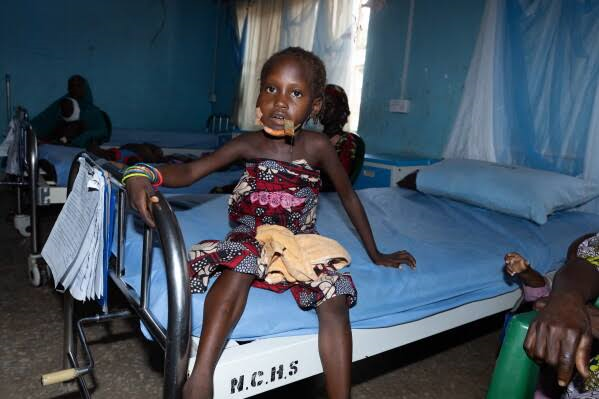
MSF Calls for Routine Noma Surveillance in Nigeria
Doctors Without Borders says noma, a fast-moving and often fatal facial infection linked to malnutrition and poverty, remains largely missing from Nigeria's routine child health programmes despite its 2023 recognition as a neglected tropical disease.
 Health
Oyo Rejects Diphtheria Outbreak Claims, Accuses APC
The Oyo State Government has dismissed claims by the Senator Sharafadeen Alli Campaign Organisation that diphtheria has affected 16 local government areas, describing the allegation as false and politically motivated. Commissioner for Health Dr. Oluwaserimi Ajetunmobi confirmed that while suspected cases have been recorded in 10 LGAs, none have been confirmed, and accused the APC campaign group of distorting immunisation data to score political points.
Comments (0)
Leave a comment
All comments are moderated before publishing. Your email is never published.