
FG Opens N50m Student Venture Grant for 50 Innovators, Restores Full Autonomy to NMEC
In a twin policy move to drive youth innovation and adult education, the Federal Government has opened applications for the second cohort of the Student Venture Capital Grant (S-VCG), offering up to ₦50 million in equity-free funding to 50 student-led ventures nationwide. Simultaneously, the government has restored full institutional autonomy to the National Commission for Mass Literacy, Adult and Non-Formal Education (NMEC), marking a major milestone in Nigeria's fight against illiteracy.
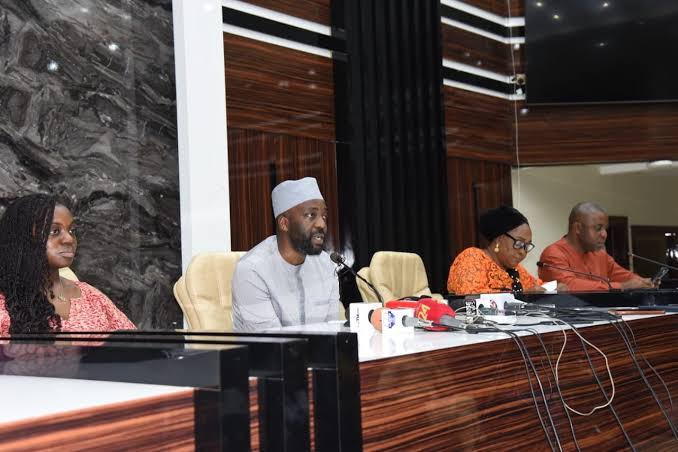
The Federal Government has opened applications for the second cohort of the Student Venture Capital Grant (S-VCG), offering up to ₦50 million in equity-free funding to 50 student-led ventures nationwide, while also restoring full institutional autonomy to the National Commission for Mass Literacy, Adult and Non-Formal Education (NMEC) in a major boost for adult education.
The S-VCG initiative, led by the Minister of Education, Dr. Maruf Tunji Alausa, is designed to help young Nigerians transform innovative ideas into viable businesses under the Renewed Hope Agenda of President Bola Ahmed Tinubu. National Project Coordinator of the S-VCG, Adebayo Onigbanjo, announced the development at a press briefing ahead of a nationwide campus mobilisation campaign scheduled for September 6–30, 2026.
The programme targets student innovators in science, technology, engineering, mathematics and medicine (STEMM), with applications undergoing AI-assisted screening and assessment by 10 human evaluators. Shortlisted candidates will make virtual presentations before finalists proceed to a bootcamp and physical presentations. Successful beneficiaries will also receive six months of mentorship from organisations and business leaders across technology, healthcare, logistics, education and other sectors.
Speaking at a news conference in Abuja, Onigbanjo said the government was seeking quality applications from student innovators nationwide, adding that 50 outstanding ventures would eventually be selected. "For Cohort 2, we are looking for quality applications from student innovators across Nigeria, from which 50 outstanding ventures will ultimately be selected," he said. He added that successful applicants would receive funding to develop and scale their businesses. "Successful applicants will be eligible to receive up to N50 million equity-free grant from the Federal Republic of Nigeria to develop and scale their businesses," Onigbanjo stated.
According to him, the initiative aligns with President Bola Tinubu's Renewed Hope Agenda and forms part of the Ministry of Education's Nigeria Education Sector Renewal Initiative, particularly its STEM pillar. Onigbanjo said the programme was designed to provide students with opportunities to transform innovative ideas into viable businesses. "Nigeria does not lack innovative young people. What many lack is the opportunity and capital to take these ideas further," he said. He stressed the need for tertiary institutions to play a greater role in fostering innovation and entrepreneurship. "Our universities, polytechnics and colleges of education must increasingly become places where ideas are developed, solutions created and businesses born," he said.
The S-VCG, known as the "Next Moonshot Initiative," is implemented under the Nigeria Education Sector Renewal Initiative in partnership with TETFund, Bank of Industry and Afara Initiative. To widen access and encourage applications, the Student Venture team and its partners will embark on a nationwide application roadshow from September 6 to September 30, visiting nine tertiary institutions across Nigeria's six geopolitical zones. These include the University of Abuja, Nile University, Abubakar Tafawa Balewa University, Bayero University Kano, Kano University of Science and Technology, Federal Polytechnic Kaduna, Ambrose Alli University, University of Lagos and Covenant University. The ministry will also activate a Campus Ambassador Programme across 20 other tertiary institutions to increase awareness and participation. Applications for the second cohort of the Student Venture Capital Grant will close on September 30, 2026.
Meanwhile, the Minister of State for Education, Prof. Suwaiba Ahmad, announced the restoration of full institutional autonomy to the National Commission for Mass Literacy, Adult and Non-Formal Education (NMEC). Speaking in Abuja during activities marking the 2026 International Literacy Day, Ahmad said the move would strengthen Nigeria's fight against illiteracy. "A major milestone in this effort is the full restoration of academic autonomy, a critical step for a healthy plan for education," she said. She added that the government was expanding infrastructure for adult education, establishing community learning centres and planning a permanent NMEC headquarters.
On Sustainable Development Goal 4, Ahmad said, "I can assure you that we have gone very far in terms of achieving SDG 4. SDG 4 is not just about adult literacy, but about education generally. I can assure you we are very well on track." NMEC Executive Secretary, Prof. Dahiru Muhammad Shuni, however, disclosed that Nigeria's available literacy data dates to 2010. "When I came in, the first thing I asked was to obtain the data… Right now, our people are on the field getting the data," he said.
The twin policy announcements reflect the Federal Government's commitment to addressing both youth unemployment through entrepreneurship and the enduring challenge of adult illiteracy. For young innovators across Nigeria's tertiary institutions, the S-VCG represents a rare opportunity to access substantial, equity-free capital without surrendering ownership of their businesses. For the millions of Nigerian adults who have missed out on formal education, the restoration of NMEC's autonomy signals a renewed focus on expanding access to literacy and lifelong learning opportunities. As applications for the grant open and the literacy commission charts a new course, both initiatives hold the potential to transform lives and contribute meaningfully to Nigeria's development agenda.
Sponsored

Related stories
 Tech & Education
Slum2School’s Solar-Powered River School Wins Global Environmental Award
A charity-run kindergarten and primary school in Epe, Lagos, has done what no Nigerian school has done before: Slum2School Green Academy has won the Environmental Action prize at the 2026 World’s Best School Prizes, beating finalists from across the globe. Built from bamboo, powered by the sun, and serving 250 children from river communities, the school is now headed to London to present its model to policymakers,proof that Nigerian education can lead the world, not just follow it.
 Tech & Education
FUT Babura Appoints Agronomy Professor Hussaini as Vice-Chancellor
The Governing Council of the Federal University of Technology, Babura, has appointed Professor Muhammad Auwal Hussaini,a renowned agronomist and former Provost of Bilyaminu Usman College of Agriculture—as its new Vice-Chancellor, defeating six other professors in a fiercely contested selection. With a mandate to deliver science, technology, and practical skills education to a young university of 3,000 students, Hussaini’s tenure begins January 27, 2027. Pro-Chancellor Onimawo Ignatius Akhakhia i
 Tech & Education
ASUP Declares Indefinite Strike in South-West Polytechnics Over Unpaid Allowances
The Academic Staff Union of Polytechnics (ASUP), Zone C, has grounded academic activities in all state-owned polytechnics, colleges of technology, and monotechnics across Ogun, Oyo, Osun, and Ekiti states, declaring an indefinite strike over the non-implementation of the Consolidated Academic Tools Allowance (CATA) and Earned Academic Allowance (EAA). The strike, which began on Monday, November 16, 2026, follows the expiration of a 15-day ultimatum—and exposes a widening gulf between federal pol
 Tech & Education
Mbah Proposes Renaming ESUT After Founder Jim Nwobodo
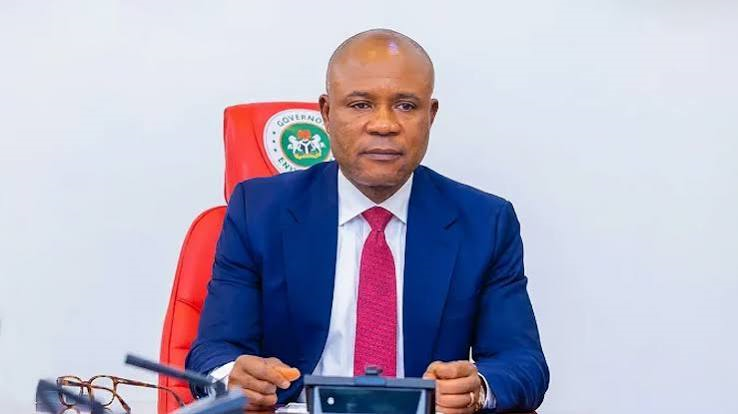
Governor Peter Mbah has set in motion the legal process to rename the Enugu State University of Science and Technology (ESUT) after its founder, Second Republic Governor Jim Nwobodo, as the institution marks 46 years since its establishment. The proposal, first pushed by the ESUT Alumni Association, requires approval from the Enugu State House of Assembly—but the announcement has already ignited a fierce debate about legacy, politics, and the price of honouring a founding father.
Comments (0)
Leave a comment
All comments are moderated before publishing. Your email is never published.