
Europe Braces for Record-Breaking Heatwave as Authorities Shut Down Schools, Halt Train Services
A severe, unprecedented heatwave has gripped Western Europe, pushing local temperatures past 40°C and forcing widespread closures of schools and transport terminals.
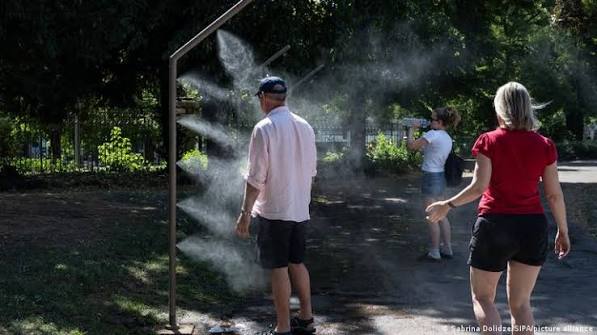
A fierce, historically early summer heatwave has blanketed Western Europe, prompting governments to declare maximum emergencies, suspend classes for thousands of students, and throttle mass transit grids. Climatologists have labeled the extreme system, driving June temperatures well past 40°C (104°F), as Europe’s worst thermal crisis in 45 years, attributing the rapid intensity of the weather directly to accelerated, human-driven climate change.
As the extreme atmospheric dome expands, emergency cooling protocols have been implemented across France, Belgium, Spain, and the United Kingdom.
The thermal load has pushed vital municipal infrastructure to its physical limits, transforming a seasonal high into a public safety hazard:
- Mass Educational Disruption: In France, where many older school buildings lack adequate air conditioning or modern insulation, the Ministry of Education authorized the immediate shutdown of 845 schools. An additional 1,800 institutions have been instructed to dismiss students ahead of peak afternoon temperatures to prevent heat exhaustion.
- Rail Operations Suspended: National rail operators have trimmed schedules heavily to mitigate severe technical risks. In Belgium, national rail firm SNCB canceled several rush-hour lines to prevent tracks from buckling and infrastructure from failing. Concurrently, France’s SNCF suspended dozens of long-distance routes to prevent overstressed train air-conditioning systems from crashing under the heat.
- The Nuclear Energy Constraint: The heatwave is introducing immediate complications for regional power generation. French energy giant EDF warned that power stations, including Blayais and Golfech, may have to curb electrical output. This is because rising river temperatures limit the amount of warm wastewater plants are legally allowed to discharge without harming local aquatic ecosystems.
"Human-driven climate change has provided the springboard for this event, loading the atmosphere with extra heat and making extreme temperatures far more intense than they would have been in the past." — Akshay Deoras, Meteorologist, University of Reading
With health officials drawing dark parallels to Europe's infamous August 2003 heatwave, which claimed thousands of lives, local municipalities are opening air-conditioned public halls, deploying emergency water stations, and placing municipal social workers on round-the-clock shift rotations to look after vulnerable populations.
Related stories
 News
News
Five Nigerians Rescued from Côte d’Ivoire Prison Arrive Abuja
Five Nigerians rescued from detention in Côte d’Ivoire have returned home after months of diplomatic efforts, while the Federal Government seeks compensation following the death of one detainee in custody.
 News
News
Olubadan Inaugurates Committee on Integration of Traditional, Orthodox Medicine
The Olubadan of Ibadanland has inaugurated a committee to integrate traditional and orthodox medicine, saying both healthcare systems should complement each other to improve healthcare delivery and preserve indigenous knowledge.
 News
News
ICPC, PenCom Recover N3bn Unremitted Pension Deductions from Defaulting Firms
The ICPC and PenCom have recovered over N3bn in unremitted pension deductions from defaulting employers in the electricity sector, with funds credited to workers’ Retirement Savings Accounts amid stricter enforcement efforts.
 News
News
CBN Revokes Licences of 46 Microfinance Banks Over Regulatory Breaches
The Central Bank of Nigeria revoked the licences of 46 microfinance banks over regulatory breaches, saying the action will protect depositors and strengthen confidence in Nigeria’s financial system.
Comments (0)
Leave a comment
All comments are moderated before publishing. Your email is never published.