
Enugu Reaffirms Commitment to Ending HIV/AIDS Through Strategic Partnerships
Enugu State says it is stepping up the fight against HIV/AIDS through stronger partnerships, expanded health infrastructure, better surveillance and evidence-based prevention and treatment services.

The Enugu State Government has reaffirmed its commitment to ending HIV/AIDS through strategic partnerships, inclusive policies and evidence-based interventions. Officials say the state is strengthening its health system not only to treat people living with HIV, but also to prevent new infections, reduce stigma and improve long-term control of the epidemic.
The message was delivered by the Commissioner for Health, Professor Emmanuel Ike Obi, during a recent engagement focused on HIV response and community health. He said the government is investing heavily in the sector, including the construction of Type-2 Primary Healthcare Centres in every ward and the expansion of access to quality healthcare services across the state. That infrastructure push matters because HIV prevention and treatment work best when primary care systems are strong, accessible and trusted by residents.
A key part of the state’s strategy is partnership. Enugu has intensified collaboration with development partners, civil society organisations and health agencies to improve HIV testing, treatment, prevention of mother-to-child transmission and viral load monitoring. This matters because no single institution can end HIV on its own; the most effective responses usually combine government leadership with community outreach, donor support and local accountability.
The state is also strengthening disease surveillance systems and healthcare workforce development. In practical terms, that means better detection of cases, more reliable reporting and improved capacity among health workers to diagnose, counsel and manage patients. Strong surveillance is particularly important in HIV response because it helps authorities track trends, identify gaps in service delivery and target interventions to the communities that need them most.
Enugu has also made public education and community engagement central to its approach. Officials say the state is scaling up awareness campaigns to reduce new HIV infections while addressing stigma and discrimination against people living with the virus. Stigma remains one of the biggest barriers to HIV control because it discourages testing, prevents people from seeking care early and makes it harder to stay on treatment consistently.
That community-focused approach is not new. The Enugu State Agency for the Control of AIDS, known as ENSACA, has in recent years worked with partners on awareness campaigns, facility-level sensitisation and prevention of mother-to-child transmission programmes. These efforts have included radio jingles, interviews, billboards and visits to antenatal clinics in rural communities, all aimed at helping pregnant women know their HIV status and access care early if needed.
The state’s recent progress appears encouraging. Caritas Nigeria has reported that Enugu has achieved 98 per cent viral suppression among identified people living with HIV, above the global target in many respects. The same source says the state has reduced HIV prevalence from 5.1 per cent in 2010 to 2.1 per cent currently, suggesting that sustained investment in testing, treatment and community mobilisation is producing measurable results.
Enugu has also been setting out more ambitious plans. Recent reports show the state unveiling a five-point agenda to accelerate HIV epidemic control by 2030, with emphasis on improved access to drugs, reduced stigma, stronger financing and political commitment. That agenda aligns with the broader goal of epidemic control by the end of the decade, which requires not just treatment but also prevention, retention in care and domestic ownership of the response.
The role of partnerships has been central to these gains. Enugu has collaborated with groups such as Caritas Nigeria, NACA-linked programmes and other development actors to expand testing, treatment, care and community support services. These collaborations help fill gaps in funding, logistics and technical expertise, especially at a time when donor-driven health programmes are increasingly under pressure to become more sustainable.
The state’s emphasis on health infrastructure also matters beyond HIV alone. Building primary healthcare centres in every ward can strengthen maternal care, immunisation, malaria treatment and basic screening services, all of which make it easier to integrate HIV services into routine care rather than treating them as separate or hidden programmes. That integrated model often works better in the long term because it normalises testing and reduces the fear attached to visiting specialised HIV clinics
For residents, the message from Enugu is that HIV is still a serious public health issue, but it is one that can be controlled with coordinated action. Testing early, starting treatment promptly, preventing mother-to-child transmission and reducing stigma are all part of the same response. If the state sustains its partnership-driven approach, it could remain one of the stronger HIV control stories in Nigeria.
Sponsored

Related stories
 Health
Borno Hires 2,000 Health Workers, Still Faces Staff Shortage
Borno State has recruited nearly 2,000 doctors, nurses and other health professionals in two years, but the head of its contributory health agency says manpower gaps persist as demand grows under the state health insurance scheme.
 Health
Lassa Fever Kills 268 in Nigeria as Cases Hit 1,138
Nigeria has recorded 1,138 confirmed Lassa fever cases and 268 deaths across 24 states in 2026, with the case fatality rate rising to 23.6 per cent—significantly higher than the 18.6 per cent recorded during the same period in 2025. The NCDC has identified five states accounting for 88 per cent of all confirmed cases, as it intensifies preparedness efforts ahead of the peak transmission season.
 Health
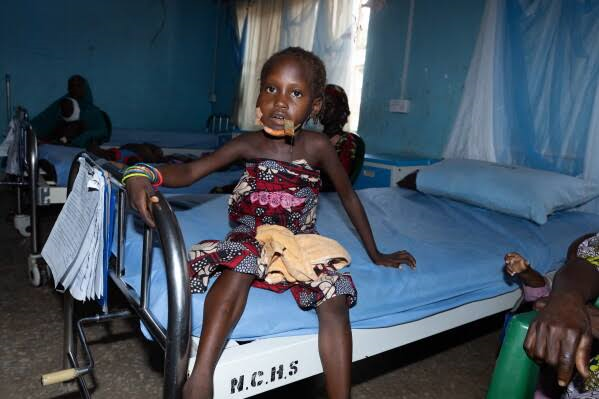
MSF Calls for Routine Noma Surveillance in Nigeria
Doctors Without Borders says noma, a fast-moving and often fatal facial infection linked to malnutrition and poverty, remains largely missing from Nigeria's routine child health programmes despite its 2023 recognition as a neglected tropical disease.
 Health
Oyo Rejects Diphtheria Outbreak Claims, Accuses APC
The Oyo State Government has dismissed claims by the Senator Sharafadeen Alli Campaign Organisation that diphtheria has affected 16 local government areas, describing the allegation as false and politically motivated. Commissioner for Health Dr. Oluwaserimi Ajetunmobi confirmed that while suspected cases have been recorded in 10 LGAs, none have been confirmed, and accused the APC campaign group of distorting immunisation data to score political points.
Comments (0)
Leave a comment
All comments are moderated before publishing. Your email is never published.