
Education Requires Funding and Reforms
Nigeria’s education system is being reshaped under a new sector‑renewal push, but experts say real progress will depend on sustained funding, outcome‑based spending and deep reforms in governance, skills and data. Recent initiatives signal intent, yet implementation gaps and budget pressures remain a major threat to the future of learning.
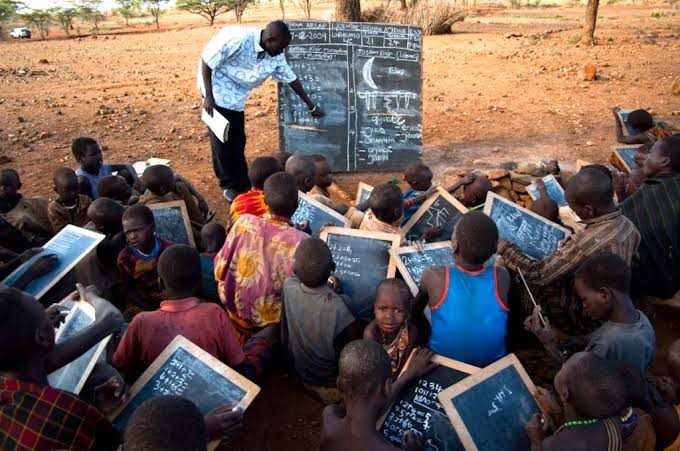
Nigeria’s education sector is in the middle of a renewal drive that combines fresh funding commitments with structural reforms, but analysts warn that without consistency and deeper changes, the system will continue to fall short of its potential. The Federal Government has rolled out the Nigeria Education Sector Renewal Initiative (NESRI), a broad framework meant to shift the country from a resource‑based to a knowledge‑based economy through six reform pillars covering access, quality, skills, governance, data and technology.[von.gov]
On paper, funding has begun to move in the right direction. Under President Bola Tinubu’s Renewed Hope Agenda, the federal allocation to education reportedly jumped to about ₦3.52 trillion in the 2025 budget, a 61.47 percent increase on the previous year, with emphasis on infrastructure, student support and wider access. In addition, the government has unlocked a 552 million‑dollar Hope‑Edu funding package, tied to a digitised, results‑based Basic Education Action Plan now adopted by 27 states and the FCT, which links funding more directly to learning outcomes and accountability.
There have also been notable steps in student financing. The Nigerian Education Loan Fund, launched in 2024, has registered over 600,000 students and disbursed around ₦56.85 billion in interest‑free loans for tuition and upkeep, seeking to remove cost barriers to higher education. TETFund’s three‑percent levy on companies’ income tax was retained after an attempted reform that would have cut its revenue, allowing the fund to disburse more than ₦700 billion to public tertiary institutions in 2025 alone.
Yet, behind these headline figures, long‑standing funding problems persist. Analyses of budget trends show that between 2015 and 2025, education’s share of the national budget fell from about 10.75 percent to just 5.47 percent, far below UNESCO’s recommended 15–20 percent benchmark. One review of the 2024 budget found that only about 5.5 percent of total federal spending went to education, with most of it absorbed by salaries and allowances, leaving far less for capital projects, teaching materials, and innovation.
Experts argue that closing this gap is not just about bigger numbers but smarter spending. The redesign of the Basic Education Action Plan into a digital, results‑based framework is one attempt to make resources work harder, tying disbursements to specific performance indicators such as enrolment, completion rates, teacher deployment and infrastructure upgrades. NESRI’s emphasis on robust data systems, including a national education census and learning‑outcome tracking, is meant to give policymakers clearer insight into where money is needed and whether interventions are working.
Reforms are also reshaping what students learn and how. In 2025, government revised the basic‑education curriculum to re‑embed history through a new Civic and Heritage Studies subject and to require junior secondary students to take at least one trade or skill‑based course—such as solar installation, livestock farming or computer repairs—aimed at making schooling more practical and employment‑oriented. Plans are in motion for WAEC and NECO to fully adopt computer‑based testing by 2026, signalling a gradual shift toward more digitised assessment and exam management.
On the institutional side, authorities have imposed a seven‑year moratorium on new public universities and temporarily halted licensing for new private universities, arguing that consolidation and quality‑assurance must take precedence over expansion. Tertiary institutions have been directed to publish budgets, student numbers and research‑funding details online to boost transparency and accountability, though the effectiveness of this measure will depend on enforcement and public scrutiny.
Skill and inclusion programmes are being scaled as well. Government reports enrolling over 100,000 learners in more than 1,600 vocational colleges, while other initiatives target out‑of‑school children, teacher training and digital skill development as part of a wider push to make education more inclusive and future‑focused. NESRI itself identifies STEMM, TVET, girl‑child education and quality assurance as central priorities for the coming years.
Even so, implementation challenges remain a heavy drag on progress. Technical failures, security concerns in some regions, uneven uptake of reforms across states, and weak local‑government capacity continue to limit the impact of policies that look promising on paper. Analysts have called for education to be treated as a national emergency, with firm commitments to raise budget shares, strengthen decentralised oversight of schools and tighten accountability for how funds are used.
The emerging consensus is that Nigeria’s education sector requires both more money and deeper reforms. Funding must rise toward global benchmarks, but it also has to be tied to clear outcomes and backed by data, transparency and strong governance. Without that combination, isolated initiatives,no matter how well‑intentioned,will struggle to deliver the transformation needed to prepare Nigeria’s young population for a knowledge‑driven economy.
Sponsored

Related stories
 Tech & Education
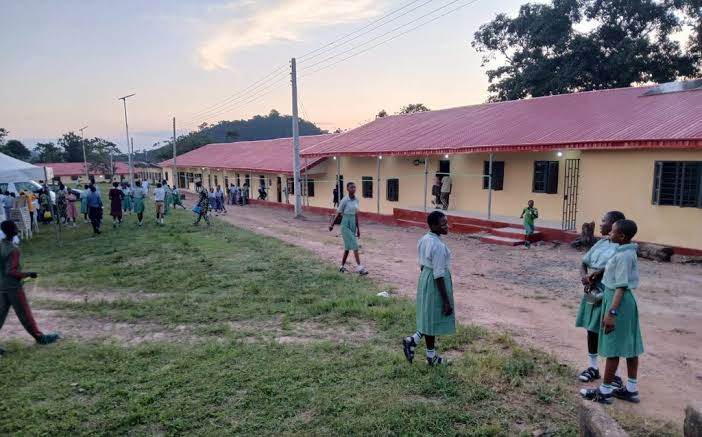
Bamidele Unveils N200m Renovated Science College
Senate Leader Opeyemi Bamidele has commissioned the renovated Government Science College, Iyin-Ekiti, personally funded at over N200 million, donating buses to the school and nearby FUTESI while promising a second phase of upgrades.
 Tech & Education
Abia Students Crowned Global Debate Champions
Students from public schools in Abia State, representing Nigeria, have emerged overall champions at the 2026 International Schools Debate Championship in Doha, Qatar, winning four major trophies and 12 laurels after defeating teams from Jordan, India, Qatar, the Philippines, Kenya and others. The historic victory has been hailed as proof that Governor Alex Otti's education reforms are producing world-class scholars.
 Tech & Education
WAEC Appoints Suleiman Kum as New Head of Nigeria National Office
The West African Examinations Council has appointed 56-year-old Suleiman Danlami Kum as the new Head of the Nigeria National Office, succeeding Dr Amos Josiah Dangut, who has assumed office as the council’s Registrar and Chief Executive Officer. A seasoned test developer, administrator and executive with 28 years of service, Kum is expected to drive technological innovation and examination security across Nigeria’s foremost examinations body.
 Tech & Education
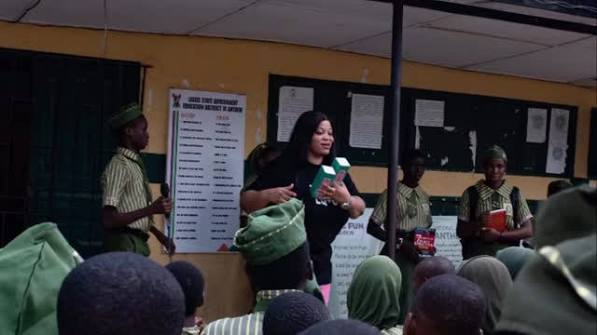
Emmanuel College ’88 Set Renovates Classrooms, Pays Exam Fees
The Progressives of the Unique 1988 Set of Emmanuel College Owerri have unveiled a renovated five-classroom block and paid NECO and WAEC fees for financially disadvantaged students at their alma mater.
Comments (0)
Leave a comment
All comments are moderated before publishing. Your email is never published.