
Delta's Healthcare Revolution: MRI, CT Scanners, 700 New Doctors
Delta State has invested heavily in healthcare infrastructure, acquiring three 1.5-Tesla MRI machines, CT scanners, 25 4D ultrasound machines, and eight dialysis machines, while recruiting over 700 medical personnel and paying the Medical Residency Training Fund. With health insurance coverage rising to 48.43 per cent and maternal mortality dropping from 350 to 120 deaths per 100,000 live births, the Oborevwori administration is building a healthcare system that addresses infrastructure, manpowe
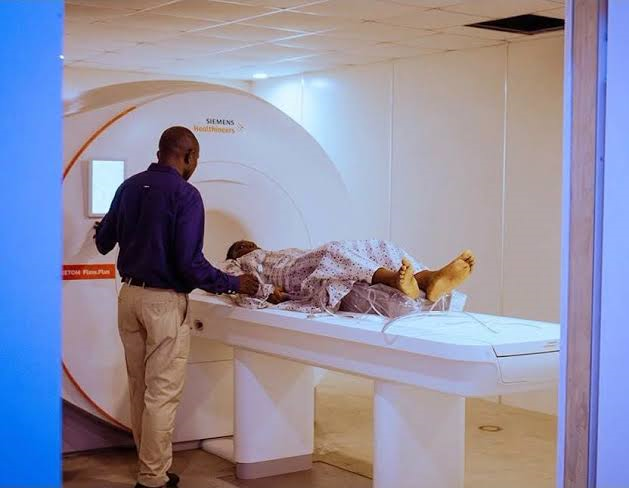
Delta State has emerged as a model for healthcare transformation in Nigeria, with the Oborevwori administration investing heavily in diagnostic equipment, human resources, and health insurance to build a system capable of meeting the needs of its population.
At the heart of this transformation is the acquisition of three 1.5-Tesla, helium-free MRI machines strategically located at Asaba Specialist Hospital, Central Hospital Warri, and Delta State University Teaching Hospital, Oghara. The machines, procured in March 2026, address one of the most critical gaps in Nigerian healthcare: access to advanced diagnostic services. Before their installation, patients requiring MRI scans often had to travel to other states or even outside the country, incurring substantial costs for transportation, accommodation, and lost work time. By bringing sophisticated diagnosis closer to patients, the state has removed a significant barrier to timely and accurate medical care.
The investment extends beyond MRI technology. The state has expanded its CT-scan capacity with the procurement and installation of 32-slice and 64-slice scanners at Central Hospital, Warri, and DELSUTH, Oghara, following a needs assessment that revealed the facilities lacked functional CT scanners. Eight dialysis machines have also been distributed among Asaba Specialist Hospital, Warri, and DELSUTH, with treatment costs reduced to approximately N45,000 in some centres. For kidney patients who require recurrent dialysis, this cost reduction is not an abstract policy achievement; it can determine whether a patient continues treatment or abandons it altogether.
Perhaps the most impactful intervention for rural communities is the distribution of 25 4D ultrasound machines across the state's 25 local government areas. Each local government area now has access to advanced ultrasound technology through its general hospital, a decision that addresses the concentration of advanced facilities in major urban centres. This is particularly significant for maternal and child healthcare, where timely ultrasound examinations can assist in monitoring pregnancies and identifying complications. An MRI machine in a major city is valuable, but a diagnostic device within reasonable reach of a pregnant woman in a rural community can have a very different practical impact. The same philosophy underpins the renovation of more than 150 primary healthcare centres across the state, strengthening the first point of contact for patients and reducing the burden on secondary and tertiary hospitals.
Infrastructure, however, is only half the equation. Recognising that Nigeria's healthcare crisis is as much a human-resource problem as it is an infrastructural one, the state approved the recruitment of more than 700 medical and non-medical personnel in March 2026. The recruits were allocated to the Hospital Management Board, DELSUTH, the College of Health Technology, Asaba Specialist Hospital, and Warri Central Hospital. To retain skilled professionals amid the ongoing "japa" phenomenon, Governor Oborevwori approved an additional N200,000 monthly salary increase for doctors and a N100,000 tax-free allowance for house officers. The state has also instituted a policy of promptly replacing medical personnel who leave the state service, preventing vacancies from becoming permanent gaps in service delivery. The payment of the Medical Residency Training Fund has further strengthened the state's credentials as an employer of choice for medical professionals, earning public commendation from the Nigerian Association of Resident Doctors.
Affordability remains a central pillar of Delta's healthcare strategy. Enrolment in the state contributory health insurance scheme rose to 2,729,729 beneficiaries as of October 31, 2025, with effective coverage increasing from 27.64 per cent in 2023 to 48.43 per cent in 2025. The government's latest figure of more than three million enrollees suggests that coverage has continued to expand. Free healthcare programmes for children under five and pregnant women complement the insurance scheme, ensuring that vulnerable households are not deterred from seeking treatment by cost. The impact is already visible: maternal mortality reportedly declined from 350 to 120 deaths per 100,000 live births following the state's free maternal healthcare interventions.
The state has also invested in medical education, establishing a College of Health Technology at Ovrode in Isoko North and supporting the establishment of a College of Medicine at Southern Delta University, Ozoro. These institutions are designed to produce the middle-level and high-level health professionals that the state will need in the coming decades, reducing dependence on recruiting professionals trained elsewhere.
Accountability has not been overlooked. Health authorities have previously sanctioned or demoted health workers over allegations of extorting patients, particularly pregnant women and children covered by free healthcare. That enforcement sends a clear message that good policy requires effective implementation.
The real measure of Delta's healthcare agenda will be what happens to the ordinary citizen who walks into a public hospital. Can the patient obtain a diagnosis without travelling outside the state? Can a pregnant woman access skilled care without financial distress? Can a child under five receive treatment without the family being crippled by bills? Can a kidney patient obtain dialysis at a manageable cost? On the evidence currently available, the Oborevwori administration has put substantial resources into answering these questions. The next chapter is ensuring that the equipment remains functional, the personnel remain motivated, the insurance system remains financially sustainable, and the reported improvements translate consistently into measurable health outcomes. That is where healthcare delivery ceases to be about government expenditure and becomes what it should ultimately be about: better health, greater access, and a reduced burden on the people of Delta State.
Sponsored

Related stories
 Health
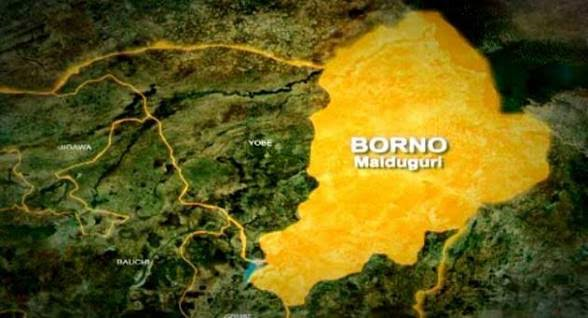
Borno Hires 2,000 Health Workers, Still Faces Staff Shortage
Borno State has recruited nearly 2,000 doctors, nurses and other health professionals in two years, but the head of its contributory health agency says manpower gaps persist as demand grows under the state health insurance scheme.
 Health
Lassa Fever Kills 268 in Nigeria as Cases Hit 1,138
Nigeria has recorded 1,138 confirmed Lassa fever cases and 268 deaths across 24 states in 2026, with the case fatality rate rising to 23.6 per cent—significantly higher than the 18.6 per cent recorded during the same period in 2025. The NCDC has identified five states accounting for 88 per cent of all confirmed cases, as it intensifies preparedness efforts ahead of the peak transmission season.
 Health
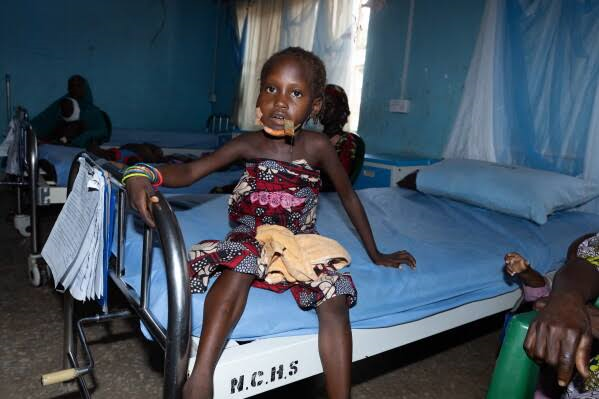
MSF Calls for Routine Noma Surveillance in Nigeria
Doctors Without Borders says noma, a fast-moving and often fatal facial infection linked to malnutrition and poverty, remains largely missing from Nigeria's routine child health programmes despite its 2023 recognition as a neglected tropical disease.
 Health
Oyo Rejects Diphtheria Outbreak Claims, Accuses APC
The Oyo State Government has dismissed claims by the Senator Sharafadeen Alli Campaign Organisation that diphtheria has affected 16 local government areas, describing the allegation as false and politically motivated. Commissioner for Health Dr. Oluwaserimi Ajetunmobi confirmed that while suspected cases have been recorded in 10 LGAs, none have been confirmed, and accused the APC campaign group of distorting immunisation data to score political points.
Comments (0)
Leave a comment
All comments are moderated before publishing. Your email is never published.