
Dangote Refinery Denies Exporting, Re-Importing Petrol Into Nigeria
Dangote Petroleum Refinery has dismissed claims that it exports petrol to Togo and re-imports it into Nigeria, describing the allegation as illogical, uneconomical and contrary to its operations.
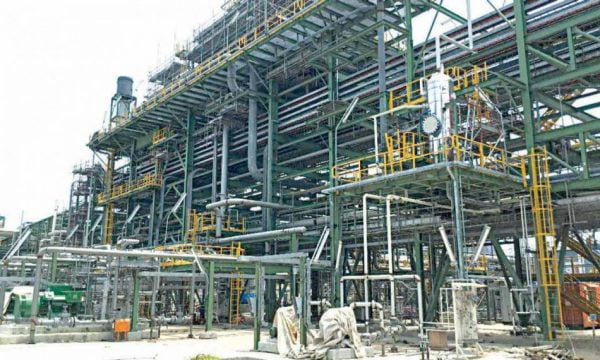
Dangote Petroleum Refinery and Petrochemicals has denied allegations that it exports petrol to Lomé, Togo, and subsequently re-imports the same products into Nigeria, describing the claim as unfounded and inconsistent with commercial and operational realities.
In a statement issued on Tuesday, the management of the refinery said the allegation lacks support from verifiable trade data, commercial logic and established industry practices.
According to the company, one of the refinery’s primary objectives is to strengthen domestic fuel supply and reduce Nigeria’s dependence on imported petroleum products.
The management noted that any arrangement that allows imported products to compete directly with fuel produced by the refinery would contradict its strategic goals.
It explained that all sales contracts and tender agreements signed with buyers expressly prohibit the resale or re-importation of Dangote Refinery products into Nigeria.
The refinery further argued that the economics of the alleged export-and-reimport arrangement are fundamentally flawed.
According to the statement, logistics costs associated with transporting products from the refinery to Lomé and then back into Nigeria are estimated at between $82 and $90 per metric ton.
It said such additional costs would significantly erode profit margins and render the transaction commercially unviable.
“Dangote Refinery does not provide export discounts sufficient to offset these costs or create arbitrage opportunities between export and domestic markets.
“Simply put, no rational producer would incur additional shipping, storage, financing and handling costs only for products to re-enter and compete in its primary market,” the statement said.
The company also highlighted its product traceability system, noting that it maintains detailed records of lifting points, nominated vessels, counterparties and declared destinations to ensure full visibility and accountability throughout the supply chain.
According to the management, these safeguards make it impossible for the refinery to facilitate or tolerate the re-importation of its products into Nigeria.
The statement added that encouraging re-importation would undermine local refining efforts, place additional pressure on foreign exchange reserves and weaken national industrial growth.
It maintained that there is no strategic, economic or operational basis for claims that Dangote Refinery exports products for re-importation into Nigeria.
“The allegation is entirely unfounded and does not withstand scrutiny when measured against market logic, contractual frameworks and industry practices.
“Dangote Refinery remains focused on its mission to enhance energy security, support local refining and contribute meaningfully to Africa’s industrial development,” the statement added.
Related stories
 News
News
Five Nigerians Rescued from Côte d’Ivoire Prison Arrive Abuja
Five Nigerians rescued from detention in Côte d’Ivoire have returned home after months of diplomatic efforts, while the Federal Government seeks compensation following the death of one detainee in custody.
 News
News
Olubadan Inaugurates Committee on Integration of Traditional, Orthodox Medicine
The Olubadan of Ibadanland has inaugurated a committee to integrate traditional and orthodox medicine, saying both healthcare systems should complement each other to improve healthcare delivery and preserve indigenous knowledge.
 News
News
ICPC, PenCom Recover N3bn Unremitted Pension Deductions from Defaulting Firms
The ICPC and PenCom have recovered over N3bn in unremitted pension deductions from defaulting employers in the electricity sector, with funds credited to workers’ Retirement Savings Accounts amid stricter enforcement efforts.
 News
News
CBN Revokes Licences of 46 Microfinance Banks Over Regulatory Breaches
The Central Bank of Nigeria revoked the licences of 46 microfinance banks over regulatory breaches, saying the action will protect depositors and strengthen confidence in Nigeria’s financial system.
Comments (0)
Leave a comment
All comments are moderated before publishing. Your email is never published.