
Climate Change: Yobe Plants 1,000 Trees to Fight Desertification
Yobe State has launched its 2026 afforestation campaign with the planting of 1,000 drought-resistant tree seedlings in Nguru LGA, while also rehabilitating existing plantations to improve tree survival and combat advancing desertification.
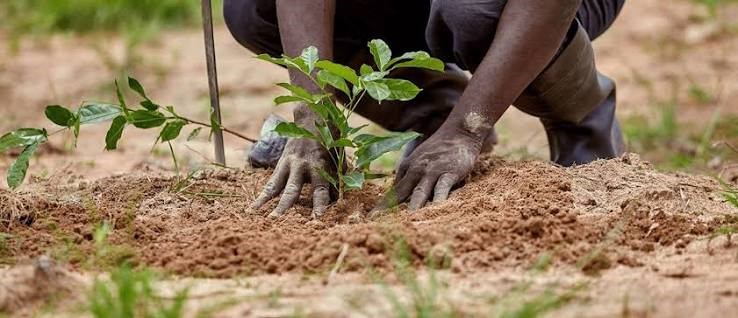
Yobe State has flagged off its 2026 afforestation campaign with the planting of 1,000 drought-resistant tree seedlings in Nguru Local Government Area. The exercise, carried out under the North East Arid Zone Development Programme (NEAZDP), is part of a broader effort to combat desertification and strengthen environmental resilience in one of Nigeria's most climate-vulnerable regions.
The planting took place on Tuesday at three locations in Nguru: MMB Quarters, Lawan Goma Mega School and SMART School. By situating trees in both residential and institutional settings, the programme aims to create visible green pockets that can act as windbreaks, reduce soil erosion and improve local microclimates.
A distinctive feature of the 2026 campaign is its focus on survival, not just numbers. Alongside the new planting, NEAZDP has begun rehabilitating existing plantations through the replacement of failed seedlings, a process known as "beating-up". This is intended to improve the survival rate of previously established trees and ensure that earlier investments are not wasted. The shift from simply counting seedlings distributed to actively managing their growth reflects lessons learned from past campaigns, where many trees died due to poor maintenance, inadequate watering and harsh climatic conditions.
Yobe is among the Nigerian states most exposed to desert encroachment. The advancing Sahara has degraded farmland, reduced grazing areas and put pressure on water sources across several local councils. Previous initiatives have targeted 10 communities in areas such as Damaturu, Geidam, Yusufari, Yunusari, Karasuwa, Nangere and Machina under the Great Green Wall programme. In 2025, the state government announced a two-million-tree target in the first phase of a new planting drive, with thousands of seedlings allocated to each local government area and additional stock reserved for household planting.
The 1,000-tree launch in Nguru fits into this wider pattern of phased, multi-year afforestation. Rather than a one-off event, tree-planting in arid zones is increasingly treated as a long-term process that involves testing species, refining techniques and ensuring community ownership. In earlier efforts, Yobe officials reported that focusing on survival and maintenance helped raise success rates from below 20 per cent to around 85 per cent in some plantations, particularly where individuals were allocated land, given stipends and made responsible for nurturing the trees.
The choice of drought-resistant species is also strategic. In past campaigns, the state has planted gum Arabic and other economic trees, which not only stabilise soil but can generate income for households. Save the Children International and other partners have similarly promoted economic trees such as mango, cashew and guava in schools and communities, noting that these can serve as windbreakers while also supporting livelihoods. When trees mature, they can reduce wind damage to buildings, provide shade, improve soil fertility and, in the case of fruit or commercial species, offer additional revenue streams for families.
The 2026 campaign is also aligned with regional efforts under the National Agency for the Great Green Wall, which has intensified afforestation in 11 frontline northern states, including Yobe. The agency has distributed millions of seedlings, including improved date palm varieties, to communities threatened by desert encroachment. By coordinating with these larger programmes, Yobe can tap into technical support, seedling supplies and monitoring frameworks that improve the odds of long-term success.
For residents of Nguru and surrounding areas, the immediate impact may be modest, but the cumulative effect of repeated planting seasons can be significant. If the seedlings survive and mature, they could help stabilise soils, reduce sandstorms, protect infrastructure and make farming and grazing more viable in the face of shifting rainfall patterns and rising temperatures.
The real test will come in the months and years after the launch. Success will depend on consistent watering, protection from livestock, community involvement and effective monitoring to ensure that today's seedlings become tomorrow's green shield against the desert.
Sponsored

Related stories
 Agriculture
Babalola’s Farmer Support Hits N98m
Legal icon Aare Afe Babalola has disbursed N11.2 million to 81 outstanding farmers across Ekiti State's 16 local government areas, bringing total awards under his annual agricultural scheme since 2015 to N98 million.
 Agriculture
FG Launches African Swine Fever Control Campaign in Southwest
The Federal Government has launched a major African Swine Fever control and biosecurity campaign at the Oke-Aro Pig Farm Estate, distributing protective kits to farmers and pledging comprehensive training to prevent future outbreaks. The intervention by the Livestock Productivity and Resilience Support Project (L-PRES) targets one of Nigeria's largest pig production clusters, which has suffered devastating losses from the highly contagious disease in the past.
 Agriculture
Kyari: More Farmland Won’t Feed 400 Million Nigerians
Agriculture Minister Abubakar Kyari says Nigeria must treat agricultural extension as critical infrastructure, disclosing that over 100,000 farmers already receive weekly digital advisories as the country's population heads toward 400 million by 2050.
 Agriculture
Farmland Expansion Alone Won’t Feed Nigeria
Agriculture Minister Abubakar Kyari says Nigeria must shift to demand-driven, AI-enabled agricultural extension services to boost farm yields, warning that expanding farmland alone can no longer feed the country's growing population.
Comments (0)
Leave a comment
All comments are moderated before publishing. Your email is never published.