
Children's Day: Poverty, Flawed Policies Jeopardising Nigerian Youths, Warn Experts
Child rights experts say Nigerian children face worsening conditions due to poverty, insecurity, and weak education systems, especially during this year’s Children’s Day. They warn that poor funding, inconsistent school policies, and economic hardship are increasing out-of-school numbers and exposing children to greater risks. They’re calling for joint action from government, communities, and institutions to protect children and improve access to quality education.

Social commentators and child rights specialists have raised the alarm over the deteriorating living conditions of Nigerian children, pointing to widespread poverty, security threats, environmental challenges, and inconsistent educational frameworks as severe hazards to their future.
Speaking in light of this year's Children's Day celebrations, the experts underscored how macroeconomic hardships have left millions of families unable to provide basic nutrition, quality healthcare, and stable learning environments for their youngsters.
An early childhood development specialist, Mr Amusa Osanyin, heavily criticised the country's disjointed approach to public schooling, drawing attention to erratic educational guidelines, deficient programme execution, and a severe lack of funding for state-run schools.
He noted that deep-seated economic hardship and rampant insecurity across several regions have acted as massive deterrents, actively discouraging parents from sending their children to school and driving up the country's out-of-school population.
To arrest this decline, Osanyin called for a coordinated, multi-stakeholder intervention. He urged state authorities, parents, religious institutions, and community leaders to build a unified front aimed at expanding educational access, safeguarding children from exploitation, and ensuring the protection of rights for the next generation.
Sponsored

Related stories
 Tech & Education
NUC Directs Universities to Adopt AI Policies for Teaching, Research, Administration
The National Universities Commission has issued a formal directive requiring all Nigerian universities to develop and implement comprehensive artificial intelligence policies, warning that institutions without clear frameworks for AI use, ethics, and academic integrity risk producing graduates unprepared for a world already transformed by the technology. With concerns mounting over plagiarism, data privacy, and the digital divide, the NUC says the time for deliberation is over and the time for a
 Tech & Education
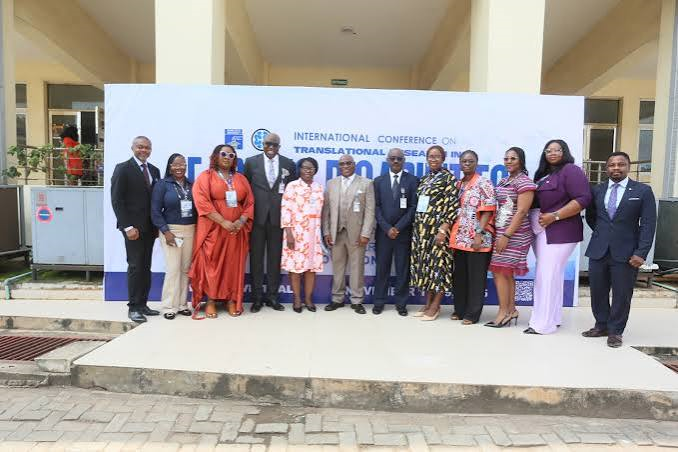
Babcock Conference Raises Awareness on Dyslexia, Challenges Misconceptions About Learning Difficulties
Babcock University’s learning disabilities conference has called for inclusive teaching reforms to support children with dyslexia, dyscalculia and other neurodivergent conditions. With 60% of learning disabilities linked to specific learning challenges and two-thirds of teachers lacking adequate knowledge, experts warned that rigid classroom practices are wrongly branding struggling pupils as lazy or unintelligent.
 Tech & Education
SACOETEC Graduates 4,944 Students, Produces 31 First-Class Graduates
Sikiru Adetona College of Education, Science and Technology (SACOETEC), Omu-Ajose, Ogun State, will today graduate 4,944 students at its second combined convocation, with 31 earning first-class honours. Provost Dr Modupe Oba-Adenuga says the ceremony is more than a certificate presentation; it is a celebration of a college delivering competent, professionally equipped teachers and degree holders under its NCE-Degree Dual Mandate. Governor Dapo Abiodun’s support, including increased subvention, h
 Tech & Education
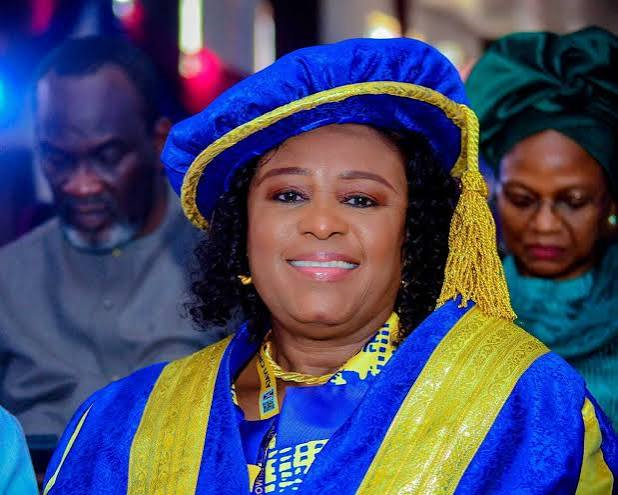
Ajayi Crowther VC Urges NELFUND to Extend Student Loans to Private Universities
Professor Ebunoluwa Oduwole, Vice-Chancellor of Ajayi Crowther University, has challenged the Federal Government to extend the Nigerian Education Loan Fund to students in accredited private universities, arguing that excluding them defeats the scheme’s fundamental purpose of making higher education accessible to all qualified Nigerians. With 4,104 graduands at its 18th convocation, including 116 First Class degrees and 87 doctoral awards, Oduwole says private institutions are shouldering a signi
Comments (0)
Leave a comment
All comments are moderated before publishing. Your email is never published.