
Beyond Corporate Social Responsibility: How the GNA CAA Governance Model Can Turn Corporate Giving and Philanthropy into Lasting Nation-Building
Eight years after its founding, the Great Nigerian Assembly invites businesses, foundations and individual philanthropists to fund verified community needs, track measurable results and build a legacy that endures.
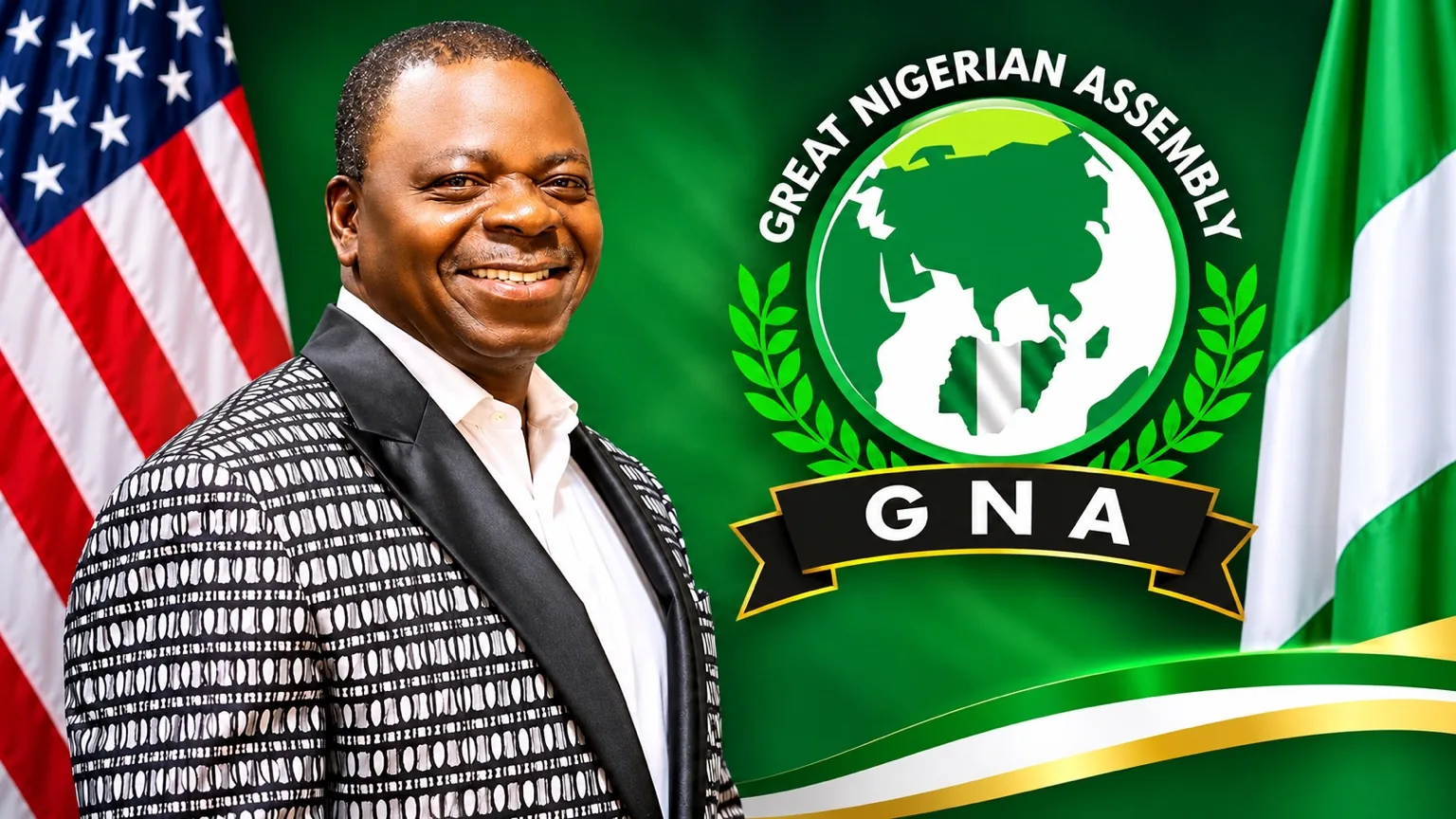
By Dr. Kayode Elusoji
Eight years ago today, on November 10, 2018, a group of Nigerians living abroad came together to establish the Nigerian Diaspora Foundation. We were professionals scattered across different parts of the world, united by a shared frustration: we loved Nigeria, we had skills and goodwill to offer, but we lacked the structure through which we could effectively organise our contributions and turn our collective commitment into lasting national impact.
That vision has since evolved into the Great Nigerian Assembly (GNA), a global professional coalition bringing together Nigerians and friends of Nigeria around a shared commitment to citizen empowerment, accountable governance and national development. Today, GNA has sixteen professional groups, members across several continents, GNA TV & News, GNA Weekly and the GNA Global Pacesetter Awards.
Over these eight years, we have continued to build the structures needed to turn our vision into practical action. One of the most significant developments is the GNA Coverage Area Administrator (CAA) Governance Model, a community-centred framework designed to help Nigerians document development needs, verify conditions on the ground, monitor interventions and build a permanent record of performance.
In Ife Central and Ife East Local Government Areas of Osun State, our first Certified Citizen Reporters (CCRs) have taken their places with the royal blessing of His Imperial Majesty, the Ooni of Ife. More young Nigerians are undergoing training as we pursue our ambition of developing a network of one million Certified Citizen Reporters across Nigeria.
I give thanks to God for these eight years. I appreciate every GNA member, committee member, volunteer and family that has sacrificed to keep this vision alive. Our progress has been made possible by people who chose to contribute their time, expertise, resources and faith in the possibility of a better Nigeria.
As we mark this anniversary, I want to address a group whose contributions are essential to the success of any nation-building effort: our businesses, corporate organisations, foundations and individual philanthropists.
Eight years ago, we decided to stop waiting. Today, we invite every Nigerian business and every generous heart to start building with us.
Generosity Is Not the Problem
Nigeria does not lack generous people or organisations willing to invest in the welfare of others.
Banks, telecommunications companies, manufacturers, oil and gas firms and other corporate organisations commit resources to corporate social responsibility programmes. Wealthy Nigerians build churches, mosques, schools, hospitals and community facilities. Foundations support education, healthcare, entrepreneurship and social welfare. Nigerians at home and abroad regularly assist relatives, neighbours, students and vulnerable communities, often without publicity or recognition.
These contributions matter. They have transformed lives, opened opportunities and provided essential services to people who might otherwise have gone without them.
However, there is a challenge we must confront honestly. Too much generosity remains scattered, insufficiently documented or disconnected from a broader understanding of community needs. Some interventions receive attention at the point of commissioning but lack the monitoring and maintenance required to sustain their benefits. In other cases, resources go to communities that are visible to donors while equally deserving communities remain overlooked.
A company may donate a borehole, organise a handover ceremony and publish photographs of the completed project. Yet, two years later, the borehole may no longer function, and there may be no reliable system for documenting its condition or coordinating repairs.
A philanthropist may construct a classroom block in one community without knowing that a neighbouring community faces a more urgent shortage of classrooms. Another organisation may provide medical equipment without a reliable mechanism for tracking whether the equipment remains functional or is being used effectively.
These examples do not diminish the value of generosity. They demonstrate why generosity needs structure.
The challenge is not simply to give more. It is to ensure that giving responds to verified needs, produces measurable outcomes and continues to benefit communities long after the initial intervention.
This is where the GNA CAA Governance Model offers a practical opportunity.
From Corporate Social Responsibility to Verified Nation-Building
The GNA CAA Governance Model is designed to help businesses and philanthropists move beyond isolated interventions towards coordinated, evidence-based community development.
At its foundation is a simple principle: identify the need, verify the evidence, support the intervention, document the results and preserve the record.
Through the model, Certified Citizen Reporters document the condition of community infrastructure and public services across their wards. These may include roads, schools, healthcare facilities, water schemes, markets and other essential infrastructure.
Conditions are assessed using a six-level grading framework, from Level 0, representing a missing facility, to Level 5, representing a facility that meets the applicable standard.
The reports are subjected to verification through Special Development Committees comprising qualified professionals. The relevant Local Government CAA Committee provides the designated local governance and approval structure.
This process is intended to establish a clearer picture of what communities have, what they lack, what requires rehabilitation and what needs urgent attention.
For businesses and philanthropists, the result is an opportunity to make decisions based on documented community needs rather than assumptions, isolated requests or visibility alone.
A company interested in improving access to clean water can identify communities where water facilities are missing or inadequate. A foundation committed to education can identify schools requiring classrooms, learning materials or rehabilitation. A healthcare philanthropist can identify gaps in primary healthcare infrastructure and direct support towards documented priorities.
The model also provides a framework for recording interventions and monitoring their condition over time. Subject to the model’s verification and reporting processes, donors can have a clearer view of what was provided, where it was delivered and whether the intended benefits are being sustained.
Corporate social responsibility should not end with a photograph. It should contribute to a community that is measurably better and leave a record that demonstrates what was achieved.
How the GNA CAA Governance Model Benefits Businesses
1. Direct Investment Towards Verified Needs
Businesses often receive numerous requests for assistance from communities, employees, traditional institutions and public representatives. Although many of these requests are genuine, organisations may struggle to determine which needs are most urgent and where their resources can produce the greatest impact.
The GNA CAA Governance Model offers a framework for identifying documented needs by location, sector and assessed condition.
Rather than selecting projects solely because they are familiar or highly visible, companies can use verified community information to guide their decisions. This can help them prioritise interventions, coordinate resources and direct assistance towards areas where it is most needed.
2. Protect the Value of Corporate Investments
A completed project is not necessarily a lasting success. A borehole that stops working, a school building that deteriorates or a healthcare facility that lacks essential maintenance may gradually lose the value of the original investment.
Through continuing community documentation, the model seeks to make the condition of infrastructure more visible beyond the commissioning date.
Certified Citizen Reporters can document changes in the condition of facilities, helping to identify problems that require attention. This creates an opportunity for businesses to consider maintenance, rehabilitation and follow-up support as part of their development commitments.
The objective is to encourage a shift from counting projects completed to examining the benefits that those projects continue to deliver.
3. Build Trust in Host Communities
For companies operating in oil-producing regions, agricultural areas, mining communities, industrial centres and rural markets, relationships with host communities are important.
Trust is strengthened when communities can see that development commitments respond to real needs and produce tangible benefits.
A structured, evidence-based approach can help businesses engage communities more meaningfully, understand local priorities and document their contributions. It can also provide a clearer basis for dialogue about what has been achieved and what still requires attention.
The model does not promise that documentation alone will resolve every community relationship challenge. Rather, it provides a practical foundation for more informed engagement, accountability and sustained cooperation.
4. Establish a Verifiable Record of Corporate Performance
Businesses increasingly need to demonstrate the substance of their social and community investments to stakeholders, employees, host communities and the wider public.
Within the GNA CAA Governance Model, companies can register as Non-Statutory Responsible Parties and have verified interventions credited to their Record of Performance.
The record is intended to document contributions and the development outcomes associated with them, providing a more enduring account of corporate participation in community development.
For a business, this offers an opportunity to connect its social commitments to evidence of actual interventions rather than relying exclusively on publicity, announcements or photographs.
The broader objective is to make responsible corporate participation more visible and encourage organisations to sustain their commitments over time.
5. Invest in the Next Generation of Nigerian Talent
Supporting the training of Certified Citizen Reporters is another way businesses can contribute to national development.
CCR training is intended to equip young Nigerians with practical skills in observation, documentation, digital reporting and civic responsibility. These capabilities can complement future learning and career development in areas such as digital journalism, technology, data management, agriculture, healthcare and other professional fields.
Companies can sponsor training for young people in their host communities or areas of operation, helping expand the network of trained citizen reporters while contributing to local capacity development.
For businesses that want their social investments to create opportunities for young Nigerians, this provides a potential pathway to combine community development with skills acquisition.
6. Mobilise Professional Expertise for National Development
Financial contributions are important, but professional knowledge is equally valuable.
Engineers can help assess infrastructure needs. Doctors and other healthcare professionals can contribute to evaluating health service gaps. Accountants can support financial accountability. Architects, educators, environmental specialists and technologists can contribute their expertise to relevant development priorities.
Through Special Development Committees and GNA’s professional groups, qualified professionals can explore opportunities to apply their knowledge to community development.
Businesses can support this effort by encouraging appropriate professional participation, subject to relevant commitments, qualifications and arrangements.
The objective is to make national development a shared responsibility that draws on both financial resources and the knowledge of Nigerians across different fields.
How the Model Benefits Philanthropists
1. Make Your Hometown’s Needs Visible
Many philanthropists feel a strong responsibility to improve the communities from which they come. They may support schools, religious institutions, healthcare facilities, roads and other local projects.
However, personal requests and community relationships do not always provide a complete picture of the needs across an entire Local Government Area.
As Local Governments are onboarded into the GNA CAA Governance Model, ward-level documentation can help philanthropists obtain a broader understanding of local conditions and identify areas requiring attention.
This enables donors to consider not only the projects brought directly to them but also the needs of less visible communities.
A philanthropist who wants to improve education, for example, can use documented information to help determine where assistance may be most beneficial. Another who wants to improve access to clean water can focus on communities where existing facilities are absent, inadequate or in need of rehabilitation.
The intention is to help generosity become more informed, inclusive and responsive.
2. Know What Your Contribution Achieved
Every donor deserves a reasonable opportunity to understand how a contribution was used and what it accomplished.
The GNA CAA Governance Model is designed to support the documentation of interventions, the verification of relevant project information and the recording of outcomes.
For philanthropists, this can provide a clearer basis for reviewing their contributions and understanding the condition of supported facilities after completion.
Where several donors collaborate on a project, a structured record can also help clarify the contributions made and the results achieved.
Transparency should not be treated as a burden imposed on generosity. It is a way of protecting the value of generosity and strengthening confidence between donors, implementing partners and the communities they serve.
3. Build a Legacy That Outlives You
Many people want their lives to be remembered not merely for the wealth they accumulated but for the positive difference they made.
A school that continues to educate children, a healthcare facility that serves families or a water scheme that provides reliable access to clean water can become a lasting contribution to community development.
The GNA CAA Governance Model seeks to preserve verified contributions through the Record of Performance, creating a documented history of interventions and their place in community development.
For philanthropists, this offers an opportunity to build a legacy supported by evidence. Their children and grandchildren can have a clearer account of the projects their families supported and the communities they helped.
A meaningful legacy is not measured only by the amount given. It is also measured by the lives improved, the opportunities created and the benefits that endure.
4. Achieve More Through Collective Giving
Some community needs are too extensive for one individual or organisation to address alone.
Rehabilitating a major road, improving several healthcare facilities or expanding access to water across multiple wards may require resources, technical expertise and coordination beyond the capacity of a single donor.
The model provides a framework through which philanthropists can explore partnerships with businesses, diaspora associations, professional groups, public institutions and development partners.
By working together around verified needs, contributors can coordinate their efforts, reduce unnecessary duplication and consider projects with broader community impact.
The goal is not to remove the personal character of philanthropy. It is to help individual generosity achieve more when combined with the resources and expertise of others.
Recognising Those Who Invest in Nigeria
At the Great Nigerian Assembly, we believe recognition should follow demonstrated performance.
The GNA Global Pacesetter Awards provide a platform for acknowledging individuals and organisations whose contributions reflect leadership, commitment and positive impact.
At the 2025 GNA Global Pacesetter Awards, we named Alhaji Aliko Dangote our Man of the Year in recognition of his significant investment in Nigeria. His example illustrates the potential of Nigerian enterprise and capital to contribute to national development.
However, nation-building is not reserved for billionaires or major corporations.
A local business that equips a healthcare facility, a philanthropist who restores a school, a professional who mentors a young Certified Citizen Reporter or a family that supports a community water project can make a meaningful difference.
What matters is not the size of the contribution alone but the value it creates and the benefits it delivers.
Through the Record of Performance and the Local Government Pacesetter Committees, the GNA CAA Governance Model seeks to make verified contributions more visible and encourage responsible participation at different levels of society.
Recognition, in this context, should do more than celebrate past achievements. It should encourage others to participate and demonstrate that every meaningful contribution to community development matters.
How Businesses and Philanthropists Can Get Involved
The eighth anniversary of the Great Nigerian Assembly offers businesses, foundations, philanthropists and other well-meaning Nigerians an opportunity to become part of a more structured approach to community development.
There are several practical ways to participate.
1. Register as a Non-Statutory Responsible Party.
Businesses, foundations and eligible individual contributors can explore registration at:
https://gnacaa.com/get-involved/rp-register
This provides a pathway for participating in the model and having eligible, verified interventions credited to a Record of Performance.
2. Adopt a Ward, a Local Government or a Development Sector.
Identify the communities or sectors that align with your organisation’s mission or philanthropic priorities. Support can be directed towards verified needs in education, healthcare, water, roads and other areas of community development.
3. Sponsor Certified Citizen Reporter Training.
Support the training of young Nigerians in your host communities, hometown or areas of operation. This can help strengthen local documentation capacity while creating opportunities for skills development.
4. Support Local Government Onboarding.
Contribute towards efforts to onboard more Local Government Areas into the model so their communities can document needs, establish evidence of local conditions and become more visible to potential development partners.
5. Support the GNA CAA Programme.
Individuals and organisations interested in supporting the broader programme can visit:
https://gnacaa.com/support-the-program
6. Become Part of the Great Nigerian Assembly.
Professionals and others who share GNA’s vision can explore membership and opportunities to contribute their knowledge, experience and resources at:
Every contribution should be approached with clear expectations, appropriate verification and an understanding of the intended outcomes. The purpose is to build partnerships that produce meaningful and sustainable benefits for communities.
Eight Years On, the Journey Continues
Over the past seven days, I have written to our communities, political office holders, Nigerians in the diaspora, State Governors and Local Governments, the Federal Government, international development partners, and now our businesses and philanthropists.
Each conversation has reinforced one central message: Nigeria cannot be built by any one group acting alone.
Communities must identify and communicate their needs. Citizens must participate in documenting and monitoring development. Political leaders and public institutions must fulfil their responsibilities. International development partners must be able to identify genuine priorities and understand the results of their interventions. Businesses and philanthropists must be able to direct their resources towards verified needs and assess the benefits they help create.
When these contributions are connected through evidence, structure and shared responsibility, the possibilities for national development become greater.
That is the vision behind the GNA CAA Governance Model.
It is also central to my forthcoming book, Stop Waiting, Start Building: A Citizen’s Blueprint for Nigeria and the Rise of the Fourth Tier.
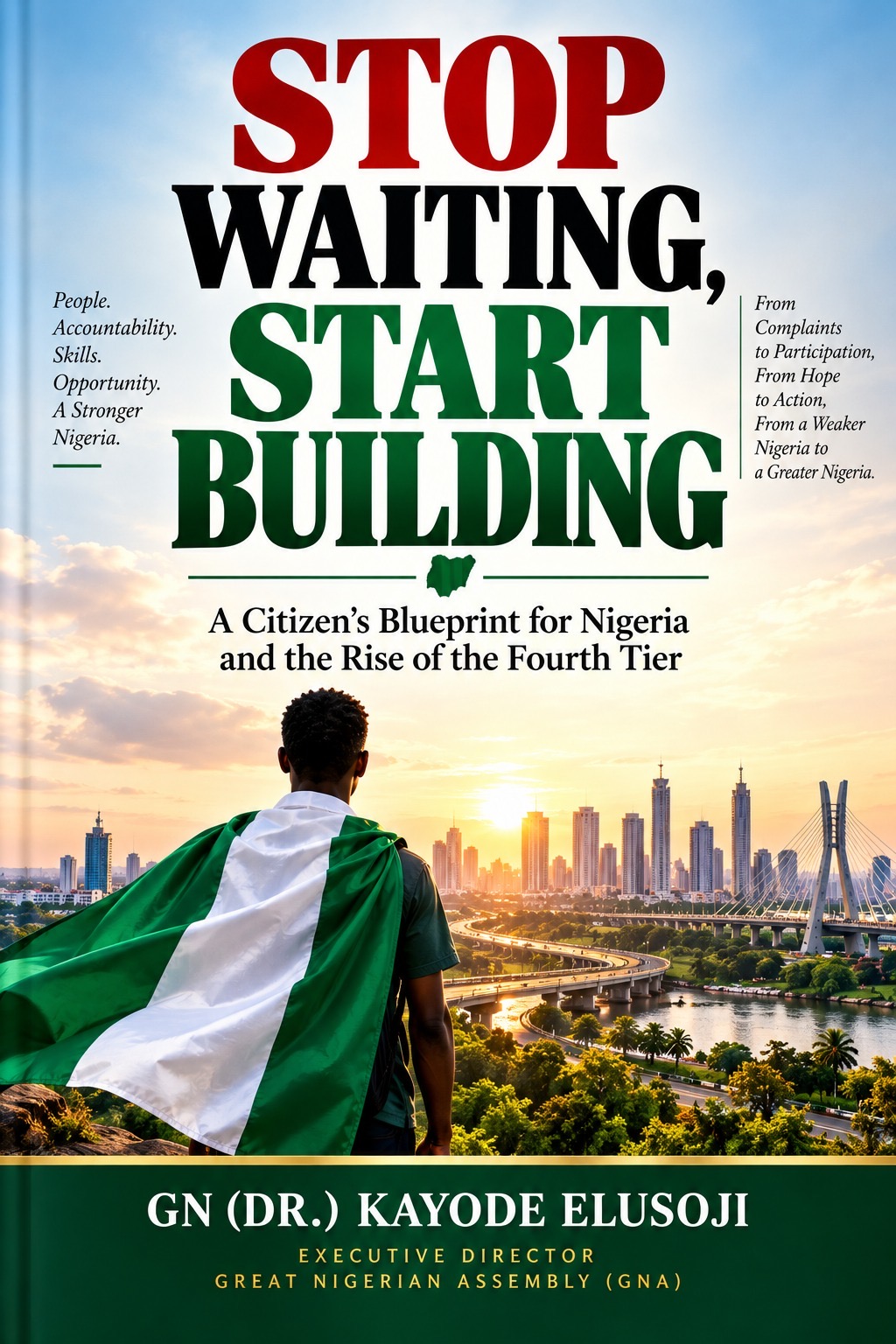 Cover of Dr. Kayode Elusoji’s forthcoming book, Stop Waiting, Start Building: A Citizen’s Blueprint for Nigeria and the Rise of the Fourth Tier.
In the book, I explore the idea of organised citizens as a Fourth Tier standing alongside the federal, state and local governments. This concept emphasises the role of structured citizen participation in documenting community needs, supporting accountability and helping development efforts respond more effectively to realities on the ground.
Businesses and philanthropists are important pillars of this vision. They possess resources, expertise, networks and the capacity to support interventions that improve lives. When their contributions are guided by verified needs and connected to a system for documenting results, they can become part of a broader and more coordinated effort to build the nation.
The purpose is not to replace government or diminish the responsibilities of public institutions. It is to encourage a stronger partnership between citizens, businesses, philanthropists and government, with community evidence helping to guide decisions and measure progress.
As we celebrate eight years of the Great Nigerian Assembly, we recognise how far the journey has taken us and how much work remains.
Our anniversary anthem expresses the spirit of this mission: we have the people, we have the skills, we have the resources and we have the will.
The challenge is to bring these strengths together and direct them towards the development Nigeria needs.
Who will build Nigeria?
The answer has always been the same: you and I.
A New Chapter of Giving, Building and Lasting Impact
To every business leader, thank you for the investments you have made in Nigeria and its people. To every philanthropist, thank you for the lives you have touched, the opportunities you have created and the communities you have supported. To every foundation, professional association and diaspora organisation working to improve the country, your contribution matters.
Our invitation is to take the next step together.
Let us move beyond counting donations to documenting outcomes. Let us move beyond commissioning projects to sustaining their benefits. Let us move beyond isolated acts of generosity to coordinated efforts that respond to verified needs. Let us build a culture in which contributions are recognised not merely for what was promised or spent, but for the positive difference they make.
The Great Nigerian Assembly is eight years old, but the vision that brought us together continues to grow. We invite businesses and philanthropists to join us in helping communities become more visible, development investments more accountable and national progress more sustainable.
Be a Great Nigerian. Build your nation. Lift your people. A New Nigeria starts with you.
Thank you for reading this seven-day series. Happy eighth anniversary to every member, supporter and friend of the Great Nigerian Assembly.
The journey continues.
Join GNA. Adopt a Community. Be a Great Nigerian!
Stop Waiting. Start Building. A New Nigeria Starts With YOU!
• GN (Dr.) Kayode Elusoji
Executive Director, Great Nigerian Assembly (GNA)
Chairman, GNA TV & News · GNA Weekly · GNA
Global Pacesetter
Sponsored
Related stories
 News
Senate Donates N100m to Flamingos for Historic World Cup Triumph
The Senate has donated ₦100 million to Nigeria’s U-17 women’s team, the Flamingos, in recognition of their historic victory at the 2026 FIFA U-17 Women’s World Cup.
 News
Cholera Kills Over 3,000 Globally in 2026 – WHO
The World Health Organisation says more than 3,000 people died from cholera globally between January and September 2026, with Nigeria accounting for 467 deaths.
 News
Most Christians Comfortable with Muslim-Muslim Ticket, Says APC Chairman
APC National Chairman Nentawe Yilwatda says most Christians consulted by the party have accepted President Bola Tinubu and Vice-President Kashim Shettima’s Muslim-Muslim ticket ahead of the 2027 general election.
 News
NERC Approves N30bn to Meter Band A, B Electricity Customers
The Nigerian Electricity Regulatory Commission has approved ₦30 billion for the installation of prepaid meters for electricity consumers in Bands A and B, as part of efforts to close the country's metering gap.
Comments (0)
Leave a comment
All comments are moderated before publishing. Your email is never published.