
Benue Unveils Food Security Plan to Boost Output
Benue State has endorsed a five-year Strategic Food Security Plan aimed at improving agricultural productivity, stabilising rural livelihoods and strengthening peace in farming communities affected by insecurity
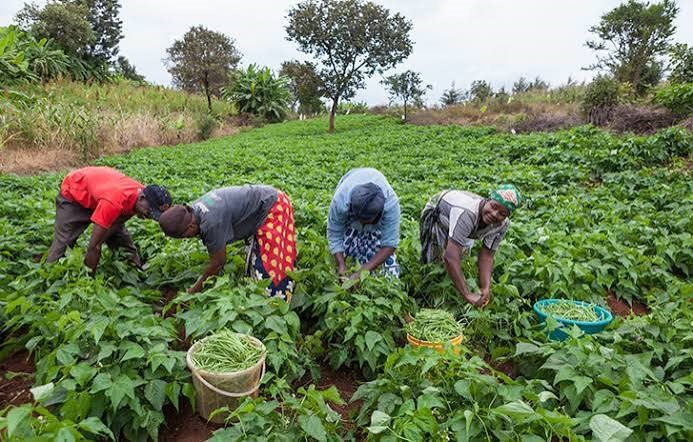
Benue State Government has endorsed a Strategic Food Security Plan designed to improve agricultural productivity and tackle the challenges undermining food production across the state. The plan is part of a broader effort to strengthen food security, rebuild rural economies and support peacebuilding in farming communities that have been affected by insecurity and conflict.
The programme, themed “Enhancing Food Security and Peacebuilding in Nigeria through Strategic Planning Project,” brought together stakeholders from multiple sectors, including farmers, academics and government officials. According to the state government, the idea is to create a clearer framework for agricultural development rather than rely on scattered interventions that do not always work together.
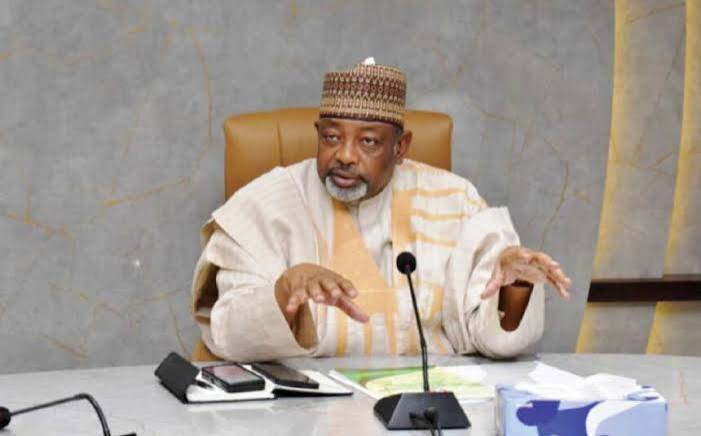
Commissioner for Agriculture and Food Security, Dr Benjamin Ashaver, said Benue had adopted a five-year development plan and remained committed to implementing it. He noted that the state will carry out a mid-term review in 2028 and an end-term evaluation in 2031, suggesting that the strategy is meant to be monitored over time rather than left as a one-off policy announcement. Ashaver was represented at the event by the Technical Adviser to the Governor on Agriculture, Danjuma Adejo.
The plan was presented to the state government by Dr Akange Edward, who said the policy is meant to stabilise the production environment, clarify land governance, rebuild inclusive rural economies and strengthen logistics and market reliability. Those priorities reflect some of the key bottlenecks facing Benue farmers, including land disputes, weak transport systems, insecurity and unpredictable market access.
Benue is one of Nigeria’s most important agricultural states, often referred to as the country’s food basket. Yet insecurity, farmer-herder conflict, climate stress and weak rural infrastructure have repeatedly disrupted production. That makes food security in the state not just an agricultural issue but also a political, social and peacebuilding challenge.
The strategic plan therefore takes a multi-sectoral approach. It is not limited to boosting crop yields, but also addresses the broader conditions needed for farming communities to thrive. These include clearer land governance, stronger local supply chains, more reliable transport and market systems, and mechanisms for reducing conflict in rural areas.
That approach is consistent with earlier food and nutrition planning efforts in the state. Benue has already developed a Multi-Sectoral Plan of Action for Food and Nutrition that covers six priority result areas, 22 strategic objectives and 115 activities over a four-year period from 2025 to 2028. The existence of that earlier framework shows that the state has been trying to organise its food and nutrition agenda around longer-term planning rather than crisis response alone.
The new food security plan also fits into ongoing agricultural initiatives in the state. In January 2026, Benue began piloting a State Strategic Food Security Plan in three local government areas — Agatu, Logo and Gwer-West — with support from the Nigeria Food Security Project and the SPRiNG programme. That pilot was designed to test integrated approaches to food security, climate resilience and peacebuilding before scaling up to the wider state.
Another important component of Benue’s food strategy is storage. The state government has also announced plans to establish a grain reserve system with storage facilities across all 23 local government areas to reduce post-harvest losses and stabilise prices. In a food-producing state where bumper harvests can still be wasted because of poor storage, such infrastructure could significantly improve the efficiency of the agricultural value chain.
These plans matter because food security is not simply about producing more crops. It is about making sure food can be safely stored, transported, sold and accessed by households at reasonable prices. If farmers cannot move produce to market or keep it from spoiling, higher output alone will not solve hunger or raise incomes.
Benue’s strategy also sits within a wider national conversation about agricultural transformation and post-harvest management. Nigeria’s federal agrifood strategy has already set a target of cutting post-harvest losses by 50 per cent, while state-level policies like Benue’s are expected to support that goal through storage, logistics and better planning. Together, these efforts show that food security policy is becoming more systematic and more data-driven.
For farmers, the promise of the new plan lies in more predictable conditions: better access to land, safer farming communities, stronger market access and less wastage after harvest. If Benue can deliver on those fronts, it could improve both agricultural output and rural livelihoods in a state that remains central to Nigeria’s food supply.
The challenge now is implementation. Strategic plans can set direction, but their impact depends on funding, coordination and political follow-through. Benue has now laid out a framework; the real test will be how effectively it turns that framework into higher production, fewer losses and more stable farming communities.
Sponsored

Related stories
 Agriculture
Babalola’s Farmer Support Hits N98m
Legal icon Aare Afe Babalola has disbursed N11.2 million to 81 outstanding farmers across Ekiti State's 16 local government areas, bringing total awards under his annual agricultural scheme since 2015 to N98 million.
 Agriculture
FG Launches African Swine Fever Control Campaign in Southwest
The Federal Government has launched a major African Swine Fever control and biosecurity campaign at the Oke-Aro Pig Farm Estate, distributing protective kits to farmers and pledging comprehensive training to prevent future outbreaks. The intervention by the Livestock Productivity and Resilience Support Project (L-PRES) targets one of Nigeria's largest pig production clusters, which has suffered devastating losses from the highly contagious disease in the past.
 Agriculture
Kyari: More Farmland Won’t Feed 400 Million Nigerians
Agriculture Minister Abubakar Kyari says Nigeria must treat agricultural extension as critical infrastructure, disclosing that over 100,000 farmers already receive weekly digital advisories as the country's population heads toward 400 million by 2050.
 Agriculture
Farmland Expansion Alone Won’t Feed Nigeria
Agriculture Minister Abubakar Kyari says Nigeria must shift to demand-driven, AI-enabled agricultural extension services to boost farm yields, warning that expanding farmland alone can no longer feed the country's growing population.
Comments (0)
Leave a comment
All comments are moderated before publishing. Your email is never published.