
ATBUTH Cuts Dialysis Fee by 70% to ₦12,000 for Kidney Patients
The Abubakar Tafawa Balewa University Teaching Hospital (ATBUTH) in Bauchi has revised its renal dialysis fee to ₦12,000 per session, down from ₦40,000—a 70 per cent reduction driven by the Federal Ministry of Health’s continued provision of essential consumables. With over 897 patients already benefiting, the intervention offers a critical reprieve for kidney disease patients across the Northeast, but it also raises questions about sustainability and the broader reach of Nigeria’s subsidised di
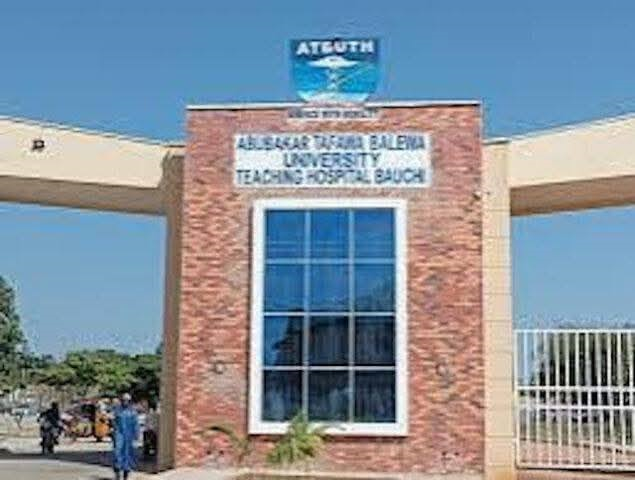
Abubakar Tafawa Balewa University Teaching Hospital (ATBUTH) in Bauchi has announced a landmark reduction in the cost of renal dialysis, revising the fee to ₦12,000 per session—a 70 per cent cut from the previous ₦40,000—following the continued provision of essential dialysis consumables by the Federal Ministry of Health and Social Welfare.
The announcement, contained in a statement by the Head of Public Relations and Protocol Unit, Usman Abdullahi Koli, and quoted by Globe FM Bauchi, marks a significant intervention in a region where the burden of kidney disease weighs heavily on patients and families already grappling with economic hardship. The revision was announced by the Chief Medical Director of ATBUTH, Professor Yusuf Jibrin Bara, who commended the Federal Ministry of Health and Social Welfare for its support, describing the provision of dialysis consumables as a major contribution to improving access to specialised renal care.
The fee reduction is not an isolated gesture. It forms part of the Federal Government’s broader subsidised dialysis programme, approved by President Bola Tinubu, which slashed the cost of a single dialysis session from ₦50,000 to ₦12,000—a 76 per cent reduction—across 11 federal tertiary health institutions nationwide. ATBUTH is one of the designated pilot centres, alongside Aminu Kano Teaching Hospital, University of Maiduguri Teaching Hospital, University of Jos Teaching Hospital, National Hospital Abuja, and several others spread across Nigeria’s geo-political zones.
For patients in Bauchi and the wider Northeast, the impact is immediate. According to Healthwise, no fewer than 897 patients from across the northeastern states have already benefited from subsidised kidney dialysis at the approved rate of ₦12,000. The hospital’s management has emphasised that the intervention is designed to reduce the financial burden on patients living with kidney disease and to improve access to regular dialysis treatment—a service that, at ₦40,000 per session, was out of reach for many families.
Professor Bara reaffirmed ATBUTH’s commitment to providing quality healthcare and ensuring that government interventions translate into improved patient welfare. He also expressed appreciation to the Minister of Health and Social Welfare, Muhammad Ali Pate, for the continued support, while acknowledging the contributions of healthcare professionals and support personnel in delivering renal services. The hospital assured patients and the public of its commitment to affordable, quality, and responsible healthcare delivery.
The significance of the fee reduction cannot be overstated. Kidney disease is a chronic, debilitating condition that requires regular dialysis—often multiple sessions per week—to sustain life. In a country where out-of-pocket health expenditure remains the dominant mode of financing, the cost of dialysis has historically pushed families into catastrophic health spending and, in many cases, forced patients to abandon treatment altogether. A reduction from ₦40,000 to ₦12,000 per session transforms dialysis from a luxury into a manageable expense for many households.
However, the intervention also raises critical questions. The subsidy depends on the continued provision of consumables by the Federal Ministry of Health, raising concerns about sustainability if funding or supply chains falter. Reports in October 2026 suggested that patients were already struggling with dialysis bills as the federal subsidy stalled in some facilities, indicating that implementation challenges persist. ATBUTH’s ability to maintain the ₦12,000 rate will depend on the reliability of federal support and the hospital’s own capacity to absorb any shortfalls.
The broader context is one of a health system under strain. The Federal Government’s subsidy scheme is a pilot, initially covering 11 institutions with the promise of expansion. But millions of Nigerians with kidney disease live far from these centres, and the cost of travel, accommodation, and lost income adds another layer of burden. For the programme to achieve its stated goal of expanding access to universal health coverage, it must move beyond a handful of federal hospitals and reach the primary and secondary facilities where most patients first seek care.
For ATBUTH, the fee revision is both a humanitarian intervention and a statement of institutional purpose. The hospital’s leadership has framed it as evidence of what collaboration between government institutions and healthcare facilities can achieve in addressing the cost of specialised medical services. For the 897 patients who have already passed through ATBUTH’s dialysis unit at the subsidised rate, that collaboration has meant the difference between treatment and abandonment, between hope and despair.
The challenge now is to ensure that the ₦12,000 lifeline is not a temporary reprieve but a permanent feature of Nigeria’s healthcare landscape. The Federal Ministry of Health has signalled its commitment to widening the safety net, but commitments must be matched with funding, logistics, and political will. For kidney patients in Bauchi and across the Northeast, the stakes are measured not in policy documents but in the rhythm of dialysis sessions—and in the knowledge that, for now at least, survival is a little more affordable.
Sponsored

Related stories
 Health
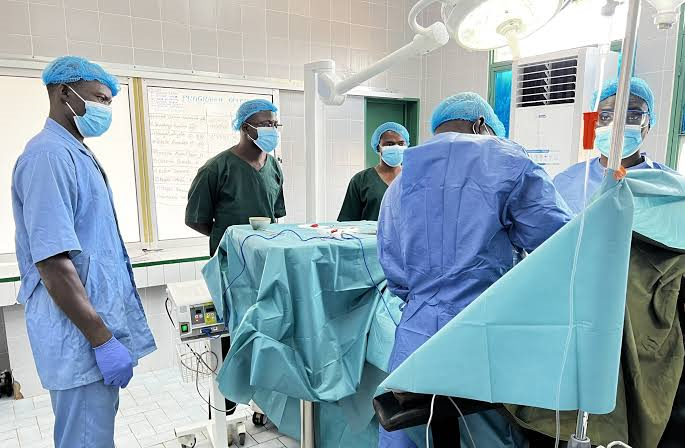
Mangal Foundation Provides 2,800 Free Surgeries, Reaches 10,200 in Katsina
The Dahiru Bara’u Mangal Foundation has expanded its free healthcare intervention in Katsina to cover fibroid, appendicitis, hernia and hydrocele surgeries for 2,800 beneficiaries, bringing the total number of people reached in 2026 alone to over 10,200. Backed entirely by the foundation’s founder, the outreach is a striking example of private philanthropy filling gaps the state’s health system has struggled to close.
 Health
Abia Records 60% Drop in Maternal Deaths Under Otti
Abia State has recorded a stunning 60 per cent reduction in maternal mortality between 2024 and 2026, emerging as the state with the second-lowest rate nationwide. Behind the statistic lies a relentless grind: 190 renovated primary healthcare centres, 123 functionalised clinics, solar power for rural facilities, and a nursing college expansion that signals the Otti administration is treating maternal survival as an infrastructure project—not a slogan.
 Health
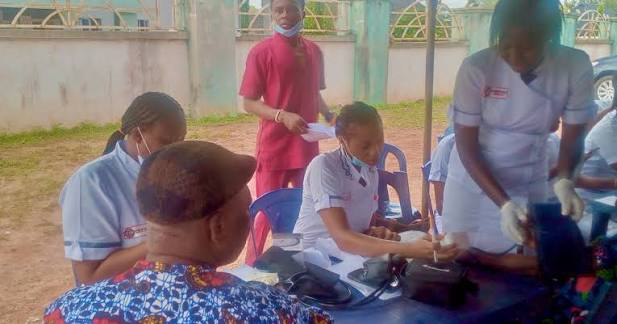
Ebonyi Eye Care Blitz: 400 Free Cataract Surgeries Begin at AE-FUTHA in Landmark Humanitarian Push
A major humanitarian intervention is underway in Abakaliki as AE-FUTHA, the Ebonyi State Government, and Saudi-backed Al-Basar International Foundation launch free cataract surgeries targeting hundreds of indigent patients. With advanced phacoemulsification technology and over 600 already screened, the programme offers a lifeline to those facing preventable blindness.
 Health
Ebola: NCDC Identifies 62 Contacts, Extends Monitoring to November 13
The Nigeria Centre for Disease Control and Prevention has identified 62 individuals who had contact with confirmed Ebola cases and is monitoring them until November 13, 2026. With two healthcare workers among the confirmed cases and the Democratic Republic of Congo's outbreak continuing to spread, Nigeria remains on high alert, intensifying surveillance at points of entry and urging citizens to report symptoms and travel history promptly.
Comments (0)
Leave a comment
All comments are moderated before publishing. Your email is never published.