
ASUU Threatens Fresh Industrial Action Over Unresolved 2009 FGN Agreement and IPPIS Autonomy
ASUU has issued a definitive fourteen-day ultimatum to the Federal Government, threatening a total shutdown of public universities over the state's persistent failure to honour the 2009 infrastructure agreements and grant financial payroll autonomy via the eradication of the IPPIS platform.

The academic landscape across Nigeria's public university system faces yet another severe existential crisis as the Academic Staff Union of Universities (ASUU) has officially put the Federal Government on a strict, time-bound strike notice. Speaking during a heavily attended press conference at the union’s national headquarters in Abuja following a grueling weekend session of their National Executive Council, ASUU National President Professor Emmanuel Osodeke launched a scathing critique against the Ministry of Education and the Office of the Accountant-General of the Federation. The union leader explicitly accused the political establishment of displaying deliberate insincerity, systemic neglect, and a complete lack of political will to decisively address the deep fiscal rot eating away at the foundations of public tertiary institutions nationwide.
At the absolute heart of this brewing industrial warfare is the long-delayed implementation of the core components of the renegotiated 2009 FGN-ASUU Agreement, a document that has remained a volatile battleground between academic scholars and state authorities for nearly two decades. Despite an endless series of high-level consultation meetings, memorandum of understanding signings, and explicit legislative promises of budgetary adjustments, crucial systemic issues remain completely unaddressed. These include the comprehensive upward review of lecturers' stagnated salary structures, the immediate release of the heavily backlogged revitalization funds meant to rehabilitate rapidly decaying campus lecture theatres and student hostels, and the definitive retirement of the controversial Integrated Personnel and Payroll Information System (IPPIS).
ASUU fiercely maintains that the IPPIS architecture fundamentally violates the statutory autonomy of university governing councils, introducing gross administrative irregularities where lecturers are routinely subjected to arbitrary salary deductions, missing allowances, and unprovoked payment omissions. The union is demanding a total migration to their domestically engineered alternative, the University Transparency and Accountability Solution (UTAS), which they argue respects the unique operational rhythm of academic personnel. With local chapters already holding emergency congresses across major campuses to vote on strike mandates, the academic union warned that if the federal authorities fail to demonstrate tangible, verifiable progress within the next fortnight, the entire public university ecosystem will be completely shut down, leaving millions of students stranded once again.
Sponsored

Related stories
 Tech & Education
Bamidele Unveils N200m Renovated Science College
Senate Leader Opeyemi Bamidele has commissioned the renovated Government Science College, Iyin-Ekiti, personally funded at over N200 million, donating buses to the school and nearby FUTESI while promising a second phase of upgrades.
 Tech & Education
Abia Students Crowned Global Debate Champions
Students from public schools in Abia State, representing Nigeria, have emerged overall champions at the 2026 International Schools Debate Championship in Doha, Qatar, winning four major trophies and 12 laurels after defeating teams from Jordan, India, Qatar, the Philippines, Kenya and others. The historic victory has been hailed as proof that Governor Alex Otti's education reforms are producing world-class scholars.
 Tech & Education
WAEC Appoints Suleiman Kum as New Head of Nigeria National Office
The West African Examinations Council has appointed 56-year-old Suleiman Danlami Kum as the new Head of the Nigeria National Office, succeeding Dr Amos Josiah Dangut, who has assumed office as the council’s Registrar and Chief Executive Officer. A seasoned test developer, administrator and executive with 28 years of service, Kum is expected to drive technological innovation and examination security across Nigeria’s foremost examinations body.
 Tech & Education
Emmanuel College ’88 Set Renovates Classrooms, Pays Exam Fees
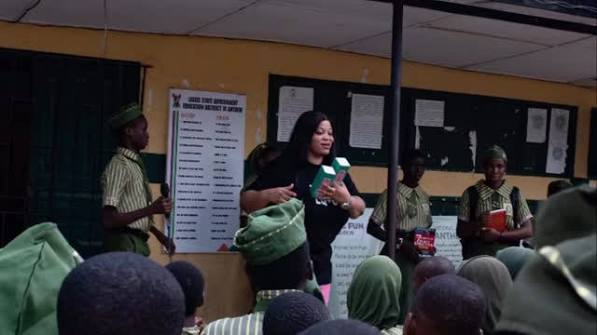
The Progressives of the Unique 1988 Set of Emmanuel College Owerri have unveiled a renovated five-classroom block and paid NECO and WAEC fees for financially disadvantaged students at their alma mater.
Comments (0)
Leave a comment
All comments are moderated before publishing. Your email is never published.