
ASUU Authorises 20 Universities to Begin Strike Over Unresolved Agreements with FG
The Academic Staff Union of Universities (ASUU) has directed 20 universities to begin an indefinite strike following the Federal Government’s failure to fully implement the 2023 agreement.
The Academic Staff Union of Universities (ASUU) has formally authorised industrial action in 20 Nigerian universities following the failure of the Federal Government to fully implement the 2023 Memorandum of Understanding (MoU) signed with the union. The decision, which was reached after an emergency National Executive Council (NEC) meeting, signals a renewed wave of disruption in Nigeria’s public university system and has sparked fresh anxiety among students, parents, and education stakeholders nationwide.
In a statement issued on Monday, July 7, 2026, ASUU President, Professor Emmanuel Osodeke, said the union had exercised “maximum restraint” for several months while waiting for the government to honour agreements on salary arrears, earned academic allowances (EAA), revitalisation funds for universities, and the adoption of the University Transparency and Accountability Solution (UTAS) payroll platform. According to the union, the Federal Government has only partially fulfilled its commitments, leaving many lecturers owed several months of salaries and allowances.
“After exhaustive dialogue and repeated warnings, our union has reluctantly authorised our branches in 20 universities to commence a full strike with immediate effect,” Osodeke stated. “This is not a decision we take lightly. It is a painful but necessary step to protect the future of public university education in Nigeria.”
The affected institutions include major universities across the six geopolitical zones, such as the University of Ibadan, Ahmadu Bello University Zaria, University of Nigeria Nsukka, Obafemi Awolowo University Ile-Ife, University of Lagos, and Bayero University Kano, among others. ASUU said the strike would be “comprehensive and indefinite” until the government shows concrete commitment to resolving all outstanding issues.
The Federal Ministry of Education has described the strike as “avoidable and premature,” insisting that significant progress had been made in implementing the 2023 agreement. A senior ministry official, who spoke on condition of anonymity, said the government had released over ₦200 billion for earned allowances and university revitalisation in the past 18 months. The official appealed to ASUU to return to the negotiation table rather than disrupt academic activities.
However, ASUU has rejected the government’s claims, accusing officials of engaging in “selective implementation” and deliberately delaying the adoption of UTAS, which the union insists is superior to the Integrated Payroll and Personnel Information System (IPPIS) currently in use.
The announcement has triggered immediate panic among students, especially those preparing for examinations or project defences. The National Association of Nigerian Students (NANS) described the development as “devastating” and urged both the government and ASUU to prioritise dialogue to prevent another prolonged shutdown of universities.
Parents have also expressed frustration. Many families who have already struggled with high tuition fees, rising living costs, and previous strikes are worried that another industrial action could further delay their children’s graduation and increase the financial burden on households.
Education experts warn that repeated strikes are having a devastating long-term effect on Nigeria’s human capital development. Nigeria already has one of the highest numbers of out-of-school children in the world, and disruptions at the university level compound the problem by creating a backlog of unemployable or under-skilled graduates.
ASUU strikes have become a recurring feature of Nigeria’s university system since the 1980s. The union has gone on strike over 20 times in the last three decades, with some actions lasting for months. The 2022 strike, which lasted eight months, remains one of the longest in the union’s history and caused significant damage to the academic calendar.
Many observers believe the current impasse reflects deeper systemic problems, including chronic underfunding of universities, poor remuneration for lecturers, and the federal government’s reluctance to fully implement previous agreements. Successive administrations have often signed agreements during periods of crisis only to abandon them once industrial actions are suspended.
Stakeholders are urging both ASUU and the Federal Government to return to the negotiating table with sincerity. The Nigerian Academy of Science and several vice chancellors have called for the establishment of a permanent joint committee with clear timelines and enforcement mechanisms to prevent future disruptions.
Some education reform advocates have also suggested that a fundamental restructuring of university funding , including greater autonomy for institutions and increased private sector involvement ,may be necessary to break the cycle of strikes that has plagued Nigerian tertiary education for decades.
As the affected universities prepare to shut down academic activities, millions of students are once again left in uncertainty. For many, this latest strike is not just an industrial dispute , it is another painful reminder of a broken education system that continues to fail its most important stakeholders: the students.
The coming days will determine whether the Federal Government and ASUU can find common ground before the strike spreads further and causes even greater damage to Nigeria’s already struggling university system.
Sponsored

Related stories
 Tech & Education
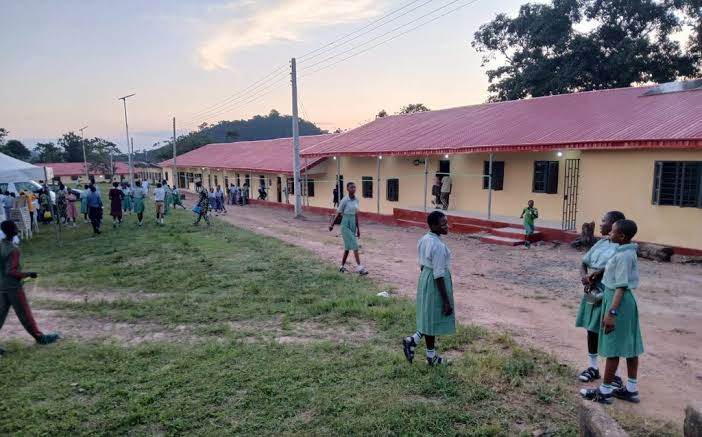
Bamidele Unveils N200m Renovated Science College
Senate Leader Opeyemi Bamidele has commissioned the renovated Government Science College, Iyin-Ekiti, personally funded at over N200 million, donating buses to the school and nearby FUTESI while promising a second phase of upgrades.
 Tech & Education
Abia Students Crowned Global Debate Champions
Students from public schools in Abia State, representing Nigeria, have emerged overall champions at the 2026 International Schools Debate Championship in Doha, Qatar, winning four major trophies and 12 laurels after defeating teams from Jordan, India, Qatar, the Philippines, Kenya and others. The historic victory has been hailed as proof that Governor Alex Otti's education reforms are producing world-class scholars.
 Tech & Education
WAEC Appoints Suleiman Kum as New Head of Nigeria National Office
The West African Examinations Council has appointed 56-year-old Suleiman Danlami Kum as the new Head of the Nigeria National Office, succeeding Dr Amos Josiah Dangut, who has assumed office as the council’s Registrar and Chief Executive Officer. A seasoned test developer, administrator and executive with 28 years of service, Kum is expected to drive technological innovation and examination security across Nigeria’s foremost examinations body.
 Tech & Education
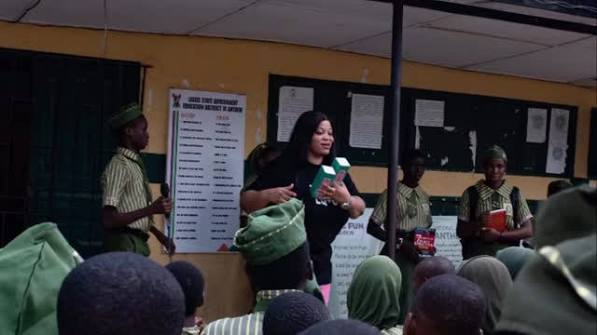
Emmanuel College ’88 Set Renovates Classrooms, Pays Exam Fees
The Progressives of the Unique 1988 Set of Emmanuel College Owerri have unveiled a renovated five-classroom block and paid NECO and WAEC fees for financially disadvantaged students at their alma mater.
Comments (0)
Leave a comment
All comments are moderated before publishing. Your email is never published.