
Alausa: 1 Million Out-of-School Children Returned to Class in 20 Months, Orders VCs to Diversify Funding
Education Minister Tunji Alausa says over one million out-of-school children have returned to classrooms in 20 months and 6.7 million girls have benefited from access interventions, while directing university vice-chancellors to urgently build alternative funding sources beyond government allocation.
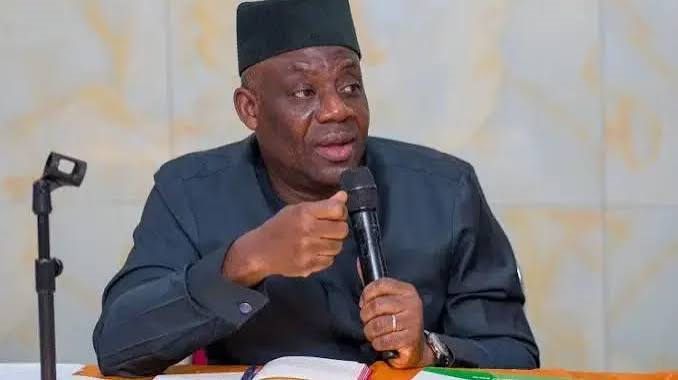
The Federal Government says it has returned more than one million out-of-school children to the classroom over the past 20 months, as part of ongoing efforts to overhaul Nigeria's education sector.
Minister of Education, Dr Tunji Alausa, disclosed the figure in Abuja while receiving the newly appointed United Nations Educational, Scientific and Cultural Organisation (UNESCO) Country Representative to Nigeria, Professor Isaiah Barreto Da Rosa, who was on a courtesy visit to the ministry.
While receiving the UNESCO delegation, Alausa also revealed that nearly 6.7 million girls have benefited from various government interventions designed to improve access to education and keep them in school, describing the achievements as part of the administration's broader push to close access gaps and improve learning quality nationwide. However, he stressed that government could not afford to concentrate its education interventions on only one gender, calling for increased attention to the educational needs of boys alongside continued progress on girl-child education. "We must sustain the gains we have made with the girl-child, but we also need to pay attention to the boy-child," he said, adding that Nigeria's human capital development would only be meaningful if no child was left behind, regardless of gender or background.
Alausa listed the Federal Ministry of Education's six priority areas as Technical and Vocational Education and Training (TVET); Science, Technology, Engineering and Mathematics (STEM); reintegration of out-of-school children; data and digitalisation; girl-child education; and quality assurance. He said government was simultaneously investing in skills development, technology, and teacher training to produce graduates capable of competing in a rapidly changing economy, adding that reliable education data was increasingly being deployed to identify areas of need, target interventions, and measure results.
On teacher development, Alausa welcomed UNESCO's technical support for the ministry's Accelerated Teacher Professional Programme (ATPP), which has a target of training one million in-service teachers, alongside the organisation's continued support in TVET assessment, digital transformation, education for peace, and media and information literacy. He urged UNESCO to align its interventions more closely with Nigeria's own reform priorities, stressing that stronger coordination would help ensure technical assistance translates into concrete results.
In his own remarks, Da Rosa pledged UNESCO's continued support for Nigeria's education transformation programme, describing the organisation as a technical partner ready to provide expertise wherever government requires assistance. He recalled UNESCO's longstanding presence in Nigeria dating back to the 1960s, and commended the ministry's progress in digitising education data, describing accurate data as essential for effective planning and policy implementation. He disclosed that UNESCO-supported programmes had already trained more than 28,000 teachers across different states and reached over 1.7 million students, adding that the organisation's specialised institutes remained available to provide further technical support to Nigeria.
Separately, at the National Advancement Forum 2026 held in Abuja, Alausa charged vice-chancellors of Nigerian public universities to urgently diversify their funding sources and strengthen advancement offices, warning that government allocations alone could not sustain tertiary institutions. He expressed concern that only four out of 68 federal universities were currently making meaningful use of alternative funding sources such as research grants, endowments, alumni giving, philanthropy, and industry partnerships, describing the situation as "unacceptable." "Government funding is not enough. Universities live, function and excel on blended funding," he said.
The minister clarified that the call was not a withdrawal of government support, noting that the Tinubu administration currently funds personnel costs in full, allows universities to retain 75 per cent of internally generated revenue, and continues direct interventions through the Tertiary Education Trust Fund (TETFund). He also recalled that President Tinubu had approved a framework allowing research and endowment funds to be moved out of the Treasury Single Account into commercial banks of choice, to provide greater flexibility and build confidence in managing such resources. "President Bola Ahmed Tinubu has met you beyond halfway. He has given you the leverage and the opportunity to do your jobs well. You must now take advantage of it," Alausa told the vice-chancellors.
To strengthen resource mobilisation, Alausa issued a set of immediate directives: all university Advancement Offices must now report directly to the Vice-Chancellor rather than the Registrar, Directors of Advancement must serve a minimum internal tenure of five years, renewable, to build lasting donor and alumni relationships, and advancement office operations must be treated as a professional job staffed by trained fundraisers who require institutional support and stability to deliver results. He urged universities to develop functional alumni databases and deploy technology to maintain lifelong relationships with graduates both in Nigeria and abroad, describing alumni engagement as a strategic component of institutional advancement.
Alausa announced that the ministry, in collaboration with the Nigerian Higher Education Foundation (NHEF), will develop a comprehensive national framework for the sustainable financing of tertiary institutions, covering endowment governance, accountability, research grants, advancement office structures, alumni giving, industry partnerships, philanthropy incentives, and revenue transparency. All public universities will be progressively onboarded under the framework and expected to build an endowment, establish an effective advancement structure, maintain a functional alumni database, strengthen research funding capacity, and develop partnerships with industry and philanthropists. "The objective is not to replace government funding or depend solely on internally generated revenue, but to establish diversified and resilient financing systems that complement government support and sustain academic excellence," Alausa clarified, warning that institutions failing to diversify their funding base risk limiting their capacity for sustained growth, research, and academic excellence.
Sponsored

Related stories
 Tech & Education
Bamidele Unveils N200m Renovated Science College
Senate Leader Opeyemi Bamidele has commissioned the renovated Government Science College, Iyin-Ekiti, personally funded at over N200 million, donating buses to the school and nearby FUTESI while promising a second phase of upgrades.
 Tech & Education
Abia Students Crowned Global Debate Champions
Students from public schools in Abia State, representing Nigeria, have emerged overall champions at the 2026 International Schools Debate Championship in Doha, Qatar, winning four major trophies and 12 laurels after defeating teams from Jordan, India, Qatar, the Philippines, Kenya and others. The historic victory has been hailed as proof that Governor Alex Otti's education reforms are producing world-class scholars.
 Tech & Education
WAEC Appoints Suleiman Kum as New Head of Nigeria National Office
The West African Examinations Council has appointed 56-year-old Suleiman Danlami Kum as the new Head of the Nigeria National Office, succeeding Dr Amos Josiah Dangut, who has assumed office as the council’s Registrar and Chief Executive Officer. A seasoned test developer, administrator and executive with 28 years of service, Kum is expected to drive technological innovation and examination security across Nigeria’s foremost examinations body.
 Tech & Education
Emmanuel College ’88 Set Renovates Classrooms, Pays Exam Fees
The Progressives of the Unique 1988 Set of Emmanuel College Owerri have unveiled a renovated five-classroom block and paid NECO and WAEC fees for financially disadvantaged students at their alma mater.
Comments (0)
Leave a comment
All comments are moderated before publishing. Your email is never published.