
Advocates Demand Data Revolution for Children With Disabilities in FCT
A coalition of disability advocacy organizations has warned that children with intellectual disabilities are effectively invisible in Nigeria's education data systems, making it impossible to assess whether inclusive education policies are working.
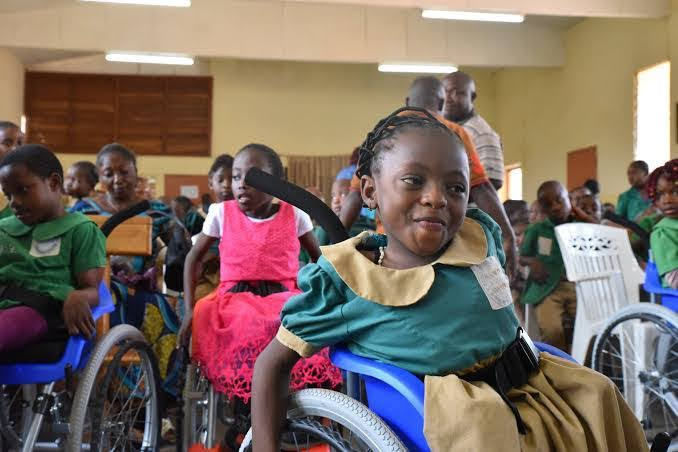
A coalition of disability advocacy organizations has issued a powerful demand for the inclusion of persons with intellectual disabilities in the implementation of educational policies in the Federal Capital Territory, warning that the absence of reliable data has rendered an entire generation of children invisible to the systems designed to serve them.
The Intellectual Disability Cluster of the Right-in-Action, the Engraced Ones Prayer Support and Advocacy Initiative, the Down Syndrome Foundation of Nigeria, and RIA by Maria Autism Foundation, in an interview with LEADERSHIP, called for urgent action to address the systemic data gaps that have left children with intellectual disabilities excluded from education planning, budgeting, infrastructure development, and teacher training.
At the heart of their demand is a fundamental question: How can the government claim its inclusive education policies are working when it does not know how many children with disabilities are enrolled in school, have dropped out, or have never been enrolled at all? Becky Beke-Akpo Selekere, Programme Manager of RIA by Maria Autism Foundation, put it bluntly: "Honestly, it cannot. Any claim that inclusive education policy is working without disaggregated data to support it is not evidence."
Selekere said Nigeria currently lacks a reliable system for determining the educational status of children with intellectual disabilities, a gap that has profound consequences for policy effectiveness and resource allocation. She called on the government to integrate disability-specific questions into existing data collection systems, including the national school census, community health records, primary healthcare registers, and local government enumeration exercises. According to her, community health workers and local government education officers could be trained to identify and document children with developmental and intellectual disabilities during routine community engagements. "The data exists in communities. What is missing is the structured, consistent mechanism to collect and centralise it," she said.
The advocates also called for collaboration between government agencies and organizations working with persons with disabilities to identify children who may not ordinarily be captured through government channels. Selekere outlined a comprehensive framework for a functional disability-in-education data system, which she said should capture information on disability type, age, gender, and location at the school, community, state, and federal levels. She recommended that public schools include disability-disaggregated enrolment and attendance information in annual school census reports, while local government education authorities and community health workers should document out-of-school children with disabilities. The Universal Basic Education Commission and the Federal Ministry of Education should coordinate the collation and publication of the data, while the National Commission for Persons with Disabilities should provide oversight. She also advocated the involvement of organizations of persons with disabilities and civil society groups in validating the data.
The absence of such a system, Selekere warned, has devastating implications that extend far beyond statistics. "When a child is not counted, the system is not simply unaware of them. It is actively organised around their absence," she said. She added that without accurate data, children with intellectual disabilities could remain excluded from policies and interventions designed to improve access to education, perpetuating a cycle of marginalization that begins in childhood and extends throughout their lives.
Selekere's most powerful statement captured the existential stakes of the data gap: "Disaggregated data by disability type, age, gender and location is not a technical detail. It is the difference between a child existing in the eyes of the state and not existing at all." This declaration underscores a fundamental truth about governance and inclusion: those who are not counted are not seen, and those who are not seen are not served.
The call from these organizations comes at a critical moment for Nigeria's education system. While the federal government has made significant commitments to inclusive education, including the implementation of the National Policy on Inclusive Education and the establishment of the National Commission for Persons with Disabilities, the absence of reliable, disaggregated data has made it impossible to measure progress or hold duty-bearers accountable. Without data, the rhetoric of inclusion remains exactly that—rhetoric, disconnected from the lived realities of children and families struggling to access education.
The advocates' demand is both urgent and achievable. The infrastructure for data collection already exists in the form of school censuses, health registers, and community enumeration exercises. What is needed is the political will to integrate disability-specific questions into these systems and the commitment to train frontline workers to identify and document children who have been systematically overlooked. The coalition's call represents a critical first step toward building an education system that truly leaves no child behind, ensuring that every child,regardless of disability, age, gender, or location,is counted, seen, and served.
Sponsored

Related stories
 Tech & Education
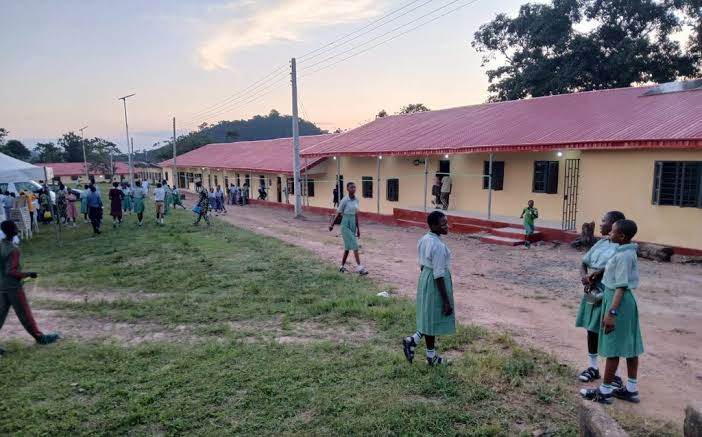
Bamidele Unveils N200m Renovated Science College
Senate Leader Opeyemi Bamidele has commissioned the renovated Government Science College, Iyin-Ekiti, personally funded at over N200 million, donating buses to the school and nearby FUTESI while promising a second phase of upgrades.
 Tech & Education
Abia Students Crowned Global Debate Champions
Students from public schools in Abia State, representing Nigeria, have emerged overall champions at the 2026 International Schools Debate Championship in Doha, Qatar, winning four major trophies and 12 laurels after defeating teams from Jordan, India, Qatar, the Philippines, Kenya and others. The historic victory has been hailed as proof that Governor Alex Otti's education reforms are producing world-class scholars.
 Tech & Education
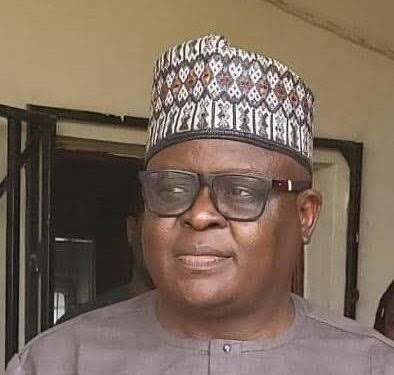
WAEC Appoints Suleiman Kum as New Head of Nigeria National Office
The West African Examinations Council has appointed 56-year-old Suleiman Danlami Kum as the new Head of the Nigeria National Office, succeeding Dr Amos Josiah Dangut, who has assumed office as the council’s Registrar and Chief Executive Officer. A seasoned test developer, administrator and executive with 28 years of service, Kum is expected to drive technological innovation and examination security across Nigeria’s foremost examinations body.
 Tech & Education
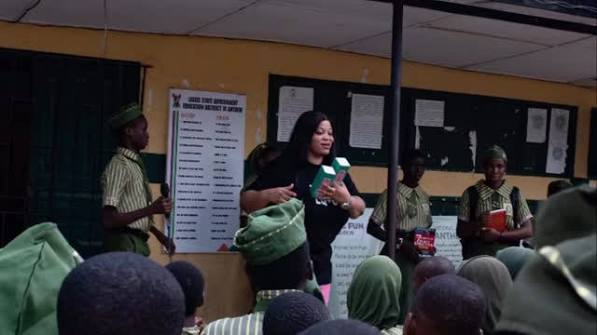
Emmanuel College ’88 Set Renovates Classrooms, Pays Exam Fees
The Progressives of the Unique 1988 Set of Emmanuel College Owerri have unveiled a renovated five-classroom block and paid NECO and WAEC fees for financially disadvantaged students at their alma mater.
Comments (0)
Leave a comment
All comments are moderated before publishing. Your email is never published.