
71 Federal Hospitals to Pay Allied Health Workers N50,000 Allowance
The Federal Government has approved a N50,000 annual ward coat allowance for allied health professionals in 71 federal tertiary health institutions, with payment set to begin from June 1, 2026

The Federal Government has approved a N50,000 annual ward coat allowance for allied health workers in 71 federal tertiary health institutions across Nigeria. The approval covers pharmacists, medical laboratory scientists and 17 other categories of allied health professionals, with implementation taking effect from June 1, 2026.
The decision was conveyed in a circular dated July 15, 2026, signed by the Director of Teaching Hospitals, Dr Okpikpi Okpako, on behalf of the Coordinating Minister of Health and Social Welfare, Professor Ali Pate. According to the circular, the allowance was approved by the National Salaries, Incomes and Wages Commission after a formal request from the Nigerian Union of Allied Health Professionals.
The ministry said the union had first written to the government in July 2024 seeking the introduction of a ward coat allowance for its members. That request was later processed through the NSIWC and approved for eligible health professionals working in federal hospitals, medical centres and clinics under ministries, departments and agencies.
Beneficiaries of the new allowance include pharmacists, medical laboratory scientists, medical social workers, optometrists, physiotherapists, dental therapists, radiographers, dietitians, dental technologists, prosthetic technologists, medical physicists, health information officers, audiologists, nutritionists, medical laboratory technologists, EEG and ECG technologists, clinical psychologists, occupational therapists and speech therapists. These groups form a large part of Nigeria’s clinical workforce and support patient care through diagnostics, rehabilitation, pharmaceutical services and specialised therapy
The ministry directed the management of all affected hospitals to begin immediate implementation through the Integrated Personnel and Payroll Information System. Chief Medical Directors and Medical Directors in the listed institutions were instructed to commence payment to all eligible staff from June 1, 2026, in line with the approved template. Officials also told hospital heads to ensure strict compliance with the directive.
However, the approval does not yet cover all federal health institutions. The circular said only 71 institutions are currently authorised to start payment, while another 12 institutions whose staff statistics were recently submitted have been forwarded to the NSIWC for further action. That means the rollout will happen in phases, with some hospitals waiting longer before they can begin payment
The approval is significant because it addresses one of the long-standing welfare demands of allied health professionals, who have argued that they perform frontline clinical duties and should receive recognition comparable to other categories of health workers. Their demand was based on the fact that many of them wear ward coats or other protective attire while working in patient-facing environments and are exposed to occupational risks in the process
For years, the Nigerian Union of Allied Health Professionals has engaged government over remuneration, career progression and conditions of service. The union has consistently maintained that its members are essential to the functioning of hospitals and deserve better welfare treatment. This latest approval therefore represents a concrete response to one of those demands, even if the amount is relatively modest.
The move also comes at a time when Nigeria’s health sector is under pressure from workforce migration. Thousands of doctors, nurses, pharmacists and other health workers have left the country in search of better pay and working conditions abroad, creating staffing gaps in many public hospitals. In that environment, even small welfare improvements can be seen as part of the effort to retain skilled professionals and reduce discontent
Government has in recent times introduced several measures to stabilise the health workforce, including salary reviews, revised allowances, new recruitment and consultations with professional associations. The ward coat allowance fits into that broader pattern of trying to improve morale and reduce the likelihood of industrial action that could disrupt healthcare delivery.
While N50,000 a year is not a large sum, the symbolic value may be just as important as the financial one. It formally recognises allied health professionals as essential frontline workers whose contributions span laboratory testing, radiography, nutrition, rehabilitation, clinical psychology and hospital information management.
For the 71 federal hospitals covered by the approval, the next step is implementation. If carried out smoothly, the allowance could improve staff morale, strengthen government relations with health unions and set a precedent for addressing other unresolved welfare issues in the sector.
Sponsored
Related stories
 Health
Borno Hires 2,000 Health Workers, Still Faces Staff Shortage
Borno State has recruited nearly 2,000 doctors, nurses and other health professionals in two years, but the head of its contributory health agency says manpower gaps persist as demand grows under the state health insurance scheme.
 Health
Lassa Fever Kills 268 in Nigeria as Cases Hit 1,138
Nigeria has recorded 1,138 confirmed Lassa fever cases and 268 deaths across 24 states in 2026, with the case fatality rate rising to 23.6 per cent—significantly higher than the 18.6 per cent recorded during the same period in 2025. The NCDC has identified five states accounting for 88 per cent of all confirmed cases, as it intensifies preparedness efforts ahead of the peak transmission season.
 Health
MSF Calls for Routine Noma Surveillance in Nigeria
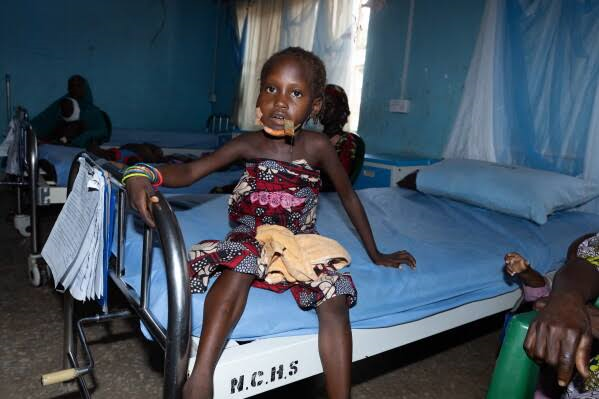
Doctors Without Borders says noma, a fast-moving and often fatal facial infection linked to malnutrition and poverty, remains largely missing from Nigeria's routine child health programmes despite its 2023 recognition as a neglected tropical disease.
 Health
Oyo Rejects Diphtheria Outbreak Claims, Accuses APC
The Oyo State Government has dismissed claims by the Senator Sharafadeen Alli Campaign Organisation that diphtheria has affected 16 local government areas, describing the allegation as false and politically motivated. Commissioner for Health Dr. Oluwaserimi Ajetunmobi confirmed that while suspected cases have been recorded in 10 LGAs, none have been confirmed, and accused the APC campaign group of distorting immunisation data to score political points.
Comments (0)
Leave a comment
All comments are moderated before publishing. Your email is never published.