
500 Women, Youth Trained on Tomato, Okra Production in Ogun State
No fewer than 500 women and youth in Ogun State have been equipped with vegetable production skills through a Federal Government capacity-building programme targeting tomato, okra and telfairia farming.
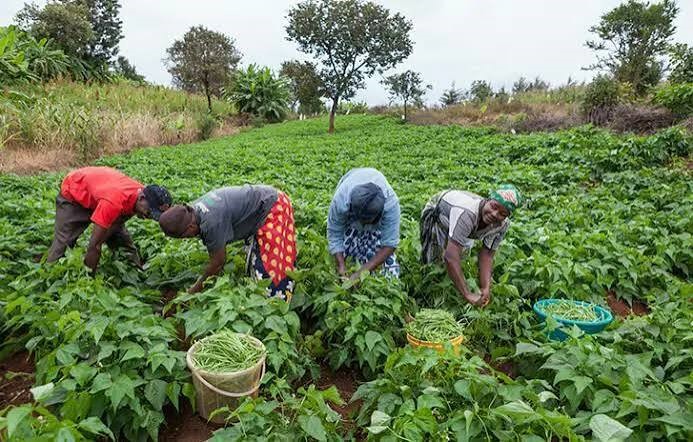
No fewer than 500 women and youth have been empowered with skills in vegetable production across selected communities of Ogun State, as part of a renewed federal push to strengthen local food security and rural livelihoods.
The capacity-building programme was organised by the Federal Government through the Federal Ministry of Agriculture and Food Security, in conjunction with the National Horticultural Research Institute (NIHORT), and ran from July 22 to 25.
The initiative formed part of a broader effort to equip grassroots farmers with modern skills needed to boost productivity and income from horticultural crops. Beyond the classroom sessions, participants were given practical, hands-on support to help them apply what they learned as soon as the training ended.
As part of the programme, participants received starter packs comprising essential farm inputs such as seed planters, harvesting baskets, raincoats and rain boots, materials intended to give the newly trained farmers and youth a head start as they return to their communities to begin or scale up production. They were also trained in improved production techniques for tomato, telfairia and okra, alongside the economics of production, marketing and record-keeping for these crops, equipping them not just to grow the vegetables but to run them as viable small businesses.
The training centred on building the capacity of selected stakeholders in the production of tomato, telfairia and okra, all frontline vegetables produced and consumed widely across the country and considered dietary staples in many Nigerian households.
In his welcome address, the CEO/Executive Director of NIHORT, Professor Muhammed Lawal Attanda, represented by Training Coordinator at Hort Consultancy Ventures Limited, Dr Joel Akinfasoye, said horticulture remains an important avenue for diversifying the economy away from a mono-product base. He described the vegetable sub-sector as one with significant untapped potential for job creation and foreign exchange earnings if properly harnessed by trained hands.
He noted that the selected vegetable crops carry significant nutritional, medicinal and economic value, and are consumed both within and outside Nigeria, positioning them as commodities with strong local and export demand. He added that adequate capacity building was essential for participants to maximise benefits from crop production and contribute meaningfully to food security, employment generation and wealth creation at the community level.
The Executive Director urged participants to make the best use of the training opportunity to build knowledge and skills that would benefit them individually and the nation at large, describing the programme as a "golden opportunity" that should not be taken for granted.
The Chairman of all secretaries in Obafemi-Owode Local Government Area, Ogun State, Mr Ashade Enitan Olakunle, who attended the event, said the programme was designed to improve the production of the selected crops within the local government area. He encouraged the trainees to apply the knowledge gained to boost their welfare and livelihoods, noting that successful implementation could have a ripple effect on food availability and affordability in the area.
Reacting to the training, a participant, Pastor Ibironke Olakanmi, commended the organisers for putting the programme together and said it would help him gain deeper knowledge of the selected crops. Another participant, Mrs Adeosun Deborah, said she hoped to further develop her understanding of tomato, okra and telfairia production through the capacity-building exercise, describing it as a welcome opportunity for personal and economic growth.
Stakeholders say programmes of this nature are critical to Nigeria's broader agricultural transformation agenda, particularly as the country continues to seek ways to reduce food import dependence and create sustainable livelihoods for women and young people in agriculture.
Sponsored

Related stories
 Agriculture
Babalola’s Farmer Support Hits N98m
Legal icon Aare Afe Babalola has disbursed N11.2 million to 81 outstanding farmers across Ekiti State's 16 local government areas, bringing total awards under his annual agricultural scheme since 2015 to N98 million.
 Agriculture
FG Launches African Swine Fever Control Campaign in Southwest
The Federal Government has launched a major African Swine Fever control and biosecurity campaign at the Oke-Aro Pig Farm Estate, distributing protective kits to farmers and pledging comprehensive training to prevent future outbreaks. The intervention by the Livestock Productivity and Resilience Support Project (L-PRES) targets one of Nigeria's largest pig production clusters, which has suffered devastating losses from the highly contagious disease in the past.
 Agriculture
Kyari: More Farmland Won’t Feed 400 Million Nigerians
Agriculture Minister Abubakar Kyari says Nigeria must treat agricultural extension as critical infrastructure, disclosing that over 100,000 farmers already receive weekly digital advisories as the country's population heads toward 400 million by 2050.
 Agriculture
Farmland Expansion Alone Won’t Feed Nigeria
Agriculture Minister Abubakar Kyari says Nigeria must shift to demand-driven, AI-enabled agricultural extension services to boost farm yields, warning that expanding farmland alone can no longer feed the country's growing population.
Comments (0)
Leave a comment
All comments are moderated before publishing. Your email is never published.