
Textile imports surge to N1.1trn in two years, choking local industry
Nigeria’s textile imports rose by 181 per cent to N1.08 trillion in 2025 from N377.47 billion in 2023, as local manufacturers struggle with high production costs, inadequate power supply, foreign exchange pressures and other structural challenges. Industry stakeholders are divided over whether a total import ban is the best way to revive the sector.
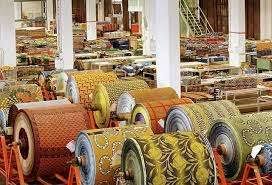
Nigeria’s dependence on imported textile materials has surged, with textile imports rising by 181 per cent in two years to N1.08 trillion in 2025 from N377.47 billion in 2023.
Latest data from the National Bureau of Statistics (NBS) showed that imports rose by 92.4 per cent to N726.18 billion in 2024 before increasing by another 46 per cent in 2025.
The upward trend has continued in 2026, with textile imports reaching N267.7 billion in the first quarter, representing a 153.2 per cent increase from the N70.48 billion recorded in the corresponding period of 2025.
The figures highlight Nigeria’s growing reliance on foreign fabrics amid declining domestic textile manufacturing capacity.
Industry operators have attributed the situation to high production costs, inadequate electricity supply, foreign exchange pressures, poor infrastructure, insecurity and limited access to affordable financing.
In contrast, Nigeria’s textile exports have continued to decline. Exports fell to N16.55 billion in 2025 from N18.76 billion in 2023 and were 55 per cent lower than the N36.98 billion recorded in 2024.
The development has renewed calls for stronger measures to protect local textile manufacturers.
The Senate in June adopted a resolution calling on the Federal Government to impose a total ban on textile imports, with the aim of reviving textile mills along the Kaduna-Kano industrial corridor and restoring domestic manufacturing capacity.
It also urged the government to promote large-scale cotton farming, increase intervention funding through the Bank of Industry and strengthen surveillance to curb textile smuggling.
However, the Manufacturers Association of Nigeria (MAN) cautioned against imposing a blanket import ban without first addressing the structural challenges confronting local manufacturers.
MAN Director-General, Mr Segun Ajayi-Kadir, said legislation alone could not revive the industry, stressing the need for government institutions to prioritise locally manufactured textiles.
He said the implementation of Executive Order 003 and the Federal Government’s Nigeria First policy would help create guaranteed demand for locally produced textiles.
The Nigeria Textile Manufacturers Association (NTMA), on the other hand, backed stronger government protection for domestic producers, saying unchecked imports, smuggling and dumping had contributed significantly to the collapse of the industry.
Its Director-General, Dr Hamma Ali Kwajaffa, called for stricter border controls and stronger enforcement of trade regulations to prevent the influx of cheap imported fabrics.
Kwajaffa, however, acknowledged that import restrictions alone would not resolve the sector’s challenges, identifying inadequate raw materials, high production costs, poor infrastructure, insecurity and limited access to affordable finance as major obstacles.
He called for stronger support for cotton farmers and efforts to rebuild Nigeria’s cotton value chain.
The Centre for the Promotion of Private Enterprise (CPPE) opposed the proposed import ban, warning that it could harm downstream industries that depend on imported textile materials.
Its Chief Executive Officer, Dr Muda Yusuf, said the proposed restrictions could disrupt Nigeria’s garment, tailoring and fashion industry, estimated at N10 trillion, as well as the N7 trillion furniture sector and threaten nearly 10 million jobs.
Yusuf argued that many micro, small and medium enterprises rely on imported fabrics because local manufacturers currently lack the capacity to meet demand in terms of quantity, quality and variety.
He said the fundamental challenge was the competitiveness of the domestic textile industry rather than import penetration.
He called for reforms focused on reviving cotton production, providing affordable finance, improving electricity supply, upgrading production technology, strengthening border controls and using government procurement to stimulate demand for locally produced textiles.
With imports continuing to rise while domestic production remains weak, stakeholders agree that restoring Nigeria’s textile industry will require measures that address the underlying structural challenges confronting the entire value chain.
Sponsored

Related stories
 News
News
Tinubu Urges Medical College To Solve Doctor ‘Japa’ Syndrome
President Bola Tinubu has tasked the West African College of Physicians with developing practical solutions to doctors’ migration and West Africa’s medical brain drain.
 News
News
Shoprite Set To Open Neighbourhood Stores After Shutdown
Shoprite Nigeria plans to open standalone neighbourhood stores after reopening three outlets, as investors pursue a strategy to cut costs and revive operations.
 News
News
Blaming Opposition For Hunger Is ‘Delusion’ — Atiku Tells Tinubu
Atiku Abubakar has accused President Tinubu of evading responsibility for Nigeria’s economic hardship after blaming opposition politicians for hunger and poverty.
 News
News
Tinubu Accuses Opposition of Creating Hunger, Poverty
President Bola Tinubu has accused opposition parties of creating the hunger and poverty they now criticise his administration over, insisting that his government is working to eradicate hardship and deliver economic prosperity.
Comments (0)
Leave a comment
All comments are moderated before publishing. Your email is never published.