
South Africa Demands Evidence of Nigerian Killings as Nigeria-South Africa Diplomatic Row Escalates
South Africa has asked Nigeria to provide verifiable evidence of Nigerians killed during xenophobic attacks, as the diplomatic row between both countries over the recurring violence intensifies.
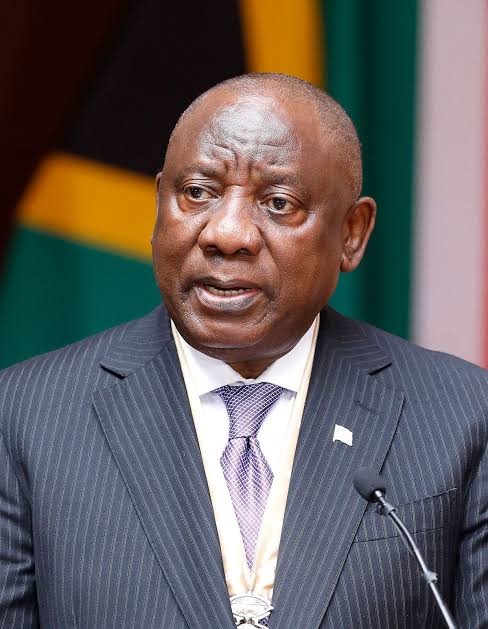
In a significant escalation of the diplomatic row triggered by xenophobic attacks targeting Nigerian nationals, the South African Department of International Relations and Cooperation has formally responded to Nigeria's increasingly stern warnings, demanding that Abuja substantiate its claims with documented evidence before further diplomatic action is considered.
The response came after the Nigerian Senate passed a resolution threatening to sever diplomatic ties with South Africa and the Federal Government issued strong statements condemning the violence. South Africa's position, conveyed through its foreign ministry, is that it takes all allegations of violence against foreign nationals seriously but requires concrete, verifiable information before it can launch targeted investigations and prosecutions.
"We urge our Nigerian counterparts to provide specific details, including names of victims, locations of incidents, and any supporting documentation," a spokesperson for the South African Department of International Relations and Cooperation stated. "South Africa is committed to protecting all persons within its borders, regardless of nationality, but our law enforcement agencies need specific and actionable information to conduct effective investigations."
The South African response has drawn sharp criticism from Nigerian officials and civil society groups, who described the demand for evidence as a deflection tactic by a government that has repeatedly failed to protect foreign nationals living within its borders.
Nigerian lawmakers, who on Tuesday called for a review of the bilateral relationship between both countries, expressed outrage at Pretoria's response. Several senators argued that the South African government already had access to reports from its own law enforcement agencies and media coverage of the violence, making the demand for evidence from Nigeria appear disingenuous.
"How many more Nigerians need to die before South Africa accepts that there is a problem?" Senator Asuquo Ekpeyong, who sponsored the Senate motion on the xenophobic attacks, told journalists. "Our people are being killed, their businesses looted, and the South African government is asking us to provide evidence. This is deeply insulting."
The Nigerians in Diaspora Commission, through its Chairman Abike Dabiri-Erewa, also responded to South Africa's position, insisting that Nigeria had documented evidence of killings and property destruction. Dabiri-Erewa said the commission had been compiling reports from affected Nigerians and would make the information available through formal diplomatic channels.
The current diplomatic standoff did not emerge in a vacuum. South Africa has experienced repeated waves of anti-foreigner violence since 2008, with Nigerians consistently among the most targeted groups. Major outbreaks of xenophobic violence occurred in 2015, 2019, and 2022, each triggering temporary diplomatic crises between Nigeria and South Africa before tensions gradually subsided without any lasting resolution.
The latest crisis, described by Nigerian officials as among the most severe in recent years, erupted during a period of intense economic pressure in South Africa, where unemployment remains above 30 percent and frustration with service delivery has fuelled anti-government sentiment that has increasingly been channelled into hostility toward foreign nationals.
South Africa's governing African National Congress (ANC) has struggled to address both the economic discontent and the xenophobic violence. Critics argue that some politicians have fuelled the hostility toward foreigners by using migrants as scapegoats for South Africa's economic challenges, while the government has simultaneously sought to maintain its constitutional commitment to protecting the rights of all persons within its borders.
Even as the diplomatic battle intensifies, the evacuation of Nigerians from South Africa has continued. Air Peace, the Nigerian carrier whose chairman Allen Onyema has become a symbol of patriotic corporate intervention during xenophobic crises, has been facilitating flights for Nigerians who have chosen to return home.
The Nigerians in Diaspora Commission confirmed that a fresh group of returnees arrived in Nigeria earlier this week. Many of the returnees described harrowing experiences, including being forced to abandon their businesses, homes, and possessions under threats of violence.
Senator Natasha Akpoti-Uduaghan, who had earlier commended Air Peace for the evacuation efforts, called on the Federal Government to establish a comprehensive rehabilitation and reintegration programme for the returnees, including access to soft loans, market spaces, and vocational training to help them rebuild their livelihoods in Nigeria.
Separately, the National Association of Nigerian Students issued its seven-day ultimatum to South African businesses operating in Nigeria, including MTN, Shoprite, and MultiChoice, demanding that they publicly condemn the xenophobic attacks or face coordinated nationwide protests.
The deadline, which expires later this week, has added another layer of pressure to an already tense situation. South African companies with significant Nigerian operations have been consulting with their headquarters about how to respond, industry sources say.
Business analysts have warned that a sustained protest or boycott campaign could have significant financial consequences for South African brands in Nigeria, which represents one of their most important African markets.
The Federal Government has also escalated its response at the multilateral level, engaging the African Union and the Economic Community of West African States to take a stronger position on the protection of African nationals within the continent.
Several other African countries whose citizens have also been affected by xenophobic violence in South Africa are reportedly supporting Nigeria's push for stronger continental mechanisms to deter anti-foreigner attacks and hold host governments accountable.
A resolution passed by the Nigerian Senate has called on the Federal Government to work with the AU to establish an early warning and accountability mechanism to prevent future xenophobic attacks across the continent. If adopted, such a framework could place South Africa under formal continental scrutiny whenever allegations of anti-foreigner violence arise.
The coming days are expected to be critical as both governments navigate a diplomatic crisis that strikes at the heart of pan-African solidarity, the rights of migrants, and the economic stakes of one of Africa's most consequential bilateral relationships.
Related stories
 News
News
Oyo Abduction: Eight Kidnappers Arrested, Others Killed During Rescue — Presidency
Eight kidnappers have been arrested and others neutralised during the rescue of abducted Oyo pupils and teachers, with authorities insisting no ransom or concession was made.
News
BREAKING: Kidnapped Oyo Pupils, Teachers Regain Freedom
Kidnapped pupils and teachers in Oyo State have regained freedom after days in captivity, with authorities yet to disclose details surrounding their release.
News
BREAKING: Kidnapped Oyo Pupils, Teachers Regain Freedom
Kidnapped pupils and teachers in Oyo State have regained freedom after days in captivity, with authorities yet to disclose details surrounding their release.
 News
News
Bwala Questions Military Strike on Kidnappers as Oyo Pupils Remain in Captivity
Presidential aide Daniel Bwala has defended the Federal Government's cautious approach to rescuing abducted Oyo pupils, asking whether bombing kidnappers' hideouts would endanger the hostages.
Comments (0)
Leave a comment
All comments are moderated before publishing. Your email is never published.