
SMEDAN, Abbas Launch Initiative to Empower 10,000 Students in Kaduna
SMEDAN, in partnership with House Speaker Rt. Hon. Tajudeen Abbas, has disbursed grants to about 10,000 indigent tertiary students in Kaduna State to ease educational costs and promote entrepreneurship. With beneficiaries confirming receipt, the initiative aims to turn financial support into a pathway for building future entrepreneurs and employers.

The Small and Medium Enterprises Development Agency of Nigeria (SMEDAN), in partnership with the Office of the Speaker of the House of Representatives, Rt. Hon. Tajudeen Abbas, has disbursed financial grants to approximately 10,000 students at tertiary institutions in Kaduna State, in an intervention that goes beyond conventional educational support to seed entrepreneurial ambition among young Nigerians .
The disbursement ceremony, held in Zaria, Kaduna State, was attended by the Director General of SMEDAN, Dr Charles Odii, and the Speaker, who presented cheques to beneficiaries. In a statement signed by Prince Moshood Lawal, Head of Corporate Affairs at SMEDAN, the agency said the initiative was designed to ease the financial burdens of pursuing higher education while also providing seed support for young people interested in starting small businesses and exploring entrepreneurial opportunities .
The operational detail that matters most is transparency. According to the statement, some beneficiaries confirmed at the event that the funds had already been credited directly to their bank accounts, a demonstration of the effectiveness of the disbursement process and a departure from the opaque, delayed payments that have undermined confidence in past government interventions . The grants were provided in varying amounts to qualified beneficiaries, though SMEDAN did not disclose the aggregate value of the intervention or the individual sums received by the students .
For Odii, the intervention is not charity but strategy. "Supporting students with financial resources goes beyond educational assistance, as it also provides an opportunity to nurture an entrepreneurial mindset, encourage self-reliance and prepare young people to become future employers rather than solely depending on the increasingly competitive formal employment market," he said . The framing is deliberate. Nigeria's formal sector cannot absorb the hundreds of thousands of graduates churned out by its universities and polytechnics each year. If the economy is to expand, it will be through small businesses, and if small businesses are to grow, they need capital, mentorship, and a culture that treats entrepreneurship as a viable path rather than a last resort.
Speaker Abbas positioned the grant within a broader architecture of federal support for students. He described the initiative as part of President Bola Ahmed Tinubu's strategic approach to expanding opportunities for young Nigerians by connecting educational support with enterprise development . The Speaker said the grant being disbursed is a way of contributing to the huge number of students who have benefited from the Nigerian Education Loan Fund (NELFUND), which the current administration also introduced . The complementarity is significant: NELFUND addresses the financing of education, while the SMEDAN grant addresses the financing of enterprise. Together, they represent a more holistic attempt to support students than either could achieve alone.
But the programme's success will not be measured at the ceremony. It will be measured in the months and years that follow, in the businesses that are registered, the jobs that are created, and the students who choose to build rather than wait for a salaried position that may never materialise. AllAfrica's analysis noted that the economic impact of such interventions would ultimately depend on the extent to which the financial support translates into sustainable business activities, improved educational retention, and measurable improvements in the economic circumstances of beneficiaries . Financial assistance alone, the report cautioned, may not be sufficient to establish viable businesses without complementary access to business training, mentorship, markets, and subsequent financing .
The students who received alerts at the venue expressed appreciation to the Speaker and the SMEDAN Director General, promising to inform their parents about the intervention . Their gratitude is understandable. For families stretched by tuition, accommodation, and the rising cost of living, a direct credit to a student's account is immediate relief. But the deeper significance of the grant lies in what it signals: that the Federal Government sees students not merely as beneficiaries of education financing but as potential founders of enterprises, employers of labour, and architects of their own economic futures.
Kaduna State, like much of northern Nigeria, grapples with high youth unemployment, limited access to affordable capital, and a business environment that often penalises small operators. A grant of this kind will not solve those structural problems overnight. But it can do something subtler and perhaps more important: it can change the calculus in a young person's mind, shifting the default assumption from "I need a job" to "I can build one." That shift, multiplied across 10,000 students, is the real return on investment that SMEDAN and the Speaker are betting on.
The ceremony in Zaria has ended. The cheques have been presented, the alerts have been received, and the statements have been issued. What remains is the work: the businesses to be built, the skills to be acquired, the markets to be navigated. The grant is a start. Whether it becomes a story of transformation or another well-meaning intervention that fades from memory will depend on what the 10,000 beneficiaries do next.
Sponsored

Related stories
 Youth Empowerment
FG Launches iDICE Digital Skills Programme Targeting 50,000 Young Nigerians
The Federal Government has launched the iDICE Skills Training to Jobs Programme, targeting 50,000 young Nigerians across seven North-West states with training in AI, cybersecurity, data analytics and creative industries. Backed by international development partners, the 10–18 week programme aims to connect graduates to jobs, internships and businesses, with 50% female participation and a broader national target of 300,000 beneficiaries.
 Youth Empowerment
Foundation Launches Youth Empowerment Programme Targeting 5,000 Nigerians
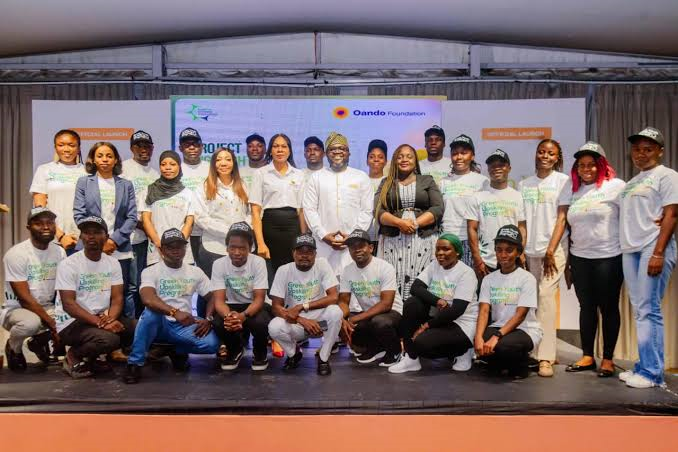
A Nigerian foundation has unveiled a sweeping plan to empower 5,000 young people with skills, funding, and mentorship, targeting a generation battered by unemployment and economic hardship. The initiative arrives at a critical moment: with youth unemployment soaring and millions of graduates unable to find work, the programme promises not just training but a pathway to self-reliance. But the question that haunts every such intervention is whether it can scale beyond a lucky few and deliver lasti
 Youth Empowerment
Katung Empowers Southern Kaduna Women, Youths Through Traditional Crafts
Senator Sunday Marshall Katung has trained and empowered women and youths in Zonkwa, Zangon Kataf LGA, with vocational skills in ceramic and pottery, tie-and-dye, and bead-making,backed by start-up funds to turn craft into cash. It is the latest in a series of human-capital interventions from the Kaduna South lawmaker, and beneficiaries say the message is clear: promises are being translated into action, one skill at a time.
 Youth Empowerment
EU, GIZ Empower 1,000 Northeast Households with Business Kits
The SEPIN-SUSI programme has distributed business establishment kits to 1,000 vulnerable households across Adamawa and Borno States—550 in Numan and 450 in Kwaya Kusar,under a GIZ-implemented Graduation Approach backed by the European Union and Germany’s Federal Ministry for Economic Cooperation and Development. It is a deliberate shift from short-term relief to sustainable livelihoods, with beneficiaries trained in shoemaking, fishery, tailoring, catering, and poultry production.
Comments (0)
Leave a comment
All comments are moderated before publishing. Your email is never published.