
Foundation Launches Youth Empowerment Programme Targeting 5,000 Nigerians
A Nigerian foundation has unveiled a sweeping plan to empower 5,000 young people with skills, funding, and mentorship, targeting a generation battered by unemployment and economic hardship. The initiative arrives at a critical moment: with youth unemployment soaring and millions of graduates unable to find work, the programme promises not just training but a pathway to self-reliance. But the question that haunts every such intervention is whether it can scale beyond a lucky few and deliver lasti
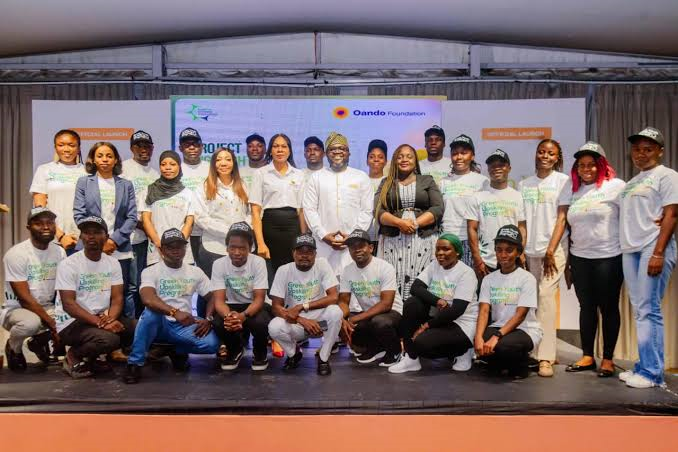
A Nigerian foundation has announced an ambitious plan to empower 5,000 young people, launching a comprehensive programme designed to equip them with vocational skills, entrepreneurial training, and financial support in a bid to tackle the country’s deepening youth unemployment crisis.
The initiative, unveiled at a ceremony in Lagos on Tuesday, November 25, 2026, targets young Nigerians between the ages of 18 and 35 across the country’s six geopolitical zones. Beneficiaries will receive training in high-demand skills including digital technology, renewable energy, agribusiness, fashion and design, and vocational trades, alongside mentorship and start-up capital to help them transition from trainees to earners.
The foundation’s leadership framed the programme as a direct response to a grim economic reality. Nigeria’s youth unemployment rate remains among the highest in the world, with millions of young people locked out of the formal labour market despite holding degrees and certificates. For many, the promise of education has curdled into frustration, as graduation leads not to jobs but to years of searching, underemployment, and despair.
“We cannot continue to produce graduates for jobs that do not exist,” the foundation’s founder said at the launch. “The future of this country depends on our ability to turn young people from job seekers into job creators. This programme is not charity. It is an investment in Nigeria’s next generation of employers, innovators, and leaders.”
The 5,000 beneficiaries will be selected through a competitive application process that prioritises young people from low-income backgrounds, internally displaced persons, and communities with limited access to economic opportunities. Training will be delivered in partnership with technical colleges, vocational centres, and private-sector firms, with a strong emphasis on practical, hands-on learning rather than theoretical instruction.
The programme’s design reflects lessons from previous empowerment initiatives that faltered because they focused on training without follow-through. Organisers say beneficiaries will receive starter packs, access to microcredit, and ongoing mentorship for at least 12 months after training, with progress tracked through a digital monitoring system. The goal is not simply to teach skills but to ensure that those skills translate into income, whether through employment, self-employment, or cooperative enterprises.
The timing is significant. Nigeria’s economy is struggling to absorb a rapidly growing youth population, and the consequences of failure are visible in rising crime, migration pressures, and social unrest. The government has launched several youth empowerment schemes of its own, but many have been criticised for political interference, opaque beneficiary selection, and weak implementation. The foundation’s intervention is a private-sector attempt to fill a gap that public programmes have struggled to close.
Stakeholders have welcomed the initiative but urged transparency and accountability. “The scale of the problem is enormous, and 5,000 is a drop in the ocean,” said a youth development expert who attended the launch. “But if this programme can demonstrate a model that actually works, that produces measurable outcomes and sustainable businesses, it can become a template for others to follow. The real test is not the launch. It is what happens to these 5,000 young people two years from now.”
For the beneficiaries, the opportunity is life-changing. Many have spent years sending applications into a void, watching their qualifications gather dust while their peers emigrate or take up informal work far below their skill levels. A programme that offers not just training but a genuine pathway to income is, for them, more than an intervention. It is a second chance.
The foundation has committed to publishing annual impact reports, tracking employment rates, business survival, and income levels among beneficiaries. That commitment to measurement is itself notable in a sector where success is often declared rather than demonstrated.
The road ahead is steep. Nigeria’s youth unemployment crisis will not be solved by a single programme, no matter how well designed. But the foundation’s 5,000-person target is a start, and its emphasis on skills, capital, and mentorship offers a more holistic model than the piecemeal interventions that have come before. For the young people who will walk through its doors, the programme is not about statistics. It is about the chance to build a life.
Sponsored

Related stories
 Youth Empowerment
FG Launches iDICE Digital Skills Programme Targeting 50,000 Young Nigerians
The Federal Government has launched the iDICE Skills Training to Jobs Programme, targeting 50,000 young Nigerians across seven North-West states with training in AI, cybersecurity, data analytics and creative industries. Backed by international development partners, the 10–18 week programme aims to connect graduates to jobs, internships and businesses, with 50% female participation and a broader national target of 300,000 beneficiaries.
 Youth Empowerment
SMEDAN, Abbas Launch Initiative to Empower 10,000 Students in Kaduna
SMEDAN, in partnership with House Speaker Rt. Hon. Tajudeen Abbas, has disbursed grants to about 10,000 indigent tertiary students in Kaduna State to ease educational costs and promote entrepreneurship. With beneficiaries confirming receipt, the initiative aims to turn financial support into a pathway for building future entrepreneurs and employers.
 Youth Empowerment
Katung Empowers Southern Kaduna Women, Youths Through Traditional Crafts
Senator Sunday Marshall Katung has trained and empowered women and youths in Zonkwa, Zangon Kataf LGA, with vocational skills in ceramic and pottery, tie-and-dye, and bead-making,backed by start-up funds to turn craft into cash. It is the latest in a series of human-capital interventions from the Kaduna South lawmaker, and beneficiaries say the message is clear: promises are being translated into action, one skill at a time.
 Youth Empowerment
EU, GIZ Empower 1,000 Northeast Households with Business Kits
The SEPIN-SUSI programme has distributed business establishment kits to 1,000 vulnerable households across Adamawa and Borno States—550 in Numan and 450 in Kwaya Kusar,under a GIZ-implemented Graduation Approach backed by the European Union and Germany’s Federal Ministry for Economic Cooperation and Development. It is a deliberate shift from short-term relief to sustainable livelihoods, with beneficiaries trained in shoemaking, fishery, tailoring, catering, and poultry production.
Comments (0)
Leave a comment
All comments are moderated before publishing. Your email is never published.