
Sanwo-Olu: Lagos Government Has Empowered 40,000 Residents With Business Tools to Boost SMEs
Lagos State Governor Babajide Sanwo-Olu has announced that his administration has empowered over 40,000 residents with business tools and equipment as part of its broad-based SME and economic empowerment strategy.
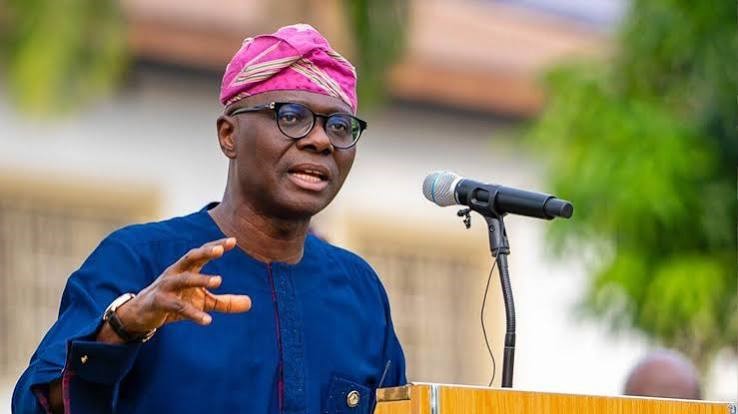
Lagos State Governor, Babajide Sanwo-Olu, has revealed that his administration has empowered more than 40,000 Lagos residents with business tools and equipment under its SME and economic empowerment programmes, describing the initiative as a deliberate effort to put productive capacity directly in the hands of ordinary Lagosians.
The governor made the disclosure during a recent public engagement where he reviewed the socio-economic interventions of his administration, underscoring the scale and ambition of the state government's grassroots economic empowerment strategy.
Sanwo-Olu said the 40,000 beneficiaries were selected from across the state's local government areas and local council development areas, with deliberate attention paid to ensuring that communities in all parts of Lagos , including underserved areas on the mainland and in the suburbs — were reached.
The items distributed ranged from sewing machines and salon equipment to grinding machines, cooking utensils, agricultural tools, and other trade-specific equipment, all carefully matched to the skills and vocational profiles of each beneficiary to maximise the impact of the intervention.
Sanwo-Olu framed the empowerment programme as part of his administration's commitment to the T.H.E.M.E.S Plus agenda, which places economic sustainability and social empowerment at the core of Lagos governance. He said the goal was not simply to distribute tools but to create the foundation for sustainable self-employment and micro-enterprise growth across the state.
"Our empowerment model is skills-driven. We do not give people what they do not know how to use. We identify their trade, confirm their proficiency, and then provide the tools they need to convert that skill into income. That is how you create lasting impact," the governor said.
He noted that many of the beneficiaries were previously struggling to scale their businesses due to a lack of quality equipment, and that the provision of professional-grade tools had in many cases transformed what were subsistence-level activities into viable and growing micro-businesses.
A critical component of the empowerment programme is its integration with the Lagos State Employment Trust Fund (LSETF) and the Lagos State Skills and Development Board, both of which have been running parallel skills acquisition and business development programmes to complement the equipment distribution initiative.
Beneficiaries are typically required to either demonstrate existing proficiency in their chosen trade or complete a structured training programme before receiving their equipment, ensuring that the tools go to individuals who are genuinely prepared to put them to productive use.
The Lagos State Government has also been working to connect empowered beneficiaries with markets, cooperatives, and financial services , including access to microfinancing through LSETF — to help them sustain and grow their businesses beyond the initial empowerment.
Lagos State is home to approximately 70 per cent of Nigeria's industrial and commercial activity. The city hosts millions of small and micro enterprises that collectively employ the vast majority of the state's working population and contribute enormously to the local economy.
However, Lagos SMEs face a familiar set of structural challenges, including limited access to affordable credit, inadequate infrastructure, high operating costs driven by epileptic power supply, and constrained access to markets and business development services.
The state government's empowerment programme is designed to address the capital access dimension of these challenges by reducing the equipment costs that represent one of the most significant upfront barriers to entry for many micro-enterprises.
By providing tools directly, the government enables aspiring and existing small business owners to channel their scarce financial resources toward other critical needs such as raw materials, working capital, and market access, rather than spending a disproportionate share of their income on equipment acquisition.
A significant proportion of the 40,000 beneficiaries are women and young people, two demographic groups that the Lagos State Government has consistently identified as priority targets for economic empowerment.
Women entrepreneurs in Lagos have consistently reported that access to quality equipment is one of the most significant constraints on the growth of their businesses. Tailoring, catering, beauty services, and food processing — sectors that employ the vast majority of Lagos female micro-entrepreneurs ,all require relatively affordable but nonetheless financially inaccessible equipment that can make or break the viability of a small business.
Similarly, young people who have completed vocational training programmes frequently find themselves unable to put their skills to productive use because they lack the starter equipment needed to begin earning income independently. The empowerment programme directly addresses this gap.
Lagos State's empowerment model is being studied with interest by other state governments across Nigeria, several of which are looking to replicate elements of the programme within their own economic empowerment frameworks.
Governor Sanwo-Olu expressed readiness to share the state's experience and learnings with counterparts across the country, noting that the programme had generated valuable data on the types of tools most in demand, the trades with the greatest potential for income generation, and the support services that most effectively help beneficiaries sustain and grow their businesses after the initial intervention.
With the 2027 general elections approaching, the empowerment milestone is also expected to feature prominently in the Lagos State Government's communication of its second-term legacy, as the administration seeks to demonstrate tangible, measurable improvements in the lives of ordinary Lagosians.
Sponsored
Related stories
 Youth Empowerment
1,000 Tech Scholars to Benefit From Ekeh Foundation, NCS Partnership
The Leo Stan Ekeh Foundation has signed a Memorandum of Understanding with the Nigeria Computer Society to provide mentorship, technical training, and practical industry experience to 1,000 beneficiaries of its technology scholarship programme. The initiative will select students from all 36 states and the FCT, covering their education from first year through graduation while pairing each scholar with a dedicated industry mentor.
 Youth Empowerment
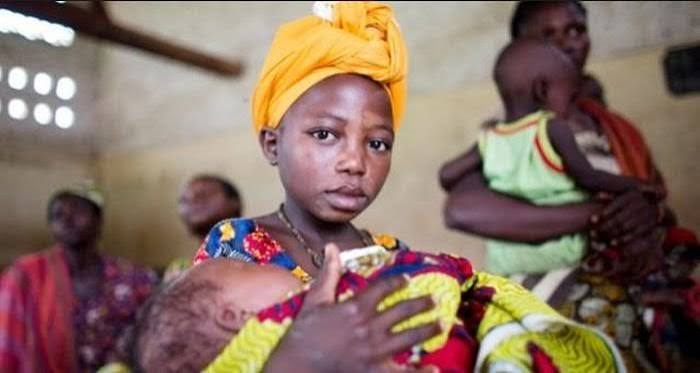
Ibadan NGO Empowers 100 Girls, Urges Oyo to Fight Child Marriage
The Oluwakemi Olusola Girl Child Foundation, with two partner foundations, gave 100 girls in an underserved Ibadan community medical checks, school bags, food, hygiene kits and counselling, while calling on the Oyo government to intensify its fight against child marriage.
 Youth Empowerment
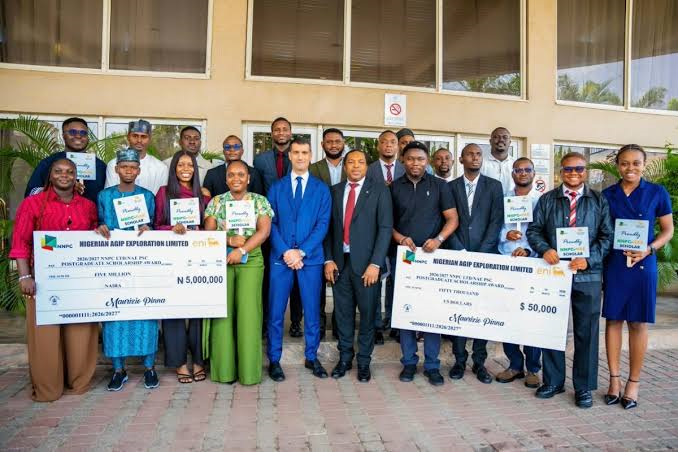
NNPC, Eni Award Postgraduate Scholarships to 30 Nigerian Graduates
The NNPC/Eni Joint Venture has awarded postgraduate scholarships to 30 Nigerian graduates for the 2026/2027 academic session, selecting the beneficiaries from over 3,000 applicants. Ten scholars will study at top universities abroad, including Imperial College London and the University of Aberdeen, while the remaining 20 will pursue degrees in Nigerian institutions across engineering, geosciences, renewable energy, and energy transition disciplines.
 Youth Empowerment
100,000 Pupils Get N20,000 Each Under N2bn Fund
First Lady Oluremi Tinubu has launched a N2 billion Learners Retention Support Programme that will provide N20,000 each to 100,000 pupils in its first phase, alongside the distribution of two million packs of sanitary towels and back-to-school materials to girls in public basic schools across Nigeria. The initiative, flagged off to mark the 2026 International Day of the Girl Child, is designed to remove the financial and hygiene barriers that force thousands of Nigerian girls out of the classroo
Comments (0)
Leave a comment
All comments are moderated before publishing. Your email is never published.