
Ibadan NGO Empowers 100 Girls, Urges Oyo to Fight Child Marriage
The Oluwakemi Olusola Girl Child Foundation, with two partner foundations, gave 100 girls in an underserved Ibadan community medical checks, school bags, food, hygiene kits and counselling, while calling on the Oyo government to intensify its fight against child marriage.
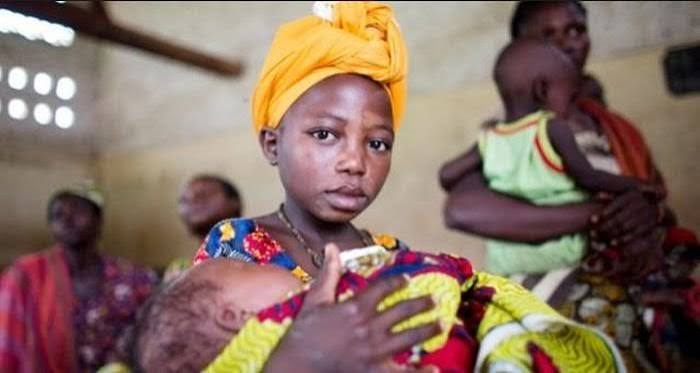
A non-governmental organisation in Ibadan has empowered 100 girls in an underserved community with health checks, school supplies, food, and counselling, while calling on the Oyo State Government to step up its fight against child marriage.
The Oluwakemi Olusola Girl Child Foundation carried out the programme in collaboration with the Rainbow Gateway Foundation and the Theresa Jacob Foundation, to mark this year's International Day of the Girl Child. The 2026 theme is "End Child Marriage and Invest in Girls' Rights."
According to organisers, the 100 girls received medical and eye checks, school bags, food items, and hygiene kits. They also took part in counselling sessions designed to give them a safe space to talk about the challenges they face, including abuse. Organisers said such sessions matter because girls in under-resourced communities often have few trusted adults to confide in.
A representative of the Oluwakemi Olusola Girl Child Foundation urged parents to refuse child marriage and allow their daughters to complete their education. She appealed to the Oyo State Government to intensify its efforts against the practice, arguing that protecting girls requires action from official institutions as well as from families and communities.
Folake Jacob of the Theresa Jacob Heart Foundation said her team handled the medical checks and educated the girls on sexual health and menstrual hygiene. Her team also taught them how to make reusable sanitary pads, a practical skill that can reduce the cost of managing menstruation. Lack of access to affordable sanitary products is widely cited as a reason some girls miss school, and a skill such as making reusable pads is intended to ease that barrier.
The organisers acknowledged that a single-day intervention has limits. They said the girls will need follow-up support to stay in school and continue with skills training after the event, an admission that reflects a common challenge for one-off outreach programmes, which can deliver immediate relief but need continued backing to change a girl's long-term prospects.
The Ibadan event was one of several activities across Nigeria linked to this year's Day of the Girl Child. In Abuja, the Helpline Social Support Initiative (HSSI) issued a statement calling for stronger action to end child marriage and protect girls from abuse. Its president, Dr Jumai Ahmadu, said protecting girls must go beyond public declarations, and that responsibility rests with adults and institutions rather than with girls themselves. HSSI urged governments, traditional and religious leaders, parents, schools, and civil society to strengthen laws and enforcement against child marriage, exploitation, and abuse, and to widen access to safe, inclusive education for girls at risk of dropping out.
In the North-East, the United Nations Children's Fund (UNICEF) and stakeholders in Gombe and Bauchi states also called for urgent, coordinated action to end child marriage and guarantee equal access to education, including for girls living with disabilities.
Child marriage has long been recognised as a driver of poor outcomes for girls in Nigeria. Advocates point to links with early school exit, early and risky pregnancies, and reduced economic opportunity. Nigeria's Child Rights Act, passed in 2003, sets 18 as the minimum age of marriage, but advocates have long noted that it has not been adopted uniformly across states and that enforcement remains uneven, leaving prevalence high in several regions. A national coalition of more than 100 civil society organisations works on the issue, and the country has a National Strategy and Costed Action Plan on Ending Child Marriage covering 2024 to 2030.
Campaigners say lasting progress depends on combining enforcement with education, economic support, and changes in community attitudes. Programmes such as the Ibadan outreach fit the community-level end of that approach, offering girls practical support while reinforcing the message that they belong in school.
For the organisers, the next step is turning a day of support into sustained help. With the 100 girls now identified and engaged, attention turns to whether partners, the Oyo State Government, and local communities will provide the follow-up the foundations say is needed to keep them learning.
Sponsored

Related stories
 Youth Empowerment
1,000 Tech Scholars to Benefit From Ekeh Foundation, NCS Partnership
The Leo Stan Ekeh Foundation has signed a Memorandum of Understanding with the Nigeria Computer Society to provide mentorship, technical training, and practical industry experience to 1,000 beneficiaries of its technology scholarship programme. The initiative will select students from all 36 states and the FCT, covering their education from first year through graduation while pairing each scholar with a dedicated industry mentor.
 Youth Empowerment
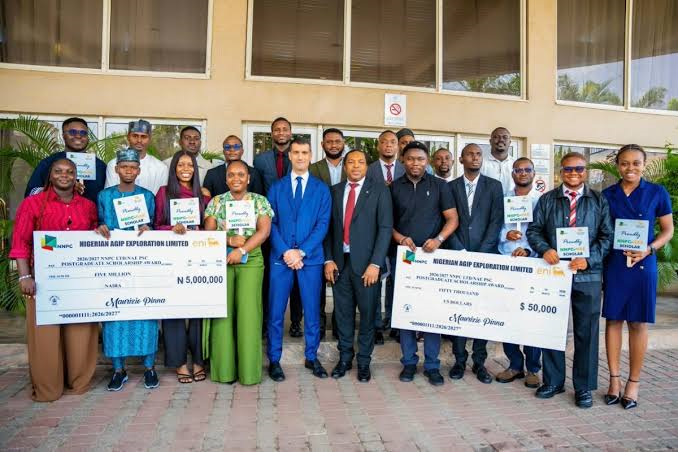
NNPC, Eni Award Postgraduate Scholarships to 30 Nigerian Graduates
The NNPC/Eni Joint Venture has awarded postgraduate scholarships to 30 Nigerian graduates for the 2026/2027 academic session, selecting the beneficiaries from over 3,000 applicants. Ten scholars will study at top universities abroad, including Imperial College London and the University of Aberdeen, while the remaining 20 will pursue degrees in Nigerian institutions across engineering, geosciences, renewable energy, and energy transition disciplines.
 Youth Empowerment
100,000 Pupils Get N20,000 Each Under N2bn Fund
First Lady Oluremi Tinubu has launched a N2 billion Learners Retention Support Programme that will provide N20,000 each to 100,000 pupils in its first phase, alongside the distribution of two million packs of sanitary towels and back-to-school materials to girls in public basic schools across Nigeria. The initiative, flagged off to mark the 2026 International Day of the Girl Child, is designed to remove the financial and hygiene barriers that force thousands of Nigerian girls out of the classroo
 Youth Empowerment
TAFTA Trains 150 Female Creators to Build Sustainable Careers
, tools, and industry connections through its maiden Creator HQ programme, a three-day immersive training focused on content creation, intellectual property protection, and monetisation. Supported by the Mastercard Foundation, the initiative is designed to help women turn their creative talents into sustainable businesses and long-term careers.
Comments (0)
Leave a comment
All comments are moderated before publishing. Your email is never published.