
Nigeria @66: Reforms Didn’t Create Nigeria’s Economic Problems — Tinubu
Tinubu says his administration inherited deep economic weaknesses and introduced reforms to address longstanding structural problems.
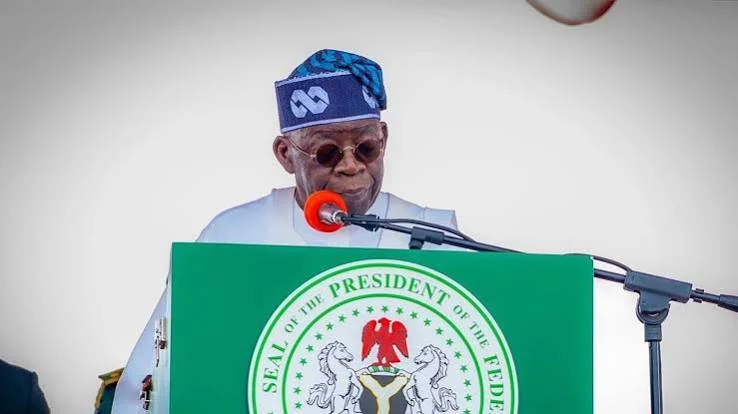
President Bola Tinubu has said the economic reforms introduced by his administration did not create Nigeria’s existing economic problems but were designed to address longstanding structural weaknesses.
Tinubu made the statement on Thursday during his Independence Day address to Nigerians as the country marked its 66th anniversary.
The President said Nigeria had for years postponed difficult economic decisions, allowing distortions and weaknesses to accumulate and affect successive generations.
According to him, by the time his administration assumed office in 2023, the country was facing severe economic challenges, including rising poverty and declining public confidence.
He said his administration therefore had to choose between maintaining existing policies and undertaking fundamental reforms aimed at changing the direction of the economy.
Tinubu pointed specifically to the removal of the petrol subsidy and reforms to the foreign exchange market as key measures introduced after he took office.
He acknowledged that the reforms had produced difficult side effects, including increased living costs, but argued that the hardship should not be confused with the underlying problems the reforms were intended to address.
“Our reforms did not create the weaknesses in our economy. They confronted them,” the President said.
Tinubu said the government had since recorded improvements in several economic indicators, including economic growth, foreign exchange stability and non-oil exports.
He said the economy grew by more than four per cent in 2026, with both oil and non-oil sectors contributing to the expansion.
The President also highlighted an increase in foreign reserves, greater stability in the foreign exchange market and more than $6 billion in non-oil export revenue recorded in 2025.
However, he acknowledged that many Nigerians were still struggling with high food prices, school fees, medical expenses and transportation costs.
Tinubu said the government recognised that these difficulties remained a major concern and that economic recovery must ultimately be reflected in the daily lives of citizens.
He said the administration’s next priority was to lower the cost of living by reducing production and transportation costs, increasing agricultural output, improving infrastructure and expanding access to finance.
The President also highlighted investments in roads, railways, ports, industrial production and digital connectivity, saying these were intended to improve productivity and create more jobs.
He said the government would continue providing targeted support for vulnerable households while working towards an economy where Nigerians could earn more through productive activities.
Tinubu maintained that the country had now moved beyond the most difficult phase of economic reform and was entering a period focused on broader prosperity.
He urged Nigerians to remain committed to the country’s future, saying the government’s objective was to build an economy capable of providing greater opportunities for citizens and future generations.
Sponsored

Related stories
 News
News
Blaming Opposition For Hunger Is ‘Delusion’ — Atiku Tells Tinubu
Atiku Abubakar has accused President Tinubu of evading responsibility for Nigeria’s economic hardship after blaming opposition politicians for hunger and poverty.
 News
News
Tinubu Accuses Opposition of Creating Hunger, Poverty
President Bola Tinubu has accused opposition parties of creating the hunger and poverty they now criticise his administration over, insisting that his government is working to eradicate hardship and deliver economic prosperity.
 News
News
UNICEF, Sokoto Target One Million Children for Polio Vaccination
UNICEF and the Sokoto State Government are intensifying efforts to protect children against polio through vaccination, community mobilisation and public awareness, with emphasis on reaching every eligible child and addressing vaccine hesitancy.
 News
News
2027 Northern Nigerians Will Repay Tinubu with Votes, Says Sani, Yari
Kaduna State Governor Uba Sani and APC Presidential Campaign Council Director-General Abdul’aziz Yari have expressed confidence that Northern Nigerians will support President Bola Tinubu’s re-election bid in 2027, citing federal government interventions in infrastructure, security, education and agriculture.
Comments (0)
Leave a comment
All comments are moderated before publishing. Your email is never published.