
Oduduwa University Graduates 1,477 Students, Seeks TETFund Support for Private Universities
Oduduwa University, Ipetumodu, Osun State, has graduated 1,477 students at its combined 12th, 13th, and 14th convocation ceremonies, with 41 earning First Class honours. Vice-Chancellor Prof. Uche Charles Ikechukwu used the occasion to renew a persistent appeal to the Federal Government: extend TETFund interventions to private universities, because their students are equally Nigerians and their institutions are equally burdened by the cost of delivering quality education

Oduduwa University, Ipetumodu, has conferred degrees on 1,477 students at its combined 12th, 13th, and 14th convocation ceremonies, marking a significant academic milestone for the Osun State private institution while reigniting a long-running debate about equity in Nigeria’s tertiary education funding.
The Vice-Chancellor, Prof. Uche Charles Ikechukwu, announced the graduation figures during the ceremony, providing a detailed breakdown of the results. Of the 1,477 graduands, 41 obtained First Class honours, representing 2.77 per cent of the cohort. A total of 441 students earned Second Class Upper Division, accounting for 30 per cent, while 828 graduated with Second Class Lower Division, making up 56 per cent. The remaining 164 students, or 11 per cent, finished with Third Class honours.
Ikechukwu framed the results as evidence of the university’s commitment to academic excellence and its ability to deliver uninterrupted education in a challenging environment. He credited the staff and management of the institution for their hard work, sacrifice, and dedication, noting that the graduating students completed their programmes on schedule without disruptions. “The graduating students have been able to complete their courses of study on schedule, without any disruptions. Credit for all of this goes to the staff and management of OUI for their hard work, sacrifice and dedication,” he said.
But the convocation was not merely a celebration of academic achievement. It was also a platform for advocacy. Ikechukwu renewed his call on the Federal Government to extend the Tertiary Education Trust Fund (TETFund) to private universities, arguing that the exclusion of private institutions from the fund was unjust and counterproductive. He stressed that Oduduwa University was solely funded by its proprietor without any financial support from the government, despite its contributions to national educational development. “Private universities should not be excluded from government-supported educational development initiatives,” he said. “Students attending private institutions are equally Nigerians.”
The TETFund debate is not new, but it has gained urgency as private universities continue to expand their share of Nigeria’s tertiary education sector. TETFund, established to manage the education tax and channel resources to public tertiary institutions, has long been a preserve of federal and state universities, polytechnics, and colleges of education. Private universities have argued that their students and their parents pay taxes, and that their institutions produce graduates who contribute to the same economy as their public counterparts. Excluding them from TETFund, critics argue, entrenches a two-tier system in which private institutions are expected to deliver public goods without public support.
Ikechukwu’s appeal was accompanied by a detailed account of the university’s academic credentials, which he presented as evidence that Oduduwa University was a serious institution deserving of government partnership. He disclosed that all of the university’s degree and postgraduate programmes had received accreditation from the National Universities Commission (NUC), while its undergraduate programmes had secured the necessary regulatory approvals. Among the accredited programmes he listed were Law, Nursing Science, Public Health, Accounting, Architecture, Banking and Finance, Biochemistry, Business Administration, Computer Science, Computer Engineering, Economics, Electrical and Electronic Engineering, Estate Management, Industrial Chemistry, Mechanical Engineering, International Relations, Mass Communication, Microbiology, Physics with Electronics, Political Science, Public Administration, and Quantity Surveying.
Professional accreditation, he added, had also been secured from relevant bodies, including the Council of Legal Education for Law, the Council for the Regulation of Engineering in Nigeria (COREN) for engineering programmes, and the Nursing and Midwifery Council for Nursing Science. The university currently has an undergraduate student population of approximately 4,000.
Beyond conventional degree programmes, Ikechukwu said the institution had established professional and technical centres to address the educational, vocational, and developmental needs of its immediate community and the country. These include the School of Entrepreneurial and Vocational Studies, the Centre for Local Government Studies, the Centre for Dramatic and Performing Arts, the Centre for the Study of Foreign Languages, and the School of Aviation.
For the 1,477 graduates, the convocation marks the end of one chapter and the beginning of another. For Oduduwa University, it is a moment to demonstrate that private institutions can deliver quality education at scale. And for the Federal Government, it is another reminder that the TETFund question will not go away. The Vice-Chancellor has made his case. The students have collected their certificates. The appeal now waits for a response.
Sponsored

Related stories
 Tech & Education
Kano Allocates N3 Billion Scholarships to 120,000 Students
The Kano State Government has proposed a N3 billion local scholarship scheme that will cover 120,000 indigenes in tertiary institutions across the country, regardless of their course of study. Executive Secretary Dr Mukhtar Bello unveiled the plan during the 2027 budget defence, revealing that it forms part of a broader N8.7 billion Scholarship Board budget that also funds foreign scholarships and operational costs. For a state with a long and complicated history of unpaid scholarships, the prop
 Tech & Education
NUC Directs Universities to Adopt AI Policies for Teaching, Research, Administration
The National Universities Commission has issued a formal directive requiring all Nigerian universities to develop and implement comprehensive artificial intelligence policies, warning that institutions without clear frameworks for AI use, ethics, and academic integrity risk producing graduates unprepared for a world already transformed by the technology. With concerns mounting over plagiarism, data privacy, and the digital divide, the NUC says the time for deliberation is over and the time for a
 Tech & Education
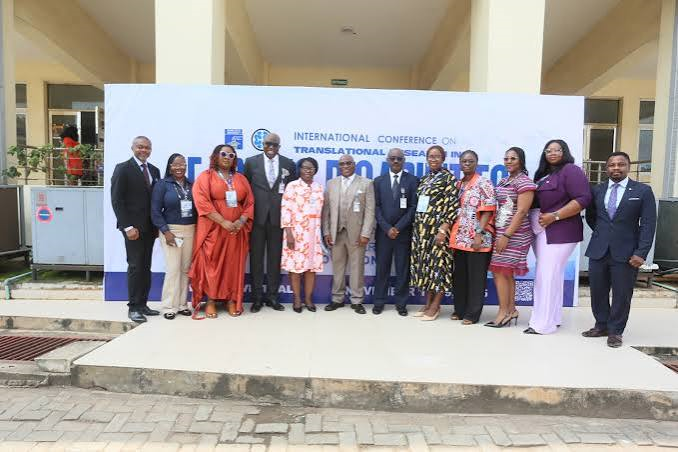
Babcock Conference Raises Awareness on Dyslexia, Challenges Misconceptions About Learning Difficulties
Babcock University’s learning disabilities conference has called for inclusive teaching reforms to support children with dyslexia, dyscalculia and other neurodivergent conditions. With 60% of learning disabilities linked to specific learning challenges and two-thirds of teachers lacking adequate knowledge, experts warned that rigid classroom practices are wrongly branding struggling pupils as lazy or unintelligent.
 Tech & Education
SACOETEC Graduates 4,944 Students, Produces 31 First-Class Graduates
Sikiru Adetona College of Education, Science and Technology (SACOETEC), Omu-Ajose, Ogun State, will today graduate 4,944 students at its second combined convocation, with 31 earning first-class honours. Provost Dr Modupe Oba-Adenuga says the ceremony is more than a certificate presentation; it is a celebration of a college delivering competent, professionally equipped teachers and degree holders under its NCE-Degree Dual Mandate. Governor Dapo Abiodun’s support, including increased subvention, h
Comments (0)
Leave a comment
All comments are moderated before publishing. Your email is never published.