
Nigeria’s Blackout Persists Despite $3.6bn World Bank Loans — Report
Despite $3.65bn in World Bank-backed power sector funding over 24 years, Nigeria continues to face persistent electricity shortages, grid collapses, and heavy reliance on self-generated power.
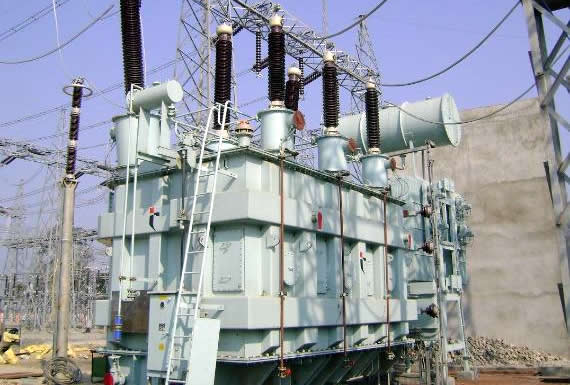
Nigeria’s electricity crisis has persisted despite receiving about $3.653 billion in World Bank-backed funding over the past 24 years aimed at reforming and stabilising the country’s power sector.
The funding, spread across multiple intervention projects between 2001 and 2024, was intended to strengthen transmission infrastructure, expand electrification, support renewable energy adoption, and improve overall sector efficiency.
Key projects include the Transmission Development Project, the National Energy Development Project, the Nigeria Electricity and Gas Improvement Project, the Nigeria Electrification Project, and the Power Sector Recovery Programme, among others.
Despite these interventions, millions of households and businesses across Nigeria continue to experience unstable electricity supply, frequent national grid collapses, and widespread dependence on petrol and diesel generators.
The national grid has repeatedly suffered system failures, while electricity generation has remained insufficient to meet growing industrial and domestic demand in Africa’s most populous country.
Recent initiatives, including renewable energy expansion programmes such as distributed solar access schemes, have shifted focus toward decentralised electricity solutions, particularly for rural and underserved communities.
However, implementation challenges, structural inefficiencies, and governance issues have limited the overall impact of these investments on end-users.
Industry stakeholders have consistently pointed to weak transmission infrastructure, liquidity shortages in the electricity market, gas supply constraints, vandalism, and policy inconsistencies as major obstacles to reliable power supply.
The World Bank has also supported broader sector reforms aimed at attracting private investment and improving electricity distribution efficiency, but results have remained mixed.
A recent report further revealed that $717.7 million in undisbursed World Bank funding under the Power Sector Recovery Programme was cancelled following a joint decision between Nigeria and the World Bank, with the programme’s closing date also moved forward.
Energy expert and Professor of Energy at the University of Lagos, Dayo Ayoade, attributed the sector’s persistent failure to corruption, weak governance, and systemic inefficiencies.
He argued that without deep structural reforms, Nigeria’s economy will continue to suffer due to high energy costs and reliance on inefficient self-generation.
According to him, tariff reforms and stronger governance frameworks are necessary, even if they result in higher electricity costs for consumers.
He further warned that proliferation of institutions in the sector and persistent leakages have undermined efficiency and accountability.
The continued electricity crisis has significantly affected productivity, small businesses, healthcare delivery, and overall economic growth, with many analysts describing it as one of Nigeria’s most critical infrastructure challenges.
Sponsored

Related stories
 News
News
Haitian-Canadian Novelist Denies Using AI to Write Debut Novel
Haitian-Canadian author Thélyson Orélien has denied using artificial intelligence to write his acclaimed debut novel, while admitting to past plagiarism and describing the controversy surrounding his work as deeply distressing.
News
Fubara Commends IGP Disu for Neutrality During Rivers Crisis
Rivers State Governor Siminalayi Fubara has commended the Inspector-General of Police, Mr Olatunji Disu, for maintaining neutrality and professionalism while serving as Commissioner of Police in the state during its political crisis.
News
Gas Pipeline Host Communities Give NNPCL, PINL Two-Week Ultimatum Over Unpaid Allowances
Host communities along the Eastern Gas Pipeline Network in the Niger Delta have given NNPCL and PINL two weeks to settle three months of unpaid allowances owed to surveillance contractors and guards, while demanding inclusion in the companies’ community development programmes.
News
EFCC Arraigns Woman Over ₦31m, $3,600, €1,815 Visa Fraud
The Economic and Financial Crimes Commission has arraigned Modupe Oriyomi Ativie over alleged visa and advance-fee fraud involving ₦31.06 million, $3,600 and €1,815, with the court adjourning the case until October 16 for a ruling on her bail application.
Comments (0)
Leave a comment
All comments are moderated before publishing. Your email is never published.