
Nepal Begins Burials As Flood Death Toll Rises To 752
Nepal begins temporary burials of flood victims as authorities record 752 deaths and thousands remain missing.
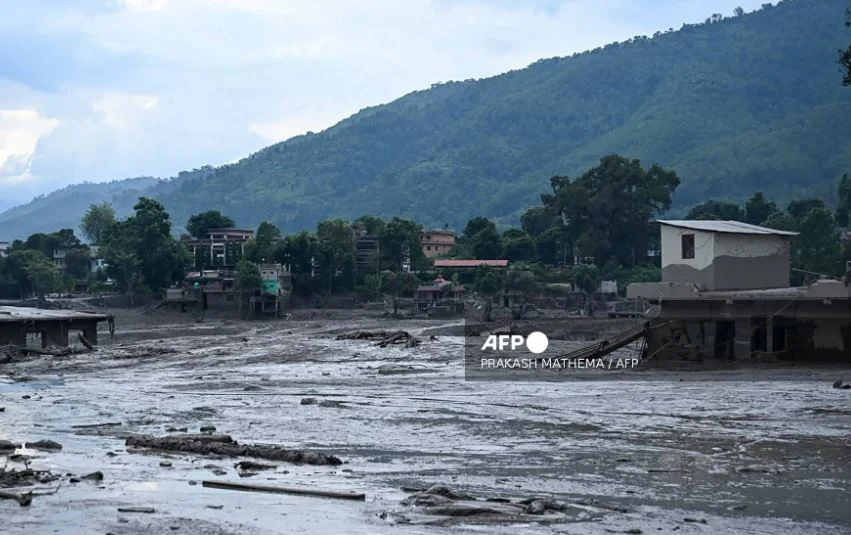
Nepal has begun temporarily burying some of the hundreds of bodies recovered after devastating floods and landslides, as the confirmed death toll rose to 752 and thousands of people remained missing.
Authorities said Sunday that DNA samples were being collected from the bodies before burial, while each victim was carefully identified and recorded. The measures are intended to allow families to retrieve the remains later when identification and recovery efforts become possible.
The temporary burials are considered necessary because Nepal does not have sufficient facilities to store the large number of bodies recovered following the disaster.
The dead are traditionally cremated on funeral pyres in predominantly Hindu Nepal. Authorities therefore described the burials as a form of long-term storage until relatives can identify and claim the remains for traditional funeral rites.
Foreign Secretary Amrit Bahadur Rai appealed for international assistance, saying the country needed more than 1,000 freezer units to preserve the bodies properly.
The disaster ministry increased the official death toll Sunday to 752 recovered bodies, while 2,502 people were still reported missing.
The scale of the disaster has placed enormous pressure on rescue teams, medical facilities and authorities responsible for identifying victims and supporting affected communities.
Rescue operations have continued in several areas, with emergency workers searching for survivors and recovering bodies from communities affected by flooding and landslides.
The disaster has also displaced large numbers of residents and caused widespread destruction to homes, roads, bridges and other infrastructure.
Authorities have been working to restore access to affected communities while delivering emergency supplies and medical assistance to survivors.
The increasing number of recovered bodies has created additional logistical challenges, particularly in areas where electricity, transportation and refrigeration facilities have been disrupted.
Officials have stressed the importance of properly documenting every recovered victim to prevent families from losing track of their relatives and to support eventual identification.
DNA samples are expected to play an important role in identifying bodies that cannot be recognised visually, particularly where victims have been severely affected by the disaster.
The government has continued to seek assistance from international partners as rescue, recovery and relief operations expand.
For many families, the continuing search remains focused on finding missing relatives and recovering their remains.
Authorities have urged residents in affected areas to cooperate with emergency teams and provide information that could assist in locating missing people.
With thousands still unaccounted for, officials warned that the human cost of the disaster could continue to rise as rescue teams reach more severely affected communities.
Sponsored

Related stories
 News
News
Customs Seizes 38,700 Litres of Petrol in Adamawa
The Nigeria Customs Service has intercepted 38,700 litres of petrol and a vehicle valued collectively at ₦63.115 million during a six-week crackdown on suspected fuel smuggling in Adamawa State.
 News
News
FG Links 15.6 Million Nigerians to National Social Register Through NIN
The Federal Government has integrated the National Identification Numbers of 15.65 million Nigerians into the National Social Register, as it expands efforts to improve beneficiary verification and strengthe In transparency in social protection programmes.
 News
News
Dangote Cement Drivers Raise Safety, Welfare Concerns at Ogun Retreat
Dangote Cement drivers at the company’s Ibese plant have discussed road safety, rising living costs and workplace challenges at a retreat, as management reaffirmed its commitment to improving their welfare and promoting safer transport operations.
 News
News
Pope Leo XIV Requires No Further Treatment for Lung Cancer, Vatican Says
Pope Leo XIV will not require additional cancer treatment after surgery successfully removed localised lung cancer, with final laboratory tests confirming that the disease had not spread beyond the affected area.
Comments (0)
Leave a comment
All comments are moderated before publishing. Your email is never published.