
World Bank Approves $500m Loan to Tackle Flooding, Restore Degraded Land in Nigeria
The World Bank has approved an additional $500m financing for Nigeria to address flooding, restore degraded agricultural land and reduce farmer-herder conflicts across 19 northern states and the Federal Capital Territory, with about 6.6 million people expected to benefit by 2031.
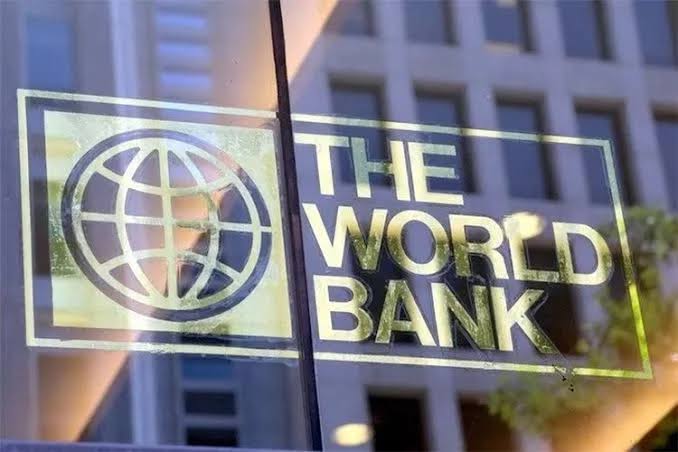
The World Bank has approved an additional $500m financing for Nigeria to strengthen climate resilience, tackle flooding, restore degraded landscapes and improve rural livelihoods across the northern part of the country.
The funding was approved under the Agro-Climatic Resilience in Semi-Arid Landscapes (ACReSAL) Project, which operates across the 19 northern states and the Federal Capital Territory.
According to the World Bank, the additional financing is expected to support the restoration of 1.4 million hectares of degraded land and benefit approximately 6.6 million people by 2031.
The intervention will focus on rehabilitating watersheds, controlling erosion, improving water management and strengthening the sustainable use of natural resources in communities vulnerable to climate-related disasters.
It is also expected to reduce flooding and associated fatalities, improve agricultural productivity and household incomes, strengthen food and water security, and reduce conflicts involving farmers, herders and rural communities.
The World Bank said the additional funding would build on progress recorded under the existing ACReSAL programme, which commenced in 2022 to address environmental degradation and climate vulnerabilities.
The project has introduced sustainable landscape management practices across approximately 550,000 hectares and reached more than 4.4 million beneficiaries.
It has also exceeded its target for improved catchment management, providing a foundation for expanding climate adaptation interventions.
World Bank Country Director for Nigeria, Mathew Verghis, said the additional financing would enable the country to expand interventions that had demonstrated positive results in vulnerable communities.
He noted that investments in climate-resilient landscapes could improve livelihoods, strengthen food and water security, and help communities cope with environmental challenges.
Similarly, the ACReSAL Task Team Leader, Iganya Joy Agene, said the funding would translate the project's existing planning and institutional foundations into larger-scale investments capable of improving climate adaptation, food security, employment and economic opportunities.
The project is being implemented by the Federal Ministry of Environment in collaboration with the Federal Ministry of Water Resources and Sanitation and the Federal Ministry of Agriculture and Food Security.
The latest approval comes about four months after the World Bank approved a $1.25bn financing package for Nigeria under the Nigeria Actions for Investment and Jobs Acceleration programme in June 2026.
Sponsored

Related stories
 News
Global Warming Indicators Hit Record Levels as COP31 Calls for Urgent Action
The World Meteorological Organization says rising global temperatures, ocean heat and greenhouse gases underscore the urgent need for stronger climate action.
 News
Vulnerable Island Nations Demand More Climate Finance at COP31
Small island nations at COP31 have called for stronger climate financing, warning that storms, floods and rising seas threaten livelihoods and development.
 News
War, Conflicts Must Not Distract World From Climate Action — Leaders Warn at COP31
Brazil and Türkiye have urged world leaders to maintain climate commitments despite wars, trade disputes and competing global political and economic crises.
 News
COP31: Energy Transition Takes Centre Stage as Countries Map Path Beyond Fossil Fuels
Countries at COP31 are pushing for faster electrification, renewable energy investment and practical roadmaps to reduce dependence on fossil fuels.
Comments (0)
Leave a comment
All comments are moderated before publishing. Your email is never published.