
MTN Fibre Expansion Plans to Link Eight Million Households
MTN Nigeria plans to connect 8 million households with fibre broadband in 3 years as it expands its Fibre-to-the-Home rollout. The company says it has invested over ₦1 trillion in telecom infrastructure but faces regulatory and deployment challenges. It also argues recent tariff increases are needed due to rising operational costs.

MTN Nigeria has affirmed its commitment to escalating its investment in fibre optic technology, setting its sights on connecting eight million households across the country within the next three years.
The disclosure was made by Tobe Okigbo, the Chief Corporate Services and Sustainability Officer, during an interactive session with alumni of the MTN Media Innovation Programme (MIP) in Lagos.
Okigbo highlighted that the telecommunications provider is channelling massive capital into residential fibre infrastructure, despite facing hurdles such as securing regulatory permits, managing the logistics of physical deployment, and navigating the extensive timelines required to recoup investments.
Data indicates that MTN Nigeria has already committed upwards of ₦1 trillion to capital expenditure, a substantial portion of which has been channeled into expanding its national fibre footprint and its Fibre-to-the-Home (FTTH) product line, known as FibreX.
He pointed out that fixed fibre broadband operates on a different model to mobile internet, as subscribers pay for specific connection speeds rather than the volume of data consumed.
This infrastructure push is part of a broader strategy by MTN to migrate consumers gradually from a reliance on mobile data over to fixed-line home broadband connections.
Okigbo noted that the global telecommunications sector is transitioning away from basic voice and data offerings, propelled by rapid advancements in artificial intelligence, 5G technology, smart devices, and interconnected households.
He cautioned that network operators who fail to pivot run the risk of becoming simple pipeline providers, whilst independent tech corporations extract the real commercial value from digital platforms.
"The future of the sector is no longer determined solely by geographic coverage. To remain relevant and market-competitive, we must construct digital services and platforms on top of our existing network infrastructure," he stated.
Addressing the issue of recent tariff adjustments, Okigbo argued that the increases were essential to counter rising overheads, inflation, and threats to the overall financial viability of the industry.
He pointed to skyrocketing diesel prices and other escalating overheads as the primary drivers behind the rising costs of maintaining telecom services in Nigeria.
In his view, service pricing must align with market conditions and inflationary pressures, while giving consumers the freedom to switch over to alternative networks if they seek better value.
Regarding the standard of service, Okigbo mentioned that MTN has previously issued compensation to customers affected by network outages and remains locked in talks with regulatory authorities over system failure accountability.
He explained that ongoing discussions aim to clarify the distinction between technical failures caused directly by network operators and disruptions triggered by external variables like vandalism, civil engineering projects, and infrastructure damage.
While MTN supports reimbursing users for genuine provider failures, Okigbo emphasised the need for clear regulatory frameworks to define these operational liabilities.
Furthermore, he remarked that laying fibre cables remains a far more intricate task than expanding cellular coverage, requiring extensive physical digging, local authority clearances, and meticulous engineering plans.
Turning to mobile financial services, Okigbo revealed that the MTN Group has acquired a 60 per cent controlling stake in MoMo across its operating territories to sharpen its edge and improve user experiences.
He concluded that the next chapter of the telecommunications landscape will be heavily dictated by integrated connectivity, smart homes, internet-enabled vehicles, and the widespread adoption of the Internet of Things (IoT).
Sponsored

Related stories
 Tech & Education
AI Era: Experts Warn Nigerian Graduates Face Skills Gap
Education experts have warned that Nigerian universities risk producing graduates who are ill-prepared for an AI-driven global job market unless curricula are urgently overhauled. At the StudyIn Global Study Conference 2026 in Lagos, stakeholders called for proactive curriculum reform, ethical AI adoption, and a shift from producing AI users to nurturing AI innovators who can solve real-world problems.
 Tech & Education
YABATECH, Threatremeter Launch Filmmaking Centre
Yaba College of Technology has signed a partnership with Threatremeter Nigeria Limited to establish a Centre for Filmmaking and Production, offering certified training in acting, directing and film production for students and the public.
 Tech & Education
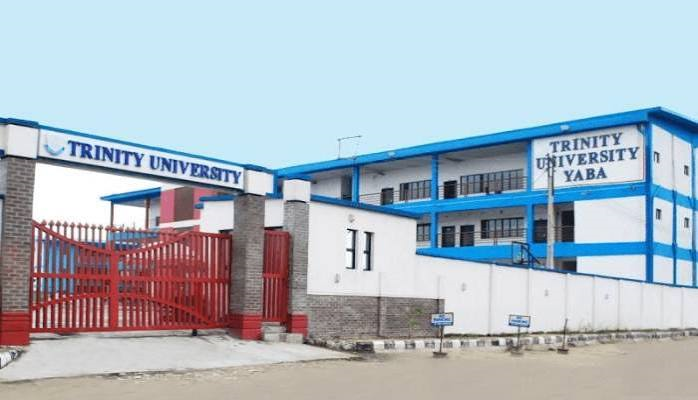
Trinity University Yaba Graduates 323, 79 First Class
Trinity University, Yaba, will confer degrees on 323 graduands at its fifth convocation on October 16, with 79 earning First Class honours and two finishing with a perfect 5.00 CGPA.
 Tech & Education
UK Visa Crackdown Hits Nigerian Students
Nigerian students are being forced to abandon their dreams of studying in the United Kingdom after universities began withdrawing admission offers en masse to avoid breaching a strict new 5 per cent visa refusal threshold. With study visa withdrawals among Nigerian applicants skyrocketing from 4.5 per cent to 22.7 per cent in the first half of 2026, thousands of prospective students now face an uncertain future—and some may be forced to leave the UK altogether.
Comments (0)
Leave a comment
All comments are moderated before publishing. Your email is never published.