
UK Visa Crackdown Hits Nigerian Students
Nigerian students are being forced to abandon their dreams of studying in the United Kingdom after universities began withdrawing admission offers en masse to avoid breaching a strict new 5 per cent visa refusal threshold. With study visa withdrawals among Nigerian applicants skyrocketing from 4.5 per cent to 22.7 per cent in the first half of 2026, thousands of prospective students now face an uncertain future—and some may be forced to leave the UK altogether.
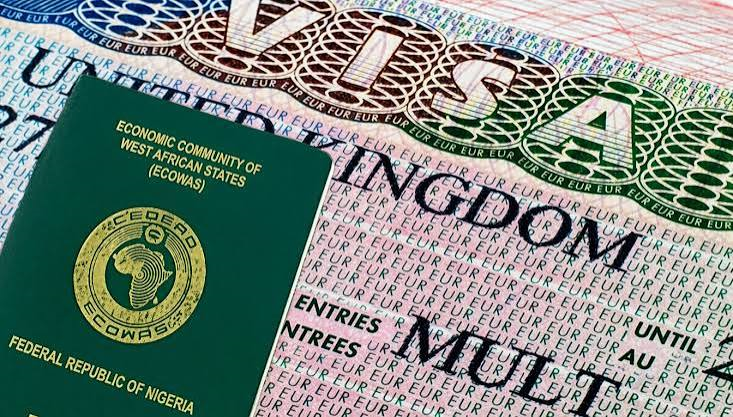
Nigerian students seeking to study in the United Kingdom are confronting a deepening crisis after universities began withdrawing admission offers en masse, leaving thousands of prospective applicants in limbo and raising the spectre of deportation for those already in the country.
The development follows a dramatic surge in study visa refusals by the UK Home Office, which doubled during the first half of 2026. According to an analysis of Home Office data by the Financial Times, 22.7 per cent of UK study visa applications from Nigerians were withdrawn in the first six months of 2026, compared with just 4.5 per cent during the same period in 2025. The overall proportion of study visa applications withdrawn rose to 10.5 per cent, up from 2.3 per cent a year earlier and a mere 0.4 per cent in 2023.
The scale of the crackdown is unprecedented. Pakistani applicants saw withdrawals surge from 3 per cent to 40.9 per cent, while Bangladesh recorded an increase from 7.1 per cent to 23.5 per cent. Universities, fearing the loss of their licences to recruit international students, have responded by pre-emptively withdrawing offers to applicants from countries with high refusal rates. Under stricter rules introduced in June 2026, universities applying for a student sponsor compliance assessment must maintain a visa refusal rate below 5 per cent, compared with the previous threshold of 10 per cent. Institutions that fail to meet the requirement risk sanctions, including losing their licence to recruit international students altogether.
The human cost of this policy is already being felt. University leaders have criticised the Home Office for what they describe as arbitrary and inconsistent decision-making. Jamie Arrowsmith, director of Universities UK International, said visa processing had become "markedly less predictable" and that "many refusals appear to rest on flawed, inconsistent and highly subjective reasoning". Professor Steven McGuire, deputy vice-chancellor of the University of East Anglia, recounted a particularly egregious case: "We had one where the interviewer did not seem to understand that UEA was in Norwich, and so rejected the applicant for not knowing where they were going to study". Professor James Miller, vice-chancellor of the University of the West of Scotland, described some refusals as "extremely spurious," noting that the Home Office had offered "no real explanation other than concern about number of students claiming asylum".
The implications extend far beyond individual applicants. Vanessa Wilson, chief executive of University Alliance, which represents 20 professional and technical universities, warned that the crackdown would result in "restructures, which inevitably result in job losses, course closures, campus closures". Sir David Bell, vice-chancellor of the University of Sunderland, said institutions had been forced to pull back from international markets where a tougher approach was being taken to visa applications. Professor Miller warned that many institutions could record a decline of more than 20 per cent in overseas student numbers this year, making job cuts "inevitable" without a policy change.
For students already in the UK, the threat is even more immediate. Under Home Office guidance, international students at institutions whose sponsorship licences are revoked may need to secure another eligible visa route or leave the country. In August 2026, the Home Office announced that Bloomsbury Institute had lost its licence to sponsor international students after failing to meet compliance requirements, with affected students told to consider alternative visa routes or leave the UK. While the latest developments do not establish that all Nigerian students already studying in the UK face deportation, the immediate impact is devastating for prospective students whose offers are being withdrawn. For a generation of Nigerian students who have worked tirelessly to secure places at British universities, the door to the UK appears to be closing—and the consequences for both students and the UK's higher education sector could be profound.
Sponsored

Related stories
 Tech & Education
Ekiti Tech Varsity Resumes, VC Promises Stable Calendar
The Federal University of Technology and Environmental Sciences, Iyin-Ekiti, has announced October 12, 2026, as the resumption date for returning students, with fresh students expected on November 2. Vice-Chancellor Prof. Gbenga Aribisala says the university is committed to a predictable academic structure that ensures students progress without disruption or delay.
 Tech & Education
JAMB Warns: Admission Outside CAPS Is Fake and Will Be Rejected
The Joint Admissions and Matriculation Board has issued a fresh warning to candidates against accepting admission offers outside its Central Admissions Processing System, declaring that such admissions are illegal and unrecognised. With thousands of students already facing devastating consequences—including being barred from NYSC, the Nigerian Law School, and medical practice—JAMB insists that CAPS remains the only approved platform for all tertiary admissions in Nigeria.
 Tech & Education
Bamidele Unveils N200m Renovated Science College
Senate Leader Opeyemi Bamidele has commissioned the renovated Government Science College, Iyin-Ekiti, personally funded at over N200 million, donating buses to the school and nearby FUTESI while promising a second phase of upgrades.
 Tech & Education
Abia Students Crowned Global Debate Champions
Students from public schools in Abia State, representing Nigeria, have emerged overall champions at the 2026 International Schools Debate Championship in Doha, Qatar, winning four major trophies and 12 laurels after defeating teams from Jordan, India, Qatar, the Philippines, Kenya and others. The historic victory has been hailed as proof that Governor Alex Otti's education reforms are producing world-class scholars.
Comments (0)
Leave a comment
All comments are moderated before publishing. Your email is never published.