
Landmark Ruling: Court Declares Hausas Born in Jos North as Indigenes
A Plateau State High Court has ruled that Hausa persons born and raised in Jos North are indigenes of the area and are entitled to indigene certificates, in a landmark decision that could reshape the decades-long indigene-settler debate.
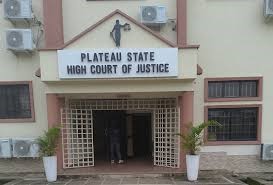
In a landmark judgment that could reshape the decades-long indigene-settler debate in Nigeria's volatile Middle Belt, a Plateau State High Court has ruled that a Hausa person born and raised in Jos North Local Government Area is an indigene of the area and is entitled to a Certificate of Indigene.
A Plateau State High Court 17 has ruled that a Hausa person born and raised in Jos North Local Government Area is an indigene of the area.
Justice C. Donglong gave the ruling while delivering judgment in a suit filed by two applicants — Fatima Baba Akawu, 1st claimant, and Baba Alhaji Akawu, 2nd claimant — against Jos North LGA over the denial of an indigene certificate to the 1st claimant.
The case was brought after the local government reportedly refused to issue Fatima an indigene certificate because of her Hausa ethnic background.
The applicants had approached the court to determine whether the 1st claimant, by virtue of her birth in Jos North LGA to a father who is a bona fide indigene of that area, is entitled to be recognised as an indigene and to be issued a Certificate of Indigene, notwithstanding her Hausa ethnic origin.
In his judgment, Justice Donglong granted all the reliefs sought by the applicants, delivering a ruling that directly confronts the contentious practice of ethnic-based denial of indigene certificates in Nigeria.
The judge described the council's action as discriminatory, noting that Fatima was issued a residence certificate while another applicant of Berom origin received an indigene certificate on the same day.
In particularly strong language, the court stated that the defendant's conduct, by issuing a Residential Certificate to the 1st claimant, a Hausa by ethnic origin, while issuing a Certificate of Indigene to Dung Bot of the Berom ethnic origin, both on the same date for the same application, is "a reprehensible act of ethnic discrimination that is inconsistent to the letter and spirit of the Constitution."
The judge declared that "by virtue of the 2nd claimant's status as a bona fide indigene of Jos North Local Government Area of Plateau State and the constitutional provisions of Section 25(1)(a) and (b) of the Constitution of the Federal Republic of Nigeria, 1999 (as amended), his biological children, including the 1st claimant, who were born and raised in Jos North" are entitled to indigene status.
Justice Donglong stated that Fatima and the other biological children of the second claimant "are entitled to be recognised as indigenes of Jos North LGA of Plateau State and to be issued a certificate of indigene accordingly." The judge also issued a perpetual injunction restraining Jos North Local Government from issuing residence certificates as a substitute for indigene certificates, declaring that such a practice has no legal basis.
The judgment touches on one of Nigeria's most sensitive and long-standing socio-political disputes. In Plateau State, where Christians dominate local government, Hausa-Fulani Muslims, whose families have lived in Jos for over a century, were classified as settlers.
Nigerian law allows local governments to determine their own qualifications for residency, and local administrators across the country typically make this determination based on ethnic heritage and historic control of the land. In response, the Hausas have been agitating for indigene status in Jos, as well as for their own traditional institutions and for political inclusion in elections and government appointments.
The indigene-settler divide has been a major driver of intercommunal violence in Jos over the years. Nigerians who are classified as "non-indigenes" or "settlers" are marginalised and excluded in ways that have nothing to do with the aims of preservation of cultural identity. The discriminatory treatment meted out to "non-indigenes" has deep historical and socio-political underpinnings, and is probably the most sensitive subject in Nigeria's public life. It has contributed to a cycle of violence in certain states and is of earnest national security concern for Nigeria.
The ruling is expected to have far-reaching implications beyond Plateau State. Legal analysts say the judgment, if upheld, could set a judicial precedent for millions of Nigerians classified as "settlers" in areas where their families have lived for generations.
Governor Hope Uzodimma of Imo State had previously implored the National Assembly to revive a policy that grants full indigene rights to Nigerians who have resided in a state for over 10 years or were born there, signalling growing political support for ending the indigene-settler divide.
However, political observers note that the ruling could stir fresh tensions in the volatile Plateau State, where the question of who "owns" Jos has been at the heart of deadly ethno-religious clashes for decades.
Sponsored
Related stories
 News
News
IMF Says Nigerians Still Face High Living Costs Despite Economic Growth
The International Monetary Fund has urged the Federal Government to introduce targeted cash transfers and temporary income support for vulnerable households as food and energy costs continue to strain Nigerians despite improved economic growth.
 News
News
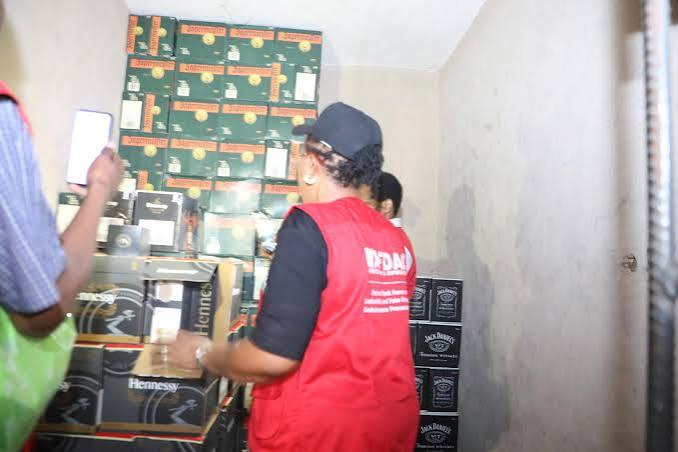
NAFDAC Arrests Two over Suspected Fake Drinks Operation in Lagos
NAFDAC has arrested two suspects at a facility in Lagos’ Trade Fair Complex over the alleged revalidation and repackaging of expired energy drinks, wines and whisky, warning of the health risks posed by counterfeit beverages.
 News
News
LCCI Proposes 20% Petrol Price Cut Within Six Months
The Lagos Chamber of Commerce and Industry has urged the Federal Government to introduce a six-month programme targeting a 15 to 20 per cent reduction in petrol pump prices to ease rising energy, transport and operating costs.
 News
News
Nigeria’s Private Capital Inflows Rise to $6bn as Reforms Gather Pace
World Bank Group President Ajay Banga says Nigeria’s private capital inflows have risen from about $300 million in 2023 to nearly $6 billion in 2026, while the Federal Government reports an increase in the tax-to-GDP ratio to 12.5 per cent.
Comments (0)
Leave a comment
All comments are moderated before publishing. Your email is never published.