
FG Targets 70% Local Drug Production by 2030
The Federal Government aims for 70% local production of essential medicines by 2030, backed by $2 billion in financing and zero-tariff policies to boost Nigeria’s pharmaceutical sovereignty

The Federal Government has announced an ambitious strategic target to achieve at least 70 percent local production of essential healthcare products by 2030. This bold initiative is designed to fortify Nigeria’s medicine security, drastically reduce the nation’s heavy reliance on imported pharmaceuticals, and build a resilient domestic healthcare supply chain.
The Minister of State for Health and Social Welfare, Iziaq Salako, disclosed this roadmap on Monday in Lagos while declaring open the 8th Nigeria Pharma Manufacturers Expo. Organized by the Pharmaceutical Manufacturers Group of the Manufacturers Association of Nigeria (PMG-MAN), the expo was themed “Regional Manufacturing: Advancing Africa’s Pharma and Life-Science Sovereignty through Localisation,” drawing top stakeholders from across the continent’s life-sciences sector.
Addressing the gathering, Minister Salako highlighted the transformative interventions being driven by the Presidential Initiative to Unlock the Healthcare Value Chain (PVAC). He revealed that the initiative has successfully secured approximately $2 billion in financing commitments at single-digit interest rates. Currently, about 50 Nigerian health firms are in advanced discussions to access this critical funding, which is expected to catalyze massive infrastructural upgrades and capacity expansion within the sector.
To further de-risk local manufacturing, the government is deploying aggressive fiscal incentives. Salako noted that 87 local pharmaceutical manufacturers are already benefiting from a presidential executive order that grants zero tariffs on the importation of pharmaceutical machinery, Active Pharmaceutical Ingredients (APIs), and excipients. This exemption covers nearly 1,000 Harmonised System (HS) codes, significantly lowering the cost of production and enhancing the global competitiveness of Nigerian-made medicines.
The push for localization is rooted in hard lessons learned during the COVID-19 pandemic, which starkly exposed the vulnerabilities of over-reliance on fragile global supply chains. “Our conversation can no longer be limited to whether we can access medicines when global supply chains are functioning,” Salako asserted. He framed medicine security not merely as a health issue, but as a critical matter of national resilience and economic sovereignty.
Consequently, the government’s strategy extends beyond the mere final-product assembly of drugs. It encompasses a comprehensive expansion of local production capabilities for APIs, vaccines, biologics, diagnostics, and other critical health commodities. Salako pointed to the ongoing operationalisation of the National Institute for Pharmaceutical Research and Development (NIPRD) API Capacity Building and Concept Production Centre as a major milestone. Additionally, targeted efforts are underway to localize the production of diagnostic products for HIV, hepatitis, and syphilis, while harnessing Nigeria’s rich phytomedicinal resources for research and development.
To guarantee that these manufacturing upgrades translate into sustainable business growth, the government is also restructuring market demand. Salako announced the establishment of Medipool, Nigeria’s national Group Purchasing Organisation for essential medicines and medical commodities. By aggregating public procurement and negotiating bulk purchases, Medipool will improve supply-chain efficiency and, crucially, create a predictable, guaranteed market for locally manufactured products, thereby incentivizing further private sector investment.
Looking beyond national borders, the Minister urged pharmaceutical manufacturers, researchers, and investors to leverage the African Continental Free Trade Area (AfCFTA). He emphasized that Nigeria’s pharmaceutical ambitions would be exponentially amplified by accessing larger regional markets, provided there is sustained innovation, regulatory alignment, and robust cross-border collaboration.
As Nigeria charts this decisive course toward pharmaceutical self-reliance, the synergy between aggressive government policy, accessible financing, and private sector innovation will be the ultimate determinant of success. If fully realized, the 2030 target will not only safeguard the health of millions of Nigerians but also position the country as the undisputed life-science manufacturing hub of Africa.
Sponsored
Related stories
 Health
Borno Hires 2,000 Health Workers, Still Faces Staff Shortage
Borno State has recruited nearly 2,000 doctors, nurses and other health professionals in two years, but the head of its contributory health agency says manpower gaps persist as demand grows under the state health insurance scheme.
 Health
Lassa Fever Kills 268 in Nigeria as Cases Hit 1,138
Nigeria has recorded 1,138 confirmed Lassa fever cases and 268 deaths across 24 states in 2026, with the case fatality rate rising to 23.6 per cent—significantly higher than the 18.6 per cent recorded during the same period in 2025. The NCDC has identified five states accounting for 88 per cent of all confirmed cases, as it intensifies preparedness efforts ahead of the peak transmission season.
 Health
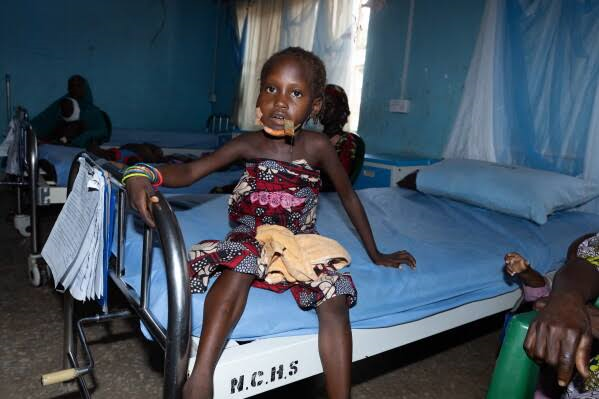
MSF Calls for Routine Noma Surveillance in Nigeria
Doctors Without Borders says noma, a fast-moving and often fatal facial infection linked to malnutrition and poverty, remains largely missing from Nigeria's routine child health programmes despite its 2023 recognition as a neglected tropical disease.
 Health
Oyo Rejects Diphtheria Outbreak Claims, Accuses APC
The Oyo State Government has dismissed claims by the Senator Sharafadeen Alli Campaign Organisation that diphtheria has affected 16 local government areas, describing the allegation as false and politically motivated. Commissioner for Health Dr. Oluwaserimi Ajetunmobi confirmed that while suspected cases have been recorded in 10 LGAs, none have been confirmed, and accused the APC campaign group of distorting immunisation data to score political points.
Comments (0)
Leave a comment
All comments are moderated before publishing. Your email is never published.