
FG Moves to Overhaul 18 Agricultural Laws
The Federal Government has begun the second phase of reviewing 18 agricultural laws, moving from diagnosis to drafting concrete reforms aimed at replacing obsolete provisions and attracting investment into Nigeria's agribusiness sector.
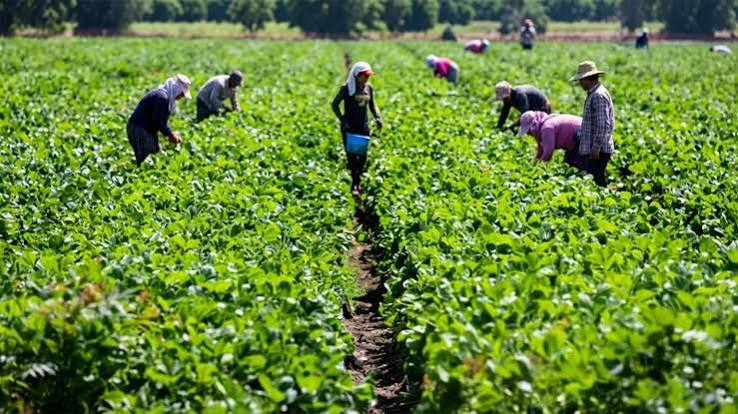
The Federal Government has commenced the second phase of a review of Nigeria's agricultural laws, as part of efforts to replace obsolete provisions with a modern legal framework capable of driving food sovereignty, sustainable agriculture, and agribusiness-led economic growth.
Director of Legal Services at the Federal Ministry of Agriculture and Food Security, Hafsat Dupe Belgore, represented by Assistant Legal Adviser Manbyen Mamvong, disclosed this in Abuja at the opening of the Second Phase of the Stakeholders' Technical Retreat on the Review of Nigeria's Agricultural Laws.
Belgore explained that the first phase involved a comprehensive diagnostic mapping of existing agricultural legislation, conducted through extensive stakeholder consultations. That exercise identified obsolete provisions, overlapping mandates, regulatory gaps, and areas where existing laws no longer reflected current realities, including climate change, mechanisation, agricultural technology, private-sector investment, and the broader transformation of food systems.
She described the second phase as more critical, since it would move the process from diagnosis to concrete legal reform. According to Belgore, the phase has three major objectives: validating the findings and draft reform proposals from the first phase, obtaining sector-specific contributions to strengthen the reforms, and aligning the proposed legal framework with the Renewed Hope Agenda, relevant national laws, and international best practices. She said the retreat was intended to refine and interrogate the draft provisions to ensure the resulting laws are practical, enforceable, and inclusive. "We are here to refine, to interrogate draft provisions, and to ensure that the new legal framework we are crafting is practical, enforceable, inclusive, and capable of driving Nigeria towards food sovereignty and agribusiness-led economic growth," she said.
Belgore urged participants to be frank, constructive, and forward-looking, assuring them that their contributions would be captured and reflected in the resulting legal drafts. She also commended the minister, permanent secretary, development partners, legal experts, and other stakeholders for their contributions to the reform process so far.
Speaking on behalf of the Chairman of the House Committee on Agricultural Production Services, Hon. Bello Ka'oje, the committee's Deputy Chairman, Kelechi Nwogu, said reviewing the 18 agricultural laws was important to ensuring Nigeria's legal framework remains relevant to emerging realities and opportunities within the agricultural sector. He said the National Assembly remains committed to working with the ministry and other stakeholders to ensure the review translates into practical and effective legislation.
Also speaking, Consultant and Lead Partner at Thinkfield Law, Emeka Ogenyi, said the retreat would enable stakeholders to validate the proposed amendments to the 18 agricultural laws and incorporate approved inputs into a final document. He explained that the harmonised version would subsequently be submitted to the Federal Ministry of Justice for formal legal drafting, with the proposed amendments aimed at establishing a modern, coherent, and fit-for-purpose agricultural legal framework capable of supporting sustainable agricultural development and attracting investment into the sector.
The retreat brought together members of the National Assembly, representatives of the Office of the Attorney-General of the Federation and Minister of Justice, directors of the Federal Ministry of Agriculture and Food Security, representatives of agencies under the ministry, legal experts, resource persons, and other stakeholders.
The legal overhaul adds to a broader pattern of institutional and policy reforms across Nigeria's agricultural sector in 2026, running alongside separate initiatives such as the upcoming oil and gas licensing rounds, the AGROW agricultural value chains programme, and various state and federal livestock and mechanisation drives. For a sector where outdated legislation has often been cited as a barrier to private investment and modern farming practices, the review's stated aim, replacing decades-old provisions with a framework built around climate resilience, mechanisation, and agribusiness, represents an attempt to align Nigeria's legal architecture with the kind of large-scale agricultural transformation officials have repeatedly said they are pursuing. With the technical retreat now under way, the next major milestone will be the submission of a harmonised draft to the Ministry of Justice for formal legislative drafting, a step that will determine how quickly, and in what final form, the proposed reforms make their way through the National Assembly.
Sponsored

Related stories
 Agriculture
Abakaliki Rice Mill: Ebonyi’s N171bn Neglected Goldmine
Nigeria's largest rice mill, operating since 1967, processes 132,000 tonnes of rice annually—worth over N171 billion—yet operates without power, safe working conditions, or good roads. As the state's entire IGR sits at just N17.18 billion, analysts ask how a facility generating ten times that amount has been allowed to decay into a "prostrate goldmine."
 Agriculture
Seaweed Could Transform Nigeria’s Agricultural Energy Sector
SMEFUNDS CEO Dr. Femi Oye advocates for seaweed as a renewable energy source to power Nigeria’s food production, offering a circular solution for farmers and small businesses.
 Agriculture
Babalola’s Farmer Support Hits N98m
Legal icon Aare Afe Babalola has disbursed N11.2 million to 81 outstanding farmers across Ekiti State's 16 local government areas, bringing total awards under his annual agricultural scheme since 2015 to N98 million.
 Agriculture
FG Launches African Swine Fever Control Campaign in Southwest
The Federal Government has launched a major African Swine Fever control and biosecurity campaign at the Oke-Aro Pig Farm Estate, distributing protective kits to farmers and pledging comprehensive training to prevent future outbreaks. The intervention by the Livestock Productivity and Resilience Support Project (L-PRES) targets one of Nigeria's largest pig production clusters, which has suffered devastating losses from the highly contagious disease in the past.
Comments (0)
Leave a comment
All comments are moderated before publishing. Your email is never published.