
FG Empowers 70 Digital Media Managers
The Federal Government has equipped 70 digital media managers with tablets to serve as grassroots information channels, bridging the gap between vocational empowerment programmes and potential beneficiaries nationwide
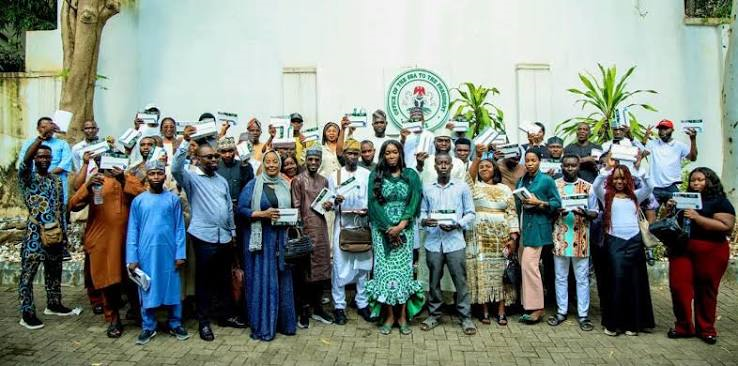
In a strategic move to deepen the reach of its socio-economic interventions, the Federal Government has equipped 70 digital media managers with modern tablets, designating them as primary grassroots information channels for the administration’s vocational, entrepreneurship, and digital empowerment programmes. Unveiled on Thursday in the nation’s capital, the initiative marks a deliberate shift toward leveraging digital media practitioners to bridge the critical information gap between government opportunities and potential beneficiaries in remote communities.
The programme was officially launched by the Office of the Senior Special Assistant to the President on Technical, Vocational and Entrepreneurship Education (OSSAP-TVEE). During a specialized media information and empowerment meeting, Abiola Arogundade, the Senior Special Assistant to the President, personally presented the devices to the beneficiaries. The initiative underscores the administration’s recognition that the success of any public policy is intrinsically tied to effective communication and widespread public awareness.
Addressing the gathering, Arogundade emphasized that the decision to empower media personnel was highly intentional. She noted that government interventions, no matter how well-funded, can only achieve their intended impact if the target demographic is adequately informed and equipped to access them.
“The empowerment of media personnel is deliberate because you play a critical role in ensuring that government programmes reach communities, young Nigerians, entrepreneurs, and other potential beneficiaries,” Arogundade stated. She highlighted that digital media practitioners serve as the vital connective tissue between policy formulation in Abuja and practical implementation at the grassroots level. “Without you, even if we go to these places, nobody will know. We want everybody to know what President Bola Ahmed Tinubu is doing, not just here in Abuja, but in all states.”
The initiative also addresses a pervasive challenge within Nigeria’s burgeoning digital economy: the digital divide. According to the presidential aide, a significant number of young Nigerians, skilled artisans, and small-scale entrepreneurs possess the requisite skills to thrive in the modern economy. However, their progress is frequently stifled by inadequate access to essential digital tools.
“A phone or laptop is a tool to find new customers and turn training into certification. Without it, even the most capable people are locked out of the world,” Arogundade explained. By providing these media managers with tablets, the government is creating a multiplier effect. These practitioners are now better positioned to produce localized content, manage community platforms, and disseminate crucial information about skill acquisition programmes and grants in formats that resonate with local populations.
The distribution of the devices comes with clear expectations. Arogundade urged the beneficiaries to deploy the tablets productively, moving beyond personal use to actively amplify information on available government programmes. She charged them with the responsibility of demystifying the application processes for various empowerment schemes, thereby helping potential beneficiaries understand exactly how to access these opportunities.
“We cannot keep empowering technical people and forget the media. You are the people helping us pass this message to the world. That is why you are here,” she affirmed, reinforcing the symbiotic relationship between technical skill acquisition and media advocacy.
This targeted intervention aligns seamlessly with the broader objectives of the National Poverty Reduction with Growth Strategy (NPRGS), which prioritizes human capital development and inclusive economic growth. By decentralizing information dissemination and empowering local digital voices, the Federal Government aims to ensure that no skilled Nigerian is left behind due to a lack of awareness or digital exclusion.
As the 70 media managers return to their respective communities, they carry not just new hardware, but a mandate to transform the narrative around government interventions. If successfully executed, this initiative could serve as a scalable model for future public communication strategies, proving that empowering the messengers is just as crucial as empowering the masses.
Sponsored

Related stories
 Youth Empowerment
1,000 Tech Scholars to Benefit From Ekeh Foundation, NCS Partnership
The Leo Stan Ekeh Foundation has signed a Memorandum of Understanding with the Nigeria Computer Society to provide mentorship, technical training, and practical industry experience to 1,000 beneficiaries of its technology scholarship programme. The initiative will select students from all 36 states and the FCT, covering their education from first year through graduation while pairing each scholar with a dedicated industry mentor.
 Youth Empowerment
Ibadan NGO Empowers 100 Girls, Urges Oyo to Fight Child Marriage
The Oluwakemi Olusola Girl Child Foundation, with two partner foundations, gave 100 girls in an underserved Ibadan community medical checks, school bags, food, hygiene kits and counselling, while calling on the Oyo government to intensify its fight against child marriage.
 Youth Empowerment
NNPC, Eni Award Postgraduate Scholarships to 30 Nigerian Graduates
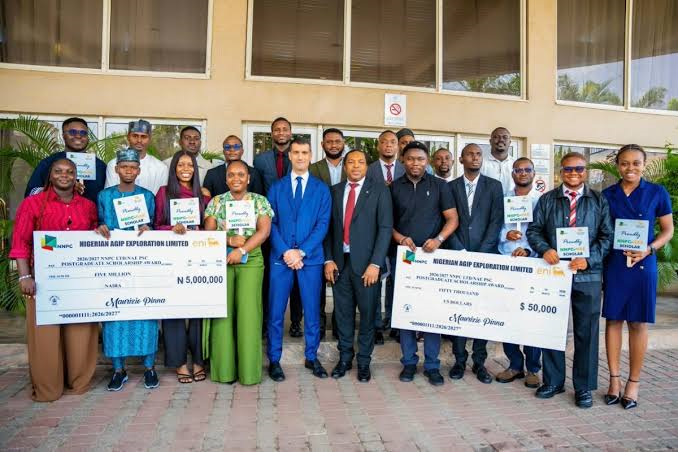
The NNPC/Eni Joint Venture has awarded postgraduate scholarships to 30 Nigerian graduates for the 2026/2027 academic session, selecting the beneficiaries from over 3,000 applicants. Ten scholars will study at top universities abroad, including Imperial College London and the University of Aberdeen, while the remaining 20 will pursue degrees in Nigerian institutions across engineering, geosciences, renewable energy, and energy transition disciplines.
 Youth Empowerment
100,000 Pupils Get N20,000 Each Under N2bn Fund
First Lady Oluremi Tinubu has launched a N2 billion Learners Retention Support Programme that will provide N20,000 each to 100,000 pupils in its first phase, alongside the distribution of two million packs of sanitary towels and back-to-school materials to girls in public basic schools across Nigeria. The initiative, flagged off to mark the 2026 International Day of the Girl Child, is designed to remove the financial and hygiene barriers that force thousands of Nigerian girls out of the classroo
Comments (0)
Leave a comment
All comments are moderated before publishing. Your email is never published.