
Fela Kuti Inducted Into Rock & Roll Hall of Fame, Makes History for Afrobeat
Decades after his death, Fela Anikulapo-Kuti has achieved what no African musician before him could: induction into the Rock & Roll Hall of Fame, following a historic Grammy Lifetime Achievement Award earlier in 2026. The honors cap a remarkable year for the Afrobeat pioneer, cementing a legacy that began in Lagos’ Kalakuta Republic and now reverberates from Los Angeles to London,and through the music of Burna Boy, Wizkid, and a generation of artists who inherited his fire.
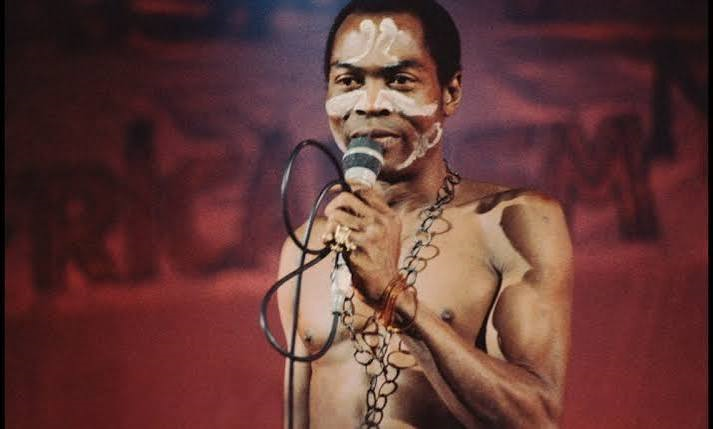
For decades, the world acknowledged Fela Anikulapo-Kuti as a prophet without a global podium. On Saturday, November 14, 2026, that changed forever.
The Afrobeat pioneer was posthumously inducted into the Rock & Roll Hall of Fame at Los Angeles’ Peacock Theater, becoming the first major African music figure to receive the honor. The induction, in the Early Influence category, followed two unsuccessful nominations in 2021 and 2022,a persistence that mirrored Fela’s own refusal to compromise in life. The Cleveland-based institution surveyed more than 1,000 musicians, historians, and industry members before recognizing Fela as “a revolutionary voice that denounced injustice, provoking political change while fusing jazz, West African music, and soul”.
The honor did not arrive in isolation. In February 2026, the Recording Academy presented Fela with a Lifetime Achievement Award, making him the first African to receive that distinction. Together, the two honors represent the most significant global recognition ever bestowed on a Nigerian musician,and a belated correction of the historical record.
Fela’s journey to this summit began in Abeokuta in 1938 and took shape during a 1967 stay in Ghana, where he studied with Hugh Masekela and began fusing highlife with jazz, funk, and West African rhythms. A 1969 tour of the United States exposed him to the Black Power movement, a revelation that politicized his music permanently. He returned to Lagos and created Afrobeat—a genre that was as much a weapon as a rhythm.
His target was never subtle. Fela confronted military rule, corruption, colonial influence, and social inequality, earning international acclaim and repeated confrontations with successive Nigerian governments. He built the Kalakuta Republic, a communal compound that functioned as a symbol of resistance, and the Afrika Shrine, a nightclub where his music became a ritual of defiance. When the military destroyed Kalakuta, he rebuilt it. When they jailed him, he wrote more songs. His refusal to compromise was absolute—and it cost him dearly during his lifetime.
That is the cruel irony of Fela’s posthumous coronation. The global recognition he now receives with such ceremony eluded him while he was alive, partly because his music refused to soften its edges for international consumption. He did not seek permission to be heard. He simply played, and the world eventually caught up.
The 2026 Rock Hall ceremony was also a family affair. Fela’s children and grandchildren—including Femi, Seun, Yeni, Shalewa, and Made Kuti—were present to receive the honor on his behalf, describing the induction as one of the greatest recognitions of his career. Their presence was a reminder that Fela’s legacy is not frozen in archival footage. It is alive, evolving, and being carried forward by the next generation.
And that legacy extends far beyond his own recordings. Fela’s influence is audible in the music of Burna Boy, Wizkid, and Rema—artists who have taken Afrobeat’s DNA to global stadiums and streaming platforms. Burna Boy, in particular, has sampled and interpolated Fela’s work liberally, treating the legend’s catalogue as both a foundation and a challenge. When Burna Boy sells out arenas in London and New York, he is walking a path that Fela cleared with far fewer resources and far greater personal cost.
Fela shared the Early Influence Award with Queen Latifah, MC Lyte, Celia Cruz, and Gram Parsons—a diverse cohort that underscores the breadth of his impact. But his story carries a particular weight for Africa. For a continent whose musical exports have often been treated as footnotes in Western narratives, Fela’s induction is a correction. It says that the sounds born in Lagos’ crowded streets and the Kalakuta Republic belong not on the margins of music history, but at its center.
Nearly three decades after his death in 1997, the Rock Hall’s citation read: “Fela Kuti’s innovative music, revolutionary message, and generational impact continue to represent the indomitable and evolving spirit of rock & roll”. That spirit—restless, confrontational, and unyielding—is the reason his music still sounds urgent today. The awards have finally caught up with the truth. Fela Kuti conquered the world’s musical stage not by seeking its approval, but by refusing to abandon his own.
Sponsored

Related stories
 Lifestyle
Pro-Tinubu Group Warns Imo West Dispute Could Cost APC South-East Support
A pro-Tinubu support group has warned that the dispute over the APC’s Imo West senatorial ticket could weaken the party’s support in the South-East and undermine its 2027 re-election campaign.
 Lifestyle
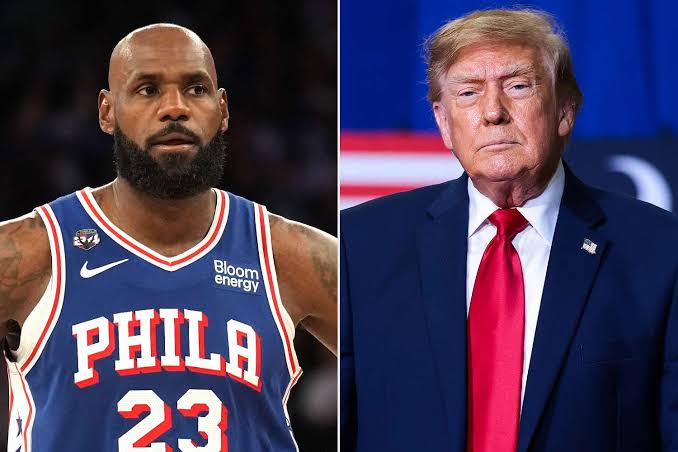
Trump Accuses LeBron James of Disrespecting US National Anthem
US President Donald Trump has criticised NBA star LeBron James for moving during the national anthem before a Philadelphia 76ers game, demanding an apology for what he described as disrespect towards the country and fallen American servicemen.
 Lifestyle
Lagos APC Unveils Team to Mobilise Non-Indigene Voters for 2027
The Lagos APC has inaugurated a sub-committee to engage non-indigenous residents and ethnic nationality groups as part of its mobilisation strategy for the 2027 elections.
 Lifestyle
OPay Seeks DSS, Police Probe Over Shutdown Rumour
OPay has asked the Department of State Services and Nigeria Police Force to investigate a false social media claim that the fintech company was shutting down its Nigerian operations.
Comments (0)
Leave a comment
All comments are moderated before publishing. Your email is never published.