
FCT Activates Emergency Centre as Cholera Outbreak Claims Nine Lives Before Christmas
The Federal Capital Territory Administration has activated its Public Health Emergency Operations Centre to contain a cholera outbreak that has already killed at least nine people in Gwagwa community, Abuja, with residents still relying on river water despite the disease being linked to unsafe water sources. As the Christmas and New Year season approaches, health authorities are racing to strengthen surveillance, improve case management, and prevent the outbreak from spreading across the territo
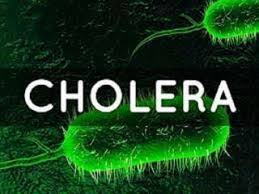
Federal Capital Territory Administration has activated its Public Health Emergency Operations Centre to contain an ongoing cholera outbreak that has claimed at least nine lives in the Gwagwa community of Abuja Municipal Area Council, with health authorities warning that the approaching Christmas and New Year celebrations could accelerate transmission if urgent measures are not taken.
The centre was formally activated on Wednesday, November 25, 2026, by the Director of Public Health, Dr Teresa Nwachukwu, on behalf of the Mandate Secretary of the Health Services and Environment Secretariat, Dr Dolapo Fasawe. The activation brings together relevant government agencies, development partners, and implementing organisations to strengthen surveillance, improve case management, and coordinate interventions in affected communities across the territory.
The FCT State Epidemiologist, Dr Lawal Lukman Ademola, was appointed Incident Manager to oversee the implementation of the approved Cholera Incident Action Plan through a multisectoral Incident Management System. His mandate covers disease surveillance, active case searches, laboratory diagnosis, treatment, infection prevention and control, water, sanitation and hygiene interventions, risk communication, logistics, and vaccination where necessary.
The outbreak has cast a grim shadow over the capital. Initial reports on November 12 confirmed five deaths in Gwagwa, a densely populated, low-income community. By November 19, the councillor representing the area, Nuhu Aliyu Usman, who also serves as Supervisory Councillor for Health in the Abuja Municipal Area Council, confirmed that the death toll had risen to nine. Residents have linked the outbreak to the community's water sources. Gwagwa had been without running water for more than two months, and most boreholes in the area were not functioning because of inadequate electricity supply. Many residents resorted to fetching water from the river near the community's main bridge, despite concerns that it may be contaminated. Others could not afford to buy water from vendors, who sell a 20-litre jerrycan for as much as N300.
The activation meeting was attended by the Director of the Rural Water Supply and Sanitation Directorate, Dr Joyce Echoke, representatives of the FCT Water Board, the World Health Organisation, UNICEF, Jhpiego, Pro-Health International, and the Nigerian Red Cross Society. The partners reaffirmed their commitment to supporting the territory's outbreak response, with priority interventions including intensified disease surveillance, active case searches, laboratory testing, treatment, infection prevention and control, water and sanitation improvements, risk communication, community engagement, and vaccination where appropriate.
The timing of the outbreak is particularly sensitive. Increased movement and social gatherings during the festive season create ideal conditions for cholera transmission, and health authorities are determined to prevent the situation from escalating. Response activities will be intensified in affected communities, while surveillance and preventive measures will be strengthened in other areas considered vulnerable to the outbreak.
Nigeria has been grappling with a severe cholera burden throughout 2026. The World Health Organisation reported 72,374 cases and 467 deaths nationwide between January 1 and September 27, 2026, with inadequate access to safe water and sanitation identified as major drivers of transmission. The FCT outbreak is a stark reminder that the capital is not immune to a crisis that has affected communities across the country.
The FCT administration has urged residents to drink only water from safe and reliable sources, advising those uncertain about water quality to boil or chlorinate it before consumption. Residents have also been advised to wash their hands regularly with soap, eat properly cooked food, use sanitary toilet facilities, avoid open defecation, and maintain clean surroundings. Anyone experiencing sudden watery diarrhoea, with or without vomiting, should take oral rehydration solution immediately and seek medical attention at the nearest health facility without delay.
Suspected cases and requests for emergency assistance can be reported to the FCT State Epidemiologist and Incident Manager, Dr Lawal Lukman Ademola, on 09084000085.
For Gwagwa's residents, the emergency operations centre represents a lifeline, but the underlying crisis remains unresolved. The community's water supply must be restored, boreholes repaired, and affordable safe water made accessible if the outbreak is to be contained at its source. The FCT has activated its response machinery. The test now is whether it can deliver clean water, reliable healthcare, and effective public health coordination before the festive season ushers in a new wave of infections.
Sponsored

Related stories
 Health
UNICEF, DGI Consult Train Health Workers in Three States to Reduce Preventable Deaths
UNICEF and Development Governance International (DGI) Consult have trained local government health managers and frontline health workers in Adamawa, Sokoto, and Kwara states under the Enhancing Leadership, Governance and Management Capacities (ELGMC) Project, a component of the EU-funded SARAH Project. The training focuses on practical problem solving, service coordination, and accountability in primary healthcare facilities, targeting gaps in reproductive, maternal, newborn, child, and adolesce
 Health
Terogene Launches DNA Testing Platform for Nigerians at Home, Abroad
Terogene has launched Reach, a digital home DNA testing platform that allows Nigerians at home and in the diaspora to order cheek swab kits, collect samples privately, manage consent through secure accounts, and receive laboratory results without ever visiting a clinic. Built to resolve paternity and sibling questions across borders, the service partners with a German ISO accredited laboratory and local hospitals, promising privacy, convenience, and a 10 day standard turnaround.
 Health
FG Intensifies Campaign Against Unhealthy Diets Amid Rising Hypertension, Diabetes Cases
The Federal Government has called for urgent, coordinated action to curb the rising tide of hypertension and diabetes, blaming unhealthy diets, processed foods, and sedentary lifestyles for a silent epidemic that is overwhelming Nigeria’s health system. Health authorities warn that unless food environments change and prevention becomes a national priority, millions more Nigerians will be diagnosed with preventable conditions that cost lives and drain household finances.
 Health
New COVID-19 Variant Prompts Medical Academy to Urge Tighter Surveillance in Nigeria
The Nigerian Academy of Medicine has urged the Federal Government to reactivate and strengthen COVID-19 surveillance systems following the emergence of a new variant abroad, warning that Nigeria’s porous borders, low testing rates, and weakened genomic sequencing capacity leave the country dangerously exposed. The academy says the time to act is now, not when the variant is already circulating undetected in Nigerian communities.
Comments (0)
Leave a comment
All comments are moderated before publishing. Your email is never published.