
Ex-Principals Reject King's College Handover, Demand FG Retain Control
Seven former principals of King's College, Lagos, have rejected the Federal Government's concession of the 117-year-old institution to its Old Boys' Association, describing the transfer of day-to-day administration to a private body as "inconceivable." In a statement, the Forum of Former Principals demanded the immediate suspension of the arrangement and urged the government to commission a comprehensive development master plan instead.
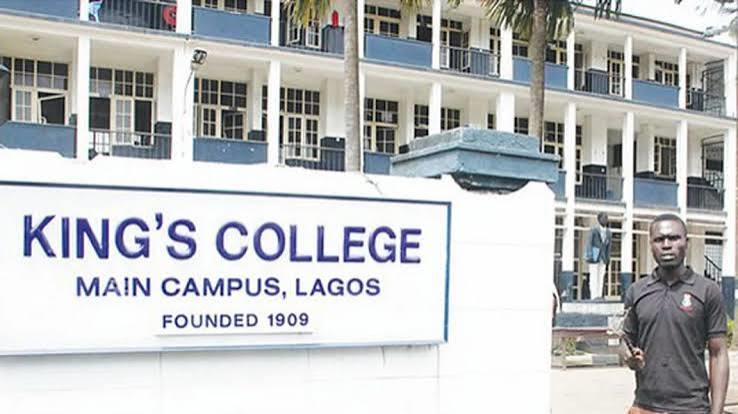
Former principals of King's College, Lagos, have rejected the Federal Government's concession of the 117-year-old institution to the King's College Old Boys' Association (KCOBA), demanding the immediate suspension of the arrangement and insisting that the government retain full ownership, funding, and administrative responsibility for the college.
The former school heads, under the Forum of Former Principals of King's College, made their position known in a statement on Wednesday signed by seven former principals and acting principals. The signatories included Dr S. A. B. Atolagbe, Sylvester Onoja, Yetunde Awofuwa, Oladele Olapeju, Elizabeth Ibezim, Dr Isaac Kolawole, and Samuel Agun, who chairs the forum.
The forum described the decision to stop government funding and transfer the day-to-day running of the college to a private body as "inconceivable," warning that such a system would amount to an abandonment of one of the Federal Government's critical social responsibilities — the education and development of the nation's future human capital.
"A system under which the Federal Government ceases to fund the daily operations and infrastructural development of King's College would amount to an abandonment of one of its critical social responsibilities," the statement read. "Transferring the day-to-day administration, funding, and provision of infrastructure to a private corporate body could, in practical terms, transform a Federal Government College into a privately controlled institution."
The former principals, who said they possessed first-hand knowledge of the challenges confronting the college, argued that it was still possible to work with available resources to maintain the standards and traditions of the institution. They described as "extreme and inconceivable" the government's choice to hand over the college's management to a private body instead of addressing its deficiencies.
Rather than hand over to the old boys, the forum urged the Federal Government to adopt the established public-sector model for the systematic development of the college. They insisted that the government should first establish what was required to develop the institution before determining how it would be managed.
"In our mind, any genuine programme for the rejuvenation and sustainable development of King's College should begin with the preparation of a comprehensive Development Master Plan by the Federal Ministry of Education to set out clear, achievable and measurable objectives within specified timeframes," the former principals stated.
They said the master plan should cover hostels, staff quarters, classrooms, laboratories, workshops, teaching and learning resources, recreational facilities, water, electricity, sanitation, and healthcare. It should also address staff recruitment, welfare, training and professional development, as well as the preservation of the college's historic buildings, traditions and institutional character.
The forum added that the plan should contain projected costs, funding sources, implementation schedules and accountability mechanisms, and be subjected to consultation with relevant stakeholders, including KCOBA, the Parent-Teacher Association, educationists, town-planning and infrastructure experts, philanthropists, public-service unions and civil-society organisations. Such an approach, they said, would ensure "transparency, professional input, broad ownership and accountability" in the development of the institution.
The former principals expressed concern that the current concession arrangement had put the process in reverse order. "Regrettably, the current concession arrangement appears to have reversed this established process — effectively placing the cart before the horse," they said. They argued that instead of the government first determining the developmental needs and future direction of its institution through a comprehensive master plan, KCOBA had offered to prepare and implement a plan on the condition that it assumed responsibility for the college's day-to-day administration.
While acknowledging the contributions of KCOBA, the PTA, class sets, philanthropists and other stakeholders, the former principals maintained that supporting the college was fundamentally different from taking over its administration. They said stakeholder support should complement, rather than replace, the government's financial and administrative responsibilities.
The forum further warned that transferring the management and funding of the college to a private body could have implications for access, including higher fees, reduced opportunities for children from low-income families, weakened government accountability, and the erosion of the institution's national character. It urged the government to ensure that no Nigerian child was denied access to King's College because of family income, social status, ethnicity, religion or place of origin.
The former principals called for the immediate suspension of the concession agreement pending comprehensive stakeholder consultations and an independent review. They proposed a partnership model under which KCOBA and other organisations could voluntarily support the college through a transparent development fund and a broad-based advisory council without assuming control of its administration. They also demanded independent audits, periodic public reporting and transparent procurement processes for funds and projects executed for the institution.
The intervention by the former principals adds significant weight to the growing opposition to the concession, which has already drawn fierce resistance from parents, staff unions, and the Trade Union Congress. The TUC had directed its affiliates to shut down Federal Unity Colleges nationwide over the proposal before suspending the action to allow a seven-member committee to review the concession document. The committee, which includes representatives of the Federal Ministry of Education, the Federal Ministry of Labour and Employment, the TUC, and KCOBA, has been given between one and two weeks to submit its recommendations.
As the committee's review gets underway, the former principals' demand for a comprehensive master plan and the immediate suspension of the concession represents a significant challenge to the government's preferred approach. Their intervention underscores the depth of concern within the education sector about the future of one of Nigeria's most storied institutions and raises fundamental questions about the role of government in funding and managing public education. For the thousands of students, parents, and alumni who hold King's College dear, the coming weeks will determine whether the institution's 117-year legacy of public education is preserved or fundamentally altered.
Sponsored

Related stories
 Tech & Education
Kano Allocates N3 Billion Scholarships to 120,000 Students
The Kano State Government has proposed a N3 billion local scholarship scheme that will cover 120,000 indigenes in tertiary institutions across the country, regardless of their course of study. Executive Secretary Dr Mukhtar Bello unveiled the plan during the 2027 budget defence, revealing that it forms part of a broader N8.7 billion Scholarship Board budget that also funds foreign scholarships and operational costs. For a state with a long and complicated history of unpaid scholarships, the prop
 Tech & Education
NUC Directs Universities to Adopt AI Policies for Teaching, Research, Administration
The National Universities Commission has issued a formal directive requiring all Nigerian universities to develop and implement comprehensive artificial intelligence policies, warning that institutions without clear frameworks for AI use, ethics, and academic integrity risk producing graduates unprepared for a world already transformed by the technology. With concerns mounting over plagiarism, data privacy, and the digital divide, the NUC says the time for deliberation is over and the time for a
 Tech & Education
Babcock Conference Raises Awareness on Dyslexia, Challenges Misconceptions About Learning Difficulties
Babcock University’s learning disabilities conference has called for inclusive teaching reforms to support children with dyslexia, dyscalculia and other neurodivergent conditions. With 60% of learning disabilities linked to specific learning challenges and two-thirds of teachers lacking adequate knowledge, experts warned that rigid classroom practices are wrongly branding struggling pupils as lazy or unintelligent.
 Tech & Education
SACOETEC Graduates 4,944 Students, Produces 31 First-Class Graduates
Sikiru Adetona College of Education, Science and Technology (SACOETEC), Omu-Ajose, Ogun State, will today graduate 4,944 students at its second combined convocation, with 31 earning first-class honours. Provost Dr Modupe Oba-Adenuga says the ceremony is more than a certificate presentation; it is a celebration of a college delivering competent, professionally equipped teachers and degree holders under its NCE-Degree Dual Mandate. Governor Dapo Abiodun’s support, including increased subvention, h
Comments (0)
Leave a comment
All comments are moderated before publishing. Your email is never published.