
Empowering Street Children with Tech Skills Offers New Hope in Nigeria
Organisations across Nigeria are training street-roaming children in coding, digital literacy, and other tech skills to rescue them from poverty and give them a real future in the digital economy.
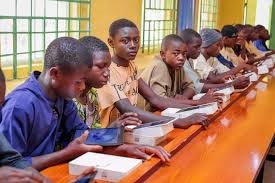
According to recent estimates by UNICEF and local child rights groups, Nigeria has one of the highest numbers of children living or working on the streets in Africa, with figures ranging between 10 and 15 million. Many of these children have either run away from abusive homes, been sent to urban areas to beg under the guise of Islamic education, or lost their families to conflict, poverty, or natural disasters. Without intervention, most face a future marked by crime, exploitation, substance abuse, or early death.
Recognising this crisis, several organisations have begun shifting from traditional rehabilitation models , which often focus solely on food, shelter, and basic literacy , to more future-oriented programmes that incorporate coding, computer literacy, digital marketing, graphic design, and basic robotics. These initiatives aim to transform street children from victims of circumstance into active participants in Nigeria’s rapidly growing digital economy.
One of the leading programmes, “Tech4StreetKids,” run by a coalition of NGOs in partnership with tech companies and the Federal Ministry of Humanitarian Affairs, has already trained over 8,500 children across Lagos, Kano, Abuja, and Port Harcourt since its inception in 2023. The programme combines safe shelter, psychosocial support, formal education catch-up, and intensive technology training. Graduates have gone on to secure entry-level jobs in digital firms, start small tech businesses, or gain admission into vocational institutions.
Mrs. Aisha Yusuf, Programme Director of Tech4StreetKids, explained that the focus on digital skills is deliberate. “These children have already lost so much time. We cannot afford to give them only basic literacy. We must equip them with skills that are in high demand so they can compete in the 21st-century economy,” she said. “A child who can code or manage social media accounts at 16 has a real chance of breaking free from the streets permanently.”
The programme has received support from major technology companies operating in Nigeria. Microsoft, Google, and several local fintech firms have provided training materials, mentors, and internship opportunities. Some participants have even developed simple mobile applications that solve problems in their communities, such as waste collection tracking or market price information systems.
However, experts caution that scaling such initiatives remains challenging. Street children often suffer from trauma, malnutrition, and deep distrust of adults, making consistent participation difficult. Many also lack basic literacy, requiring intensive bridging programmes before they can engage with technology. Funding is another major constraint. Most programmes rely on donor support, which is often short-term and unpredictable.
Dr. Fatima Adebayo, a child psychologist working with street children in Kano, stressed the need for a more holistic approach. “Technology training is excellent, but it must be combined with trauma care, family tracing and reunification where possible, and long-term mentorship. You cannot teach a child how to code if that child is still sleeping on the streets or suffering from untreated trauma,” she noted.
The Federal Government has shown increasing interest in the model. The Ministry of Education recently announced plans to integrate basic digital literacy into the almajiri education reform programme, while the Ministry of Humanitarian Affairs has pledged to expand funding for tech-based rehabilitation centres in major cities.
Education stakeholders believe that if properly scaled, these initiatives could significantly reduce the number of children living on the streets while building a future-ready workforce. Nigeria’s digital economy is projected to contribute substantially to GDP in the coming years, but this growth depends on having enough skilled young people to fill technical roles.
For the children themselves, the programmes offer more than just skills. They provide hope, structure, and a sense of possibility. Many graduates speak emotionally about how learning to use a computer for the first time changed their self-perception from “worthless street child” to “someone with a future.”
As Nigeria grapples with its large population of vulnerable children, initiatives that combine rescue, rehabilitation, and digital skills training are increasingly being viewed as one of the most promising solutions. While the challenge remains enormous, the progress made by programmes like Tech4StreetKids shows that even the most disadvantaged children can be brought into the digital age — if society is willing to invest in them.
The coming years will test whether these scattered but successful efforts can be expanded into a national movement capable of transforming the lives of millions of Nigeria’s street-roaming children.
Sponsored

Related stories
 Youth Empowerment
1,000 Tech Scholars to Benefit From Ekeh Foundation, NCS Partnership
The Leo Stan Ekeh Foundation has signed a Memorandum of Understanding with the Nigeria Computer Society to provide mentorship, technical training, and practical industry experience to 1,000 beneficiaries of its technology scholarship programme. The initiative will select students from all 36 states and the FCT, covering their education from first year through graduation while pairing each scholar with a dedicated industry mentor.
 Youth Empowerment
Ibadan NGO Empowers 100 Girls, Urges Oyo to Fight Child Marriage
The Oluwakemi Olusola Girl Child Foundation, with two partner foundations, gave 100 girls in an underserved Ibadan community medical checks, school bags, food, hygiene kits and counselling, while calling on the Oyo government to intensify its fight against child marriage.
 Youth Empowerment
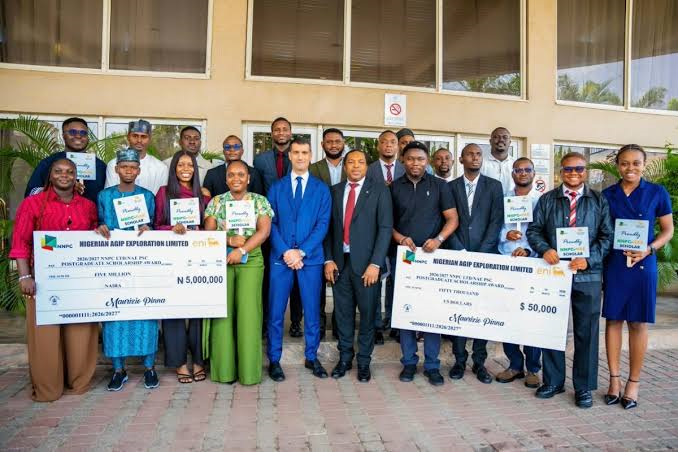
NNPC, Eni Award Postgraduate Scholarships to 30 Nigerian Graduates
The NNPC/Eni Joint Venture has awarded postgraduate scholarships to 30 Nigerian graduates for the 2026/2027 academic session, selecting the beneficiaries from over 3,000 applicants. Ten scholars will study at top universities abroad, including Imperial College London and the University of Aberdeen, while the remaining 20 will pursue degrees in Nigerian institutions across engineering, geosciences, renewable energy, and energy transition disciplines.
 Youth Empowerment
100,000 Pupils Get N20,000 Each Under N2bn Fund
First Lady Oluremi Tinubu has launched a N2 billion Learners Retention Support Programme that will provide N20,000 each to 100,000 pupils in its first phase, alongside the distribution of two million packs of sanitary towels and back-to-school materials to girls in public basic schools across Nigeria. The initiative, flagged off to mark the 2026 International Day of the Girl Child, is designed to remove the financial and hygiene barriers that force thousands of Nigerian girls out of the classroo
Comments (0)
Leave a comment
All comments are moderated before publishing. Your email is never published.