
Africa Sits at Bottom of Digital Ladder as High Costs Stall 5G Adoption
Africa risks being excluded from future breakthroughs in AI and technology as high hardware costs and low 5G penetration leave only 40 per cent of the population connected to the internet.
A critical lack of device affordability and low broadband penetration are threatening to lock Africa out of the global technological revolution, widening an already severe digital divide between the continent and high-income economies.
According to data from the State of Africa's Infrastructure Report, African nations remain anchored to the bottom of the global digital hierarchy. The primary bottleneck is the steep price of hardware, with even entry-level smartphones remaining financially out of reach for millions of people surviving on less than £1.50 ($2) a day.
Consequently, sub-Saharan Africa registers the lowest smartphone penetration rate in the world. Basic feature phones still dominate the regional landscape, accounting for 46 per cent of mobile ownership across the territory, a stark contrast to high-income countries, where basic handsets make up just eight per cent of the market.
The deficit in personal computing and fixed-line connectivity is equally pronounced. Across 34 surveyed African countries, household computer ownership languishes at a mere 11 per cent, directly mirroring a near-total absence of fixed broadband infrastructure. Whilst fixed-line connections have boomed across Asia and the Middle East, Africa's subscription rate sits below one per cent.
The transition to next-generation mobile networks has proved similarly sluggish:
- 4G Coverage: Reaches roughly 60 per cent of the African population.
- 5G Availability: Accessible to just 11 per cent of citizens, lagging significantly behind the aggressive rollouts seen in the Asia-Pacific region and Western markets.
In Nigeria, the continent's largest economic market, the reality is even starker. Speaking at a recent media briefing in Lagos, Dr Aminu Maida, the Executive Vice Chairman of the Nigerian Communications Commission (NCC), revealed that whilst 5G infrastructure coverage hovers around 11 per cent, active and regular usage of the network drops to an estimated five per cent of all active connections.
Industry experts warn that this prolonged exclusion from high-speed connectivity risks cutting African businesses and individuals out of highly lucrative emerging fields like Artificial Intelligence (AI) and the Internet of Things (IoT).
Interestingly, the underlying problem is no longer purely geographic signal availability. The report highlights that mobile internet coverage physically reaches more than 90 per cent of the continent's population. However, because of steep data costs, uneven broadband quality, and expensive handsets, only four out of ten Africans are actually online.
To bridge this divide and tap into vast, underserved consumer markets, analysts argue that Africa requires roughly £5.5 billion ($7 billion) in annual infrastructure investment. Key recommendations include embedding fibre optic lines alongside existing transport corridors, such as pipelines, railways, and electrical grids, and advancing public-private partnerships around digital identities and shared network infrastructure to aggressively lower consumer access costs.
Sponsored

Related stories
 Tech & Education
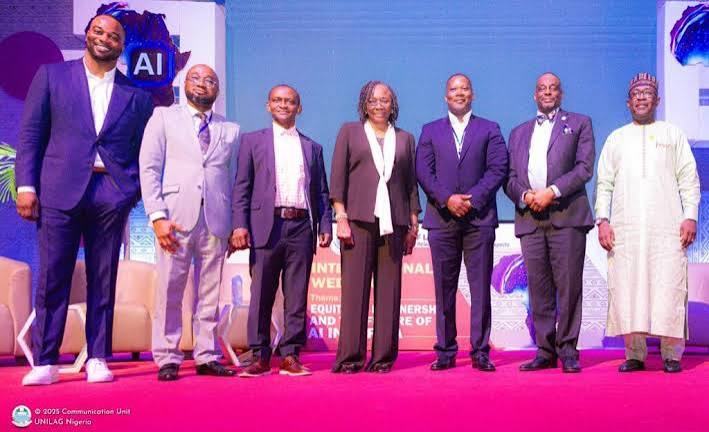
African Universities Urged to Rethink Teaching in AI Era
At UNILAG's International Week, leaders from the University of Ghana, UNILAG and UNDP argued that AI makes memorisation-based teaching obsolete and urged universities to reform curricula, assessment and incentives to reward critical thinking and innovation.
 Tech & Education
Otti’s Wife Supports 1,000 Abia Pupils With School Materials
The wife of the Abia State Governor, Mrs. Priscilla Otti, has distributed back-to-school materials to 1,000 indigent pupils from 50 public schools across the state's 17 local government areas, declaring that a child's background should never be a barrier to greatness. The intervention, organised by the Safe Tent Care Initiative in collaboration with the Abia State Universal Basic Education Board, is designed to support families struggling to provide essential educational materials for their chil
 Tech & Education
AI Era: Experts Warn Nigerian Graduates Face Skills Gap
Education experts have warned that Nigerian universities risk producing graduates who are ill-prepared for an AI-driven global job market unless curricula are urgently overhauled. At the StudyIn Global Study Conference 2026 in Lagos, stakeholders called for proactive curriculum reform, ethical AI adoption, and a shift from producing AI users to nurturing AI innovators who can solve real-world problems.
 Tech & Education
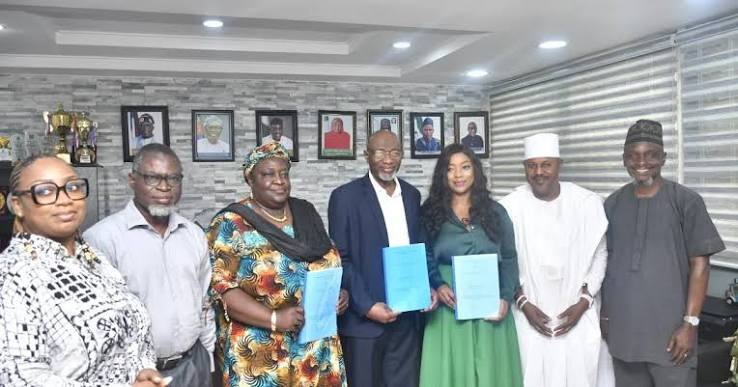
YABATECH, Threatremeter Launch Filmmaking Centre
Yaba College of Technology has signed a partnership with Threatremeter Nigeria Limited to establish a Centre for Filmmaking and Production, offering certified training in acting, directing and film production for students and the public.
Comments (0)
Leave a comment
All comments are moderated before publishing. Your email is never published.