
Yobe to Build 50 Schools to Boost Girls’ Education
Yobe State plans to construct 50 new secondary schools and rehabilitate 225 existing ones under the AGILE project, alongside digital upgrades and conditional cash transfers to boost girls' education.
The Yobe State Government has announced an ambitious, multi-faceted educational intervention aimed at drastically improving access to secondary education for girls across the state. Under the flagship Adolescent Girls Initiative for Learning and Empowerment (AGILE), the state plans to construct 50 brand-new secondary schools and comprehensively rehabilitate 225 existing institutions over the coming years.
The expansive initiative was disclosed by the Project Coordinator of AGILE in Yobe State, Abdullahi Dahiru Bulah, during the recent onboarding of local government facilitators and community mobilizers. These grassroots workers are strategically tasked with driving community awareness and fostering behavioral change regarding the critical importance of girls' education across all 17 Local Government Areas (LGAs) in the state.
Bulah emphasized that the project is meticulously designed to address the systemic, socioeconomic, and cultural barriers that historically prevent girls from completing their secondary education in Northern Nigeria. "The project is designed to help more girls complete secondary education and acquire practical skills that would improve their livelihoods and foster long-term economic independence," he stated during the briefing.
The AGILE framework operates on three core pillars: providing safe and quality educational infrastructure, creating a highly enabling environment for girls to remain in school, and strengthening the overall state education management system. To achieve this, the project is deploying a tiered funding approach. Currently, 104 schools are undergoing targeted rehabilitation through small and medium grants, while extensive preparations are already underway to rehabilitate an additional 121 schools under the large-grant component.
Recognizing that modern education requires modern tools, the initiative also features a robust digital inclusion component. Bulah revealed that 875 desktop computers have already been procured and distributed to 35 secondary schools, with each facility receiving 25 units. These digital hubs are being complemented by the installation of standalone solar power systems, internet connectivity, and specialized teacher training programs. An additional 15 schools are slated to benefit from this digital skills program in the immediate future, helping to bridge the technological divide in rural communities.
Beyond formal schooling, the state is actively addressing the needs of out-of-school girls. AGILE has successfully established 20 non-formal learning centres, with plans to roll out an additional 100 centres. These facilities are specifically tailored to provide foundational literacy, numeracy, and practical livelihood skills to girls who, for various reasons, missed the window for formal education.
Perhaps one of the most impactful interventions is the introduction of conditional cash transfers (CCTs). The state government is providing direct financial support to girls at critical educational transition points—specifically, when moving from primary to junior secondary school, and from junior to senior secondary school. These payments are designed to alleviate the financial burden on low-income families by helping beneficiaries cover essential educational needs such as uniforms, textbooks, and school bags. Crucially, subsequent cash disbursements are strictly linked to a minimum of 70 percent school attendance, thereby incentivizing consistent enrollment and actively reducing dropout rates.
The comprehensive nature of the AGILE project in Yobe State represents a paradigm shift in how regional governments tackle educational disparities. By combining hard infrastructure development with digital empowerment, non-formal education, and direct financial incentives, the Yobe State Government is laying a durable foundation for gender equality in education. As the 50 new schools rise and the rehabilitated facilities reopen, the initiative promises to unlock the potential of thousands of young girls, transforming them from marginalized students into empowered, economically independent contributors to the state’s future.
Sponsored

Related stories
 Tech & Education
African Universities Urged to Rethink Teaching in AI Era
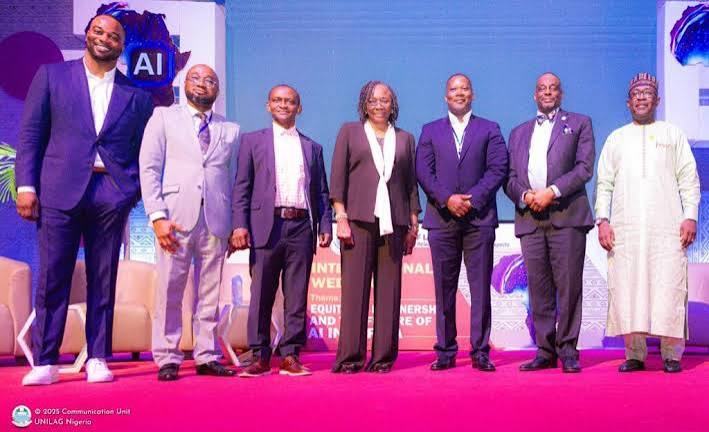
At UNILAG's International Week, leaders from the University of Ghana, UNILAG and UNDP argued that AI makes memorisation-based teaching obsolete and urged universities to reform curricula, assessment and incentives to reward critical thinking and innovation.
 Tech & Education
Otti’s Wife Supports 1,000 Abia Pupils With School Materials
The wife of the Abia State Governor, Mrs. Priscilla Otti, has distributed back-to-school materials to 1,000 indigent pupils from 50 public schools across the state's 17 local government areas, declaring that a child's background should never be a barrier to greatness. The intervention, organised by the Safe Tent Care Initiative in collaboration with the Abia State Universal Basic Education Board, is designed to support families struggling to provide essential educational materials for their chil
 Tech & Education
AI Era: Experts Warn Nigerian Graduates Face Skills Gap
Education experts have warned that Nigerian universities risk producing graduates who are ill-prepared for an AI-driven global job market unless curricula are urgently overhauled. At the StudyIn Global Study Conference 2026 in Lagos, stakeholders called for proactive curriculum reform, ethical AI adoption, and a shift from producing AI users to nurturing AI innovators who can solve real-world problems.
 Tech & Education
YABATECH, Threatremeter Launch Filmmaking Centre
Yaba College of Technology has signed a partnership with Threatremeter Nigeria Limited to establish a Centre for Filmmaking and Production, offering certified training in acting, directing and film production for students and the public.
Comments (0)
Leave a comment
All comments are moderated before publishing. Your email is never published.