
UNILORIN Senate Approves Degrees for 10,141 Students Ahead of October Convocation
The University of Ilorin's Senate has approved first degree results for 10,141 students for the 2025/2026 session, clearing the way for the institution's 41st convocation ceremony in October.
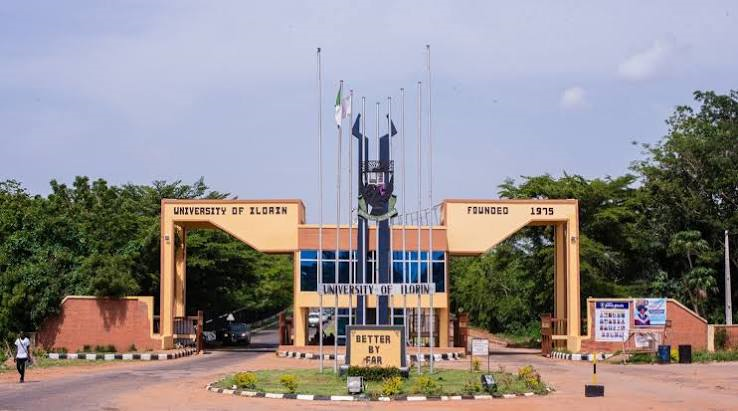
The Senate of the University of Ilorin (UNILORIN) has approved the results of 10,141 students for the award of first degrees for the 2025/2026 academic session, clearing a major hurdle ahead of the institution's forthcoming convocation ceremonies.
The approval was made at the university's 312th Senate meeting, held on August 31, 2026, at the Senate Chamber and presided over by the Vice-Chancellor, Prof. Wahab Egbewole, SAN. The meeting brought together senior academic and administrative officers of the university to review and ratify results submitted by the various faculties and departments ahead of the graduating session.
Beyond the first-degree results, the Senate also approved results for postgraduate and professional programmes, including candidates for the Doctor of Philosophy (PhD), master's degree holders across various disciplines, professional master's programmes run by the university's Institute of Education, and programmes conducted by institutions affiliated with UNILORIN. According to the university, the affected students have fulfilled the necessary academic requirements for the award of degrees within their respective fields of study, following the standard review and moderation processes undertaken by faculty boards ahead of Senate ratification.
The results were formally presented to the Senate by the Chairman of the Business Committee of the Senate and Deputy Vice-Chancellor (Academic), Prof. Moji Taibat Bakare-Odunola, after which members considered and approved them as presented. The presentation and approval process forms a routine but critical part of the university's academic calendar, serving as the final institutional checkpoint before graduating students can be cleared to participate in convocation activities.
With the approval now secured, the affected students move a step closer to participating in the university's 41st convocation ceremonies, scheduled to hold in October 2026. The convocation will mark the formal conferment of degrees on students who have completed their respective programmes, alongside recognition of outstanding academic achievements across various faculties.
Speaking after the results were approved, Vice-Chancellor Egbewole urged level advisers, heads of department, and faculty authorities still holding outstanding results to ensure those results are processed, reconciled, and submitted before the university's next Senate meeting. He stressed that timely processing remained necessary to prevent otherwise qualified students from being excluded from the forthcoming convocation due to avoidable administrative delays, a concern that reflects a recurring challenge many Nigerian universities face in ensuring all eligible students are cleared in time for graduation ceremonies.
Egbewole's appeal underscores the administrative complexity involved in coordinating results across a large, multi-faculty institution like UNILORIN, where delays at the departmental or faculty level can have knock-on effects for students awaiting final clearance. By flagging the issue publicly at the Senate level, the Vice-Chancellor appeared keen to ensure accountability across the university's various academic units ahead of the October ceremony.
In a related development at the same Senate meeting, members approved a report on the proposed statute for the university's Postgraduate College, recommending that it be forwarded to the Governing Council and subsequently to President Bola Tinubu, in his capacity as Visitor to the university, for final approval and gazetting. According to the proposed statute, the Postgraduate College would be headed by a Provost, serving as both the academic and administrative head of the college, who would be a professor elected by the Senate for a two-year term.
The proposed statute represents a significant structural development for the university's postgraduate education framework, potentially formalising governance arrangements for a college that oversees a growing population of postgraduate students across various advanced degree programmes. Should the statute ultimately receive presidential assent and be gazetted, it would establish a more clearly defined leadership and administrative structure for postgraduate studies at the institution going forward.
Taken together, the dual approvals, covering both the current session's graduating students and the longer-term structural framework for the university's postgraduate education, reflect UNILORIN's continued efforts to strengthen both its immediate academic processes and its broader institutional architecture as one of Nigeria's leading public universities, even as attention now turns to the logistics of preparing for the 41st convocation ceremony next month.
Sponsored

Related stories
 Tech & Education
African Universities Urged to Rethink Teaching in AI Era
At UNILAG's International Week, leaders from the University of Ghana, UNILAG and UNDP argued that AI makes memorisation-based teaching obsolete and urged universities to reform curricula, assessment and incentives to reward critical thinking and innovation.
 Tech & Education
Otti’s Wife Supports 1,000 Abia Pupils With School Materials
The wife of the Abia State Governor, Mrs. Priscilla Otti, has distributed back-to-school materials to 1,000 indigent pupils from 50 public schools across the state's 17 local government areas, declaring that a child's background should never be a barrier to greatness. The intervention, organised by the Safe Tent Care Initiative in collaboration with the Abia State Universal Basic Education Board, is designed to support families struggling to provide essential educational materials for their chil
 Tech & Education
AI Era: Experts Warn Nigerian Graduates Face Skills Gap
Education experts have warned that Nigerian universities risk producing graduates who are ill-prepared for an AI-driven global job market unless curricula are urgently overhauled. At the StudyIn Global Study Conference 2026 in Lagos, stakeholders called for proactive curriculum reform, ethical AI adoption, and a shift from producing AI users to nurturing AI innovators who can solve real-world problems.
 Tech & Education
YABATECH, Threatremeter Launch Filmmaking Centre
Yaba College of Technology has signed a partnership with Threatremeter Nigeria Limited to establish a Centre for Filmmaking and Production, offering certified training in acting, directing and film production for students and the public.
Comments (0)
Leave a comment
All comments are moderated before publishing. Your email is never published.