
UNILAG VC Warns Unregulated AI Use is Eroding Students’ Critical Thinking Skills
UNILAG Vice-Chancellor Prof. Folasade Ogunsola warns that unregulated AI use is eroding students' critical thinking, urging universities to adopt innovative assessments and ethical guardrails
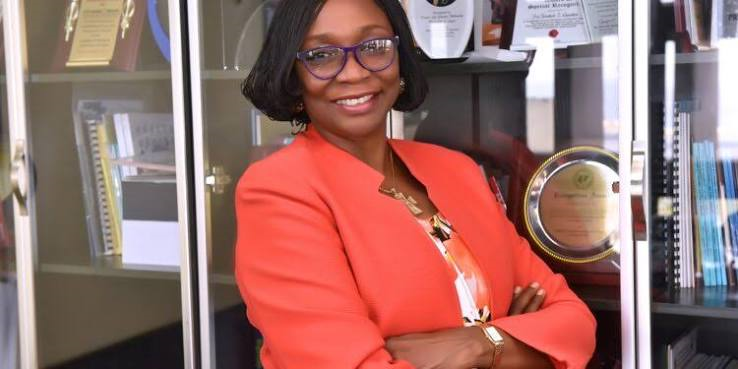
Vice-Chancellor of the University of Lagos (UNILAG), Professor Folasade Ogunsola, has issued a stark warning that the unregulated and overreliant use of Artificial Intelligence (AI) by students is actively eroding critical thinking skills and allowing learners to bypass the fundamental processes of education.
Speaking at the 8th Lagos State University (LASU) Research and Innovation Fair, themed “Accelerating National Development through Artificial Intelligence-Driven Research and Innovation,” Prof. Ogunsola emphasized that while AI holds enormous potential to transform education, its misuse poses a severe threat to intellectual development. The event, held at the LASU campus in Ojo, Lagos, gathered top academic minds to address the dual-edged nature of emerging technologies in higher education.
Prof. Ogunsola stressed that the core mandate of universities is to cultivate minds capable of clear, logical, and critical thought. She argued that the cognitive struggle involved in solving complex problems is essential for brain development.
“Our job is to teach minds to think, and a mind that is not challenged cannot think, because the struggle of working things out is what makes a mind think and builds critical analysis, not giving it out to AI,” she stated.
She cautioned that platforms like ChatGPT and Gemini are increasingly leading to the erosion of foundational learning skills. “We’re beginning to recognise that it might bypass learning, that students may come into school and leave at the end having not learnt. Overdependence on AI is not good for brain development, so there have to be guardrails with AI use,” she added, urging students to use AI as an assistant rather than a substitute for their own intellect.
A significant hurdle for educational institutions is the sheer sophistication and accessibility of these tools. Prof. Ogunsola noted that AI can access knowledge, recall facts, and execute processes far faster than humans, making it incredibly difficult for faculty to police its use, especially when students can access these models seamlessly via mobile phones. Strikingly, she revealed that "ninety-four per cent of AI-generated research may go undetected" by current academic scrutiny tools.
Consequently, she argued that outright banning AI is neither practical nor sustainable. Instead, universities must proactively redefine the skills they expect students to develop and innovate their assessment methods to accurately gauge genuine learning. “If we’re going to really start to ensure that the next generation is thinking, we cannot ban AI, but we must find ways to ensure that they use AI to learn, and we have methods to know what they have learned and to force them to think,” she asserted.
Beyond the erosion of critical thinking, Prof. Ogunsola highlighted a spectrum of associated risks, including academic integrity violations, AI "hallucinations" (inaccurate information), data privacy concerns, intellectual property infringements, digital inequality, and potential future job displacements.
Echoing the need for structured integration, Professor Adebayo Abiodun, former Vice-Chancellor of Covenant University, stressed that institutions must urgently develop comprehensive AI policies to guide both students and staff. He advocated for robust "town-and-gown" collaboration, urging universities to partner with corporate bodies to sensitize professionals and integrate AI tools to enhance, rather than replace, human productivity. He also called for significant government investment to make AI platforms freely accessible for educational purposes.
The outgoing LASU Vice-Chancellor, Professor Ibiyemi Olatunji-Bello, noted that the fair provided a crucial platform for innovators to showcase solutions tailored to contemporary challenges. She emphasized that Nigerian institutions must go beyond merely adopting AI as a superficial tool. Instead, she urged scholars and students to leverage these advanced technologies to solve distinctly Nigerian problems, foster interdisciplinary research, and actively participate in an AI-enabled global economy.
Babatunde Ogala, SAN, Chairman of the LASU Governing Council, reinforced this sentiment during his address. Represented by council member Taiwo Atolagbe, Ogala highlighted the critical importance of Nigeria engaging with the AI transformation responsibly and purposefully, stressing that interdisciplinary collaboration is non-negotiable for thriving in the modern digital economy.
As artificial intelligence continues to reshape the global educational landscape, the consensus among Nigeria’s academic leaders is clear: the technology is here to stay. The imperative now lies in establishing robust guardrails, innovative pedagogical strategies, and ethical frameworks that ensure AI serves as a catalyst for intellectual empowerment, rather than an agent of cognitive decline.
Sponsored

Related stories
 Tech & Education
Bamidele Unveils N200m Renovated Science College
Senate Leader Opeyemi Bamidele has commissioned the renovated Government Science College, Iyin-Ekiti, personally funded at over N200 million, donating buses to the school and nearby FUTESI while promising a second phase of upgrades.
 Tech & Education
Abia Students Crowned Global Debate Champions
Students from public schools in Abia State, representing Nigeria, have emerged overall champions at the 2026 International Schools Debate Championship in Doha, Qatar, winning four major trophies and 12 laurels after defeating teams from Jordan, India, Qatar, the Philippines, Kenya and others. The historic victory has been hailed as proof that Governor Alex Otti's education reforms are producing world-class scholars.
 Tech & Education
WAEC Appoints Suleiman Kum as New Head of Nigeria National Office
The West African Examinations Council has appointed 56-year-old Suleiman Danlami Kum as the new Head of the Nigeria National Office, succeeding Dr Amos Josiah Dangut, who has assumed office as the council’s Registrar and Chief Executive Officer. A seasoned test developer, administrator and executive with 28 years of service, Kum is expected to drive technological innovation and examination security across Nigeria’s foremost examinations body.
 Tech & Education
Emmanuel College ’88 Set Renovates Classrooms, Pays Exam Fees
The Progressives of the Unique 1988 Set of Emmanuel College Owerri have unveiled a renovated five-classroom block and paid NECO and WAEC fees for financially disadvantaged students at their alma mater.
Comments (0)
Leave a comment
All comments are moderated before publishing. Your email is never published.