
UNILAG Students Get N150 Fixed CNG Fare
University of Lagos students will pay a locked-in N150 fare per stop under a new Federal Government CNG transport initiative, with five gas-powered buses among 100 pledged for 20 universities nationwide.
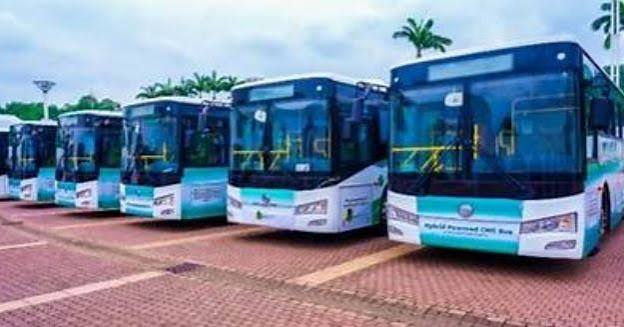
Students of the University of Lagos (UNILAG) will now pay N150 per stop under a new Federal Government Compressed Natural Gas (CNG) transport scheme being introduced to reduce transportation costs across Nigerian tertiary institutions.
The Group Chief Executive Officer of Femadec Group, Fola Akinola, announced the fixed fare at a press conference in Lagos on Thursday. He said the scheme was designed to ensure that students would continue paying N150 per stop regardless of changes in broader transportation costs in the coming months or years. "What this means is that irrespective of what happens in the next couple of months or years, we intend to keep transportation costs for students per stop at N150," Akinola said.
He added that the initiative would also provide subsidised CNG vehicle conversion kits to academic staff, with flexible payment terms allowing them to convert their personal vehicles without paying the full cost upfront. The offer, he said, is also open to members of the public outside the university community.
The scheme will involve the deployment of five new CNG-powered buses to universities, with UNILAG among the institutions included in the programme's first phase.
Speaking on behalf of the Presidential Initiative on Compressed Natural Gas and Electric Vehicles (Pi-CNG), representative Tosin Coker said 100 buses had been pledged for 20 universities under the first phase of the broader programme. According to him, five buses are currently allocated to Lagos, with additional buses being deployed to other states.
Coker explained that the government would continue making CNG conversion kits available based on demand, stressing the particular importance of lowering transport costs for students. He noted that transportation accounts for about 30 per cent of the daily expenses of an average household, a burden he said weighs even more heavily on students who do not earn regular incomes. "It is essential to note that transportation costs for the average household is about 30 percent of their daily expenses. But, consider university students who are not even working, so how much more of a percentage is on their own expenses?" he said.
Coker clarified that the Federal Government's role in the scheme is to act as a market enabler rather than to permanently subsidise CNG transport operations. He said the objective is to keep CNG-powered transportation affordable while still allowing operators to recover their investments and sustain the services over time. He disclosed that CNG infrastructure is currently available in 26 states, adding that the government expects the network to expand further as private-sector investment increases. According to him, the Federal Government is working with private operators to create conditions conducive to infrastructure investment while ensuring the resulting benefits reach consumers.
The Deputy Vice-Chancellor of UNILAG, Professor Muyiwa Falaiye, who represented Vice-Chancellor Professor Folasade Ogunsola, said the university welcomed the initiative given its potential to reduce transportation costs for both students and staff. Falaiye said the project would help make transportation within and around the university more affordable, adding that the institution was grateful to be among those hosting the programme.
However, the CNG station at UNILAG has not yet been commissioned, with organisers saying some regulatory processes and safety approvals remain outstanding.
The UNILAG rollout adds to the Federal Government's broader push to expand CNG adoption across Nigeria's transport sector as part of efforts to cushion the impact of rising fuel costs following the removal of petrol subsidies. By targeting tertiary institutions specifically, where students face transport costs without the benefit of regular income, the scheme represents a more targeted application of the government's wider CNG transition strategy, one that officials hope will demonstrate the model's viability before further expansion to other campuses nationwide.
Sponsored

Related stories
 Tech & Education
African Universities Urged to Rethink Teaching in AI Era
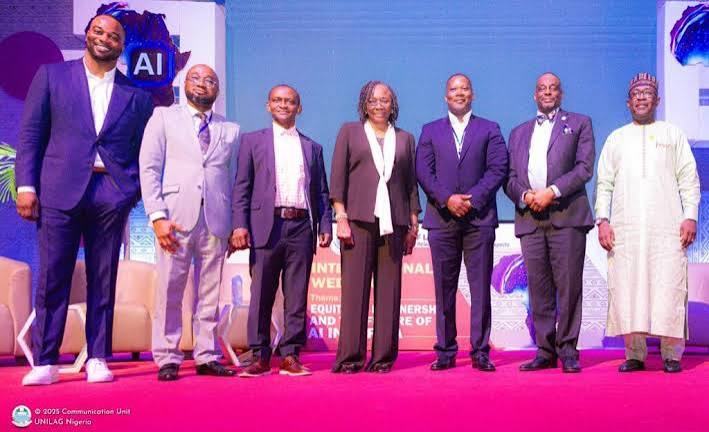
At UNILAG's International Week, leaders from the University of Ghana, UNILAG and UNDP argued that AI makes memorisation-based teaching obsolete and urged universities to reform curricula, assessment and incentives to reward critical thinking and innovation.
 Tech & Education
Otti’s Wife Supports 1,000 Abia Pupils With School Materials
The wife of the Abia State Governor, Mrs. Priscilla Otti, has distributed back-to-school materials to 1,000 indigent pupils from 50 public schools across the state's 17 local government areas, declaring that a child's background should never be a barrier to greatness. The intervention, organised by the Safe Tent Care Initiative in collaboration with the Abia State Universal Basic Education Board, is designed to support families struggling to provide essential educational materials for their chil
 Tech & Education
AI Era: Experts Warn Nigerian Graduates Face Skills Gap
Education experts have warned that Nigerian universities risk producing graduates who are ill-prepared for an AI-driven global job market unless curricula are urgently overhauled. At the StudyIn Global Study Conference 2026 in Lagos, stakeholders called for proactive curriculum reform, ethical AI adoption, and a shift from producing AI users to nurturing AI innovators who can solve real-world problems.
 Tech & Education
YABATECH, Threatremeter Launch Filmmaking Centre
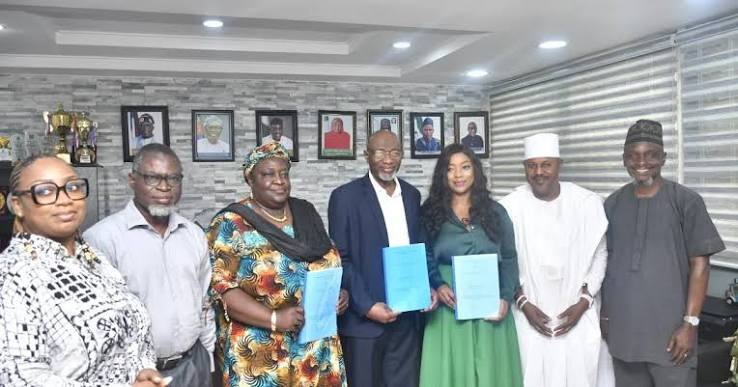
Yaba College of Technology has signed a partnership with Threatremeter Nigeria Limited to establish a Centre for Filmmaking and Production, offering certified training in acting, directing and film production for students and the public.
Comments (0)
Leave a comment
All comments are moderated before publishing. Your email is never published.