
UCH Medical Lecturers Warn FG Against Admission Quota Increase Without Matching Infrastructure
MDCAN's UCH Ibadan chapter says government has increased medical student admission quotas faster than it has delivered promised infrastructure, warning the mismatch risks undermining training quality at the College of Medicine, University of Ibadan.
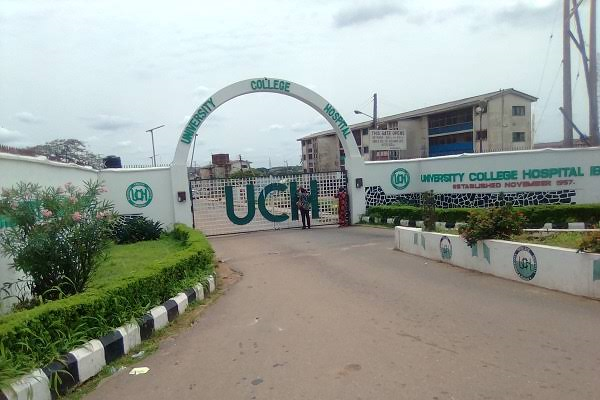
Medical lecturers under the Medical and Dental Consultants Association of Nigeria (MDCAN), University College Hospital, Ibadan Chapter, have warned the Federal Government against further increasing admission quotas for medical students without matching the expansion with adequate infrastructure and teaching manpower.
The warning was issued during the association's biennial press briefing in Ibadan, held as part of activities marking its 2026 Annual General Meeting. The Chairman of MDCAN, UCH Chapter, Dr Oluseyi Akande, said increasing the number of medical students admitted into Colleges of Medicine, including the College of Medicine, University of Ibadan, could overstretch existing facilities and teaching staff, ultimately affecting the standard of medical education if not properly managed.
Akande acknowledged that the Federal Government's decision to raise admission quotas was aimed at addressing Nigeria's well-documented shortage of medical personnel, a goal he described as commendable given the scale of the country's healthcare workforce gap. However, he cautioned that the policy risks undermining the very quality of training it is meant to eventually strengthen, if the necessary infrastructure and staffing levels are not scaled up in tandem with rising student numbers.
According to Akande, while the Federal Government had directly intervened by providing infrastructure intended to accommodate the increased admission capacity, implementation of those infrastructure projects had been slow. "At the College of Medicine, University of Ibadan, these structures are not ready, even though the number of students admitted increased since last year," he said, pointing to a direct and current gap between rising enrollment figures and the physical capacity available to train those additional students.
Akande called on the Federal Government to expedite completion of the promised infrastructure and to strengthen monitoring mechanisms to ensure that such interventions are delivered on schedule going forward. He also stressed the need for increased recruitment of medical academic staff, noting that additional students require a correspondingly larger pool of qualified lecturers, clinical supervisors, and support personnel to maintain training standards, particularly during clinical rotations where hands-on supervision is essential to producing competent doctors.
Beyond the admissions quota concern, Akande used the briefing to commend the Federal Government, through the Federal Ministry of Health, for recent steps taken to address violence against healthcare workers, an issue that has drawn growing national attention amid a wave of reported attacks and abductions targeting medical personnel in various parts of the country. He also congratulated members of MDCAN's UCH Chapter on the successful conduct of the 2026 Annual General Meeting and its accompanying activities, which included a scientific conference, sporting events, courtesy visits, the AGM itself, a luncheon, and a thanksgiving service.
The concerns raised by MDCAN's UCH Chapter echo similar warnings from other medical education stakeholders across the country in recent months. Separately, the Nigerian Association of Medical and Dental Academics (NAMDA) has cautioned that poor lecturer welfare, unresolved salary disputes, and the resulting exodus of experienced medical academics from Nigerian universities could further strain the capacity of institutions to absorb rising admission numbers. Academic planners at other institutions have similarly pointed to a broader, systemic pattern in which universities admit students beyond quotas approved by the Medical and Dental Council of Nigeria (MDCN), a practice attributed variously to revenue pressures and political demand for more doctors, but one that regulators and experts warn can leave clinical rotations overcrowded and supervision stretched thin.
The Federal Government has, in recent months, publicly stated its ambition to raise annual medical school admissions from roughly 12,000 currently to about 20,000 within the next three years, part of a broader strategy to counter the continued emigration of trained doctors and nurses, popularly referred to as "Japa," and to close Nigeria's persistent doctor-to-patient gap.
For institutions like the College of Medicine, University of Ibadan, one of Nigeria's oldest and most prestigious medical training establishments, the tension identified by MDCAN highlights a broader challenge facing the government's expansion drive: translating policy ambition and rising enrollment figures into the physical infrastructure, staffing levels, and clinical training capacity genuinely required to produce well-trained doctors, rather than simply increasing the number of students admitted each year.
Sponsored

Related stories
 Tech & Education
Bamidele Unveils N200m Renovated Science College
Senate Leader Opeyemi Bamidele has commissioned the renovated Government Science College, Iyin-Ekiti, personally funded at over N200 million, donating buses to the school and nearby FUTESI while promising a second phase of upgrades.
 Tech & Education
Abia Students Crowned Global Debate Champions
Students from public schools in Abia State, representing Nigeria, have emerged overall champions at the 2026 International Schools Debate Championship in Doha, Qatar, winning four major trophies and 12 laurels after defeating teams from Jordan, India, Qatar, the Philippines, Kenya and others. The historic victory has been hailed as proof that Governor Alex Otti's education reforms are producing world-class scholars.
 Tech & Education
WAEC Appoints Suleiman Kum as New Head of Nigeria National Office
The West African Examinations Council has appointed 56-year-old Suleiman Danlami Kum as the new Head of the Nigeria National Office, succeeding Dr Amos Josiah Dangut, who has assumed office as the council’s Registrar and Chief Executive Officer. A seasoned test developer, administrator and executive with 28 years of service, Kum is expected to drive technological innovation and examination security across Nigeria’s foremost examinations body.
 Tech & Education
Emmanuel College ’88 Set Renovates Classrooms, Pays Exam Fees
The Progressives of the Unique 1988 Set of Emmanuel College Owerri have unveiled a renovated five-classroom block and paid NECO and WAEC fees for financially disadvantaged students at their alma mater.
Comments (0)
Leave a comment
All comments are moderated before publishing. Your email is never published.