
UBEC Renovates 287 Schools, 4,000 Classrooms Nationwide
The Universal Basic Education Commission (UBEC) has renovated 287 schools and over 4,000 classrooms across Nigeria under a new "whole-school approach" that addresses comprehensive infrastructure needs rather than isolated repairs. Executive Secretary Dr. Aisha Garba also commissioned 74 digital learning centres, bringing the total established under the Tinubu administration to over 2,000, as part of efforts to equip pupils with 21st-century skills
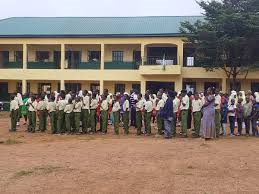
The Universal Basic Education Commission (UBEC) has announced the renovation of 287 schools and more than 4,000 classrooms across the country, in a sweeping intervention aimed at improving learning conditions and establishing minimum standards for basic education infrastructure nationwide.
Executive Secretary of UBEC, Dr. Aisha Garba, disclosed this on Wednesday while commissioning renovated facilities at the Nyanya-Hausawa Basic and Secondary School in Abuja Municipal Area Council (AMAC), Federal Capital Territory. She said the intervention formed part of the Federal Government's Renewed Hope Agenda to ensure that children, regardless of their location, have access to safe and conducive learning environments.
Garba explained that UBEC had introduced a "whole-school approach" requiring interventions to address the overall needs of schools instead of focusing on isolated classroom blocks. "Our mandate is that all children, regardless of where they are, should be in school. We should also make sure that schools are in conducive environment for learning," she said. Under this new model, schools requiring intervention have their needs assessed comprehensively, including classrooms, furniture, toilets, water, electricity and security. "We are no longer going to renovate a window or put in one chair and leave other hundreds of students sitting on the floor," Garba stated.
The commission's new minimum standards for school infrastructure require new projects to include classrooms, perimeter fencing, security measures, solar power, boreholes, adequate toilets, administrative blocks and playgrounds. Garba added that schools would increasingly receive technology facilities, including computer and ICT laboratories and smartboards, to equip pupils with digital skills for 21st-century education and the global economy.
The Nyanya-Hausawa intervention, executed under UBEC's 2025 Direct Intervention Project, covered the rehabilitation, furnishing and equipping of the LEA Nursery and Primary School and Government Junior Secondary School. The project included the renovation of three blocks comprising about 30 classrooms and 48 toilets, as well as solar-powered boreholes connected to the toilets. The Director of Physical Planning at UBEC, Ibrahim Nura, explained that the school was seriously dilapidated before the intervention, with some facilities unsuitable for teaching and learning. He said a condition assessment was conducted before the rehabilitation to determine the specific needs of the school, noting that some buildings had completely lost their structural integrity and were unsafe.
The school's Junior Secondary School Principal, Gideon Isah, commended UBEC for providing renovated classrooms, furniture and a solar-powered water system. Isah recalled that some students previously sat on bare floors because of inadequate furniture, saying the renovation had improved the morale of teachers and students. He appealed for an administrative block, noting that the primary, junior secondary and senior secondary sections currently operated without one. The principal said the community, in collaboration with the Parent-Teacher Association, had employed three security personnel to protect the facilities from vandalism.
Meanwhile, Garba commissioned 74 digital learning centres, including one at Model Girls' Junior Secondary School, AMAC. She said UBEC had established more than 2,000 such centres under the Tinubu administration, equipped with computers, smartboards, solar panels, printers, scanners and internet connectivity. According to her, the centres provide online and offline learning content, while teachers are trained to use the facilities and digital resources effectively. Facilitators of the project said the Digital Learning Centres are technology-enabled learning facilities established to expand access to digital education and enhance the quality of teaching and learning in basic education schools.
The renovation drive is part of a broader reform agenda that will see UBEC commence full implementation of its 10-Year Universal Basic Education Roadmap, 2026–2035, in the first week of October. Under the roadmap, states will no longer be expected to focus on isolated interventions such as classroom blocks or furniture where other critical deficiencies exist in the same schools. The new approach represents a fundamental shift in how basic education infrastructure is planned and delivered, moving from fragmented repairs to comprehensive school development that addresses the full spectrum of learning needs.
For the millions of Nigerian children who attend public basic schools, the intervention offers more than renovated buildings; it represents a commitment to creating environments where learning can thrive. As Garba noted, the goal is to ensure that every child, regardless of their location, has access to the safe and conducive learning environment they deserve. With the 10-year roadmap set to guide future interventions, the renovation of 287 schools and 4,000 classrooms may well be remembered as the beginning of a new era in Nigeria's basic education infrastructure.
Sponsored

Related stories
 Tech & Education
African Universities Urged to Rethink Teaching in AI Era
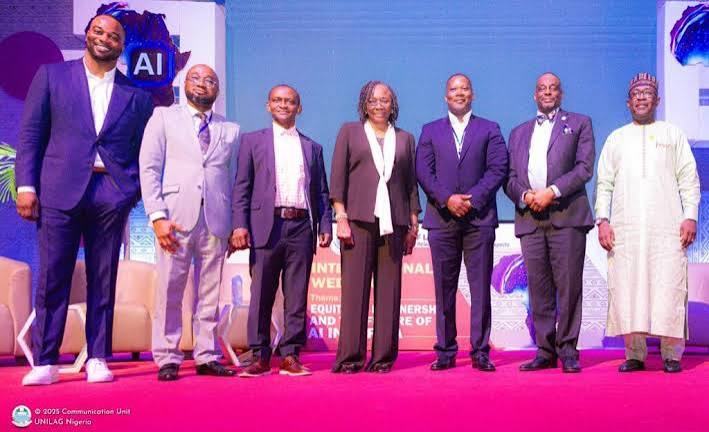
At UNILAG's International Week, leaders from the University of Ghana, UNILAG and UNDP argued that AI makes memorisation-based teaching obsolete and urged universities to reform curricula, assessment and incentives to reward critical thinking and innovation.
 Tech & Education
Otti’s Wife Supports 1,000 Abia Pupils With School Materials
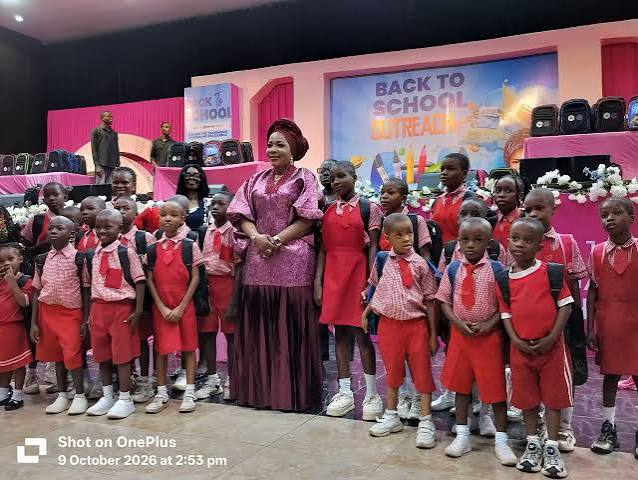
The wife of the Abia State Governor, Mrs. Priscilla Otti, has distributed back-to-school materials to 1,000 indigent pupils from 50 public schools across the state's 17 local government areas, declaring that a child's background should never be a barrier to greatness. The intervention, organised by the Safe Tent Care Initiative in collaboration with the Abia State Universal Basic Education Board, is designed to support families struggling to provide essential educational materials for their chil
 Tech & Education
AI Era: Experts Warn Nigerian Graduates Face Skills Gap
Education experts have warned that Nigerian universities risk producing graduates who are ill-prepared for an AI-driven global job market unless curricula are urgently overhauled. At the StudyIn Global Study Conference 2026 in Lagos, stakeholders called for proactive curriculum reform, ethical AI adoption, and a shift from producing AI users to nurturing AI innovators who can solve real-world problems.
 Tech & Education
YABATECH, Threatremeter Launch Filmmaking Centre
Yaba College of Technology has signed a partnership with Threatremeter Nigeria Limited to establish a Centre for Filmmaking and Production, offering certified training in acting, directing and film production for students and the public.
Comments (0)
Leave a comment
All comments are moderated before publishing. Your email is never published.