
Tinubu Directs Agencies to Remove Investment Bottlenecks
President Bola Tinubu has directed government institutions to eliminate unnecessary bureaucratic delays, improve coordination and provide a predictable business environment to attract investment into Nigeria’s energy, infrastructure and mining sectors.
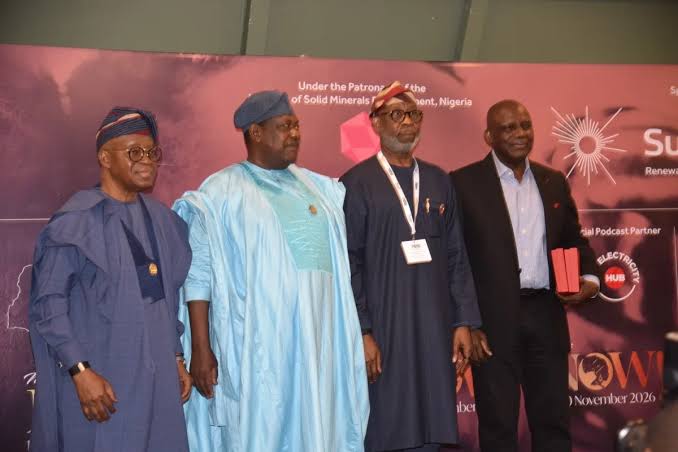
President Bola Tinubu has ordered public institutions to remove administrative bottlenecks, strengthen inter-agency coordination and engage investors more efficiently as the Federal Government intensifies efforts to convert economic reforms into tangible investments.
Tinubu said Nigeria could no longer afford a situation where investment opportunities remained unrealised because of bureaucratic delays, poor coordination among government agencies and uncertainty in the regulatory environment.
The President, represented by the Secretary to the Government of the Federation, George Akume, gave the directive on Thursday in Abuja at the opening of the Nigerian Industry in Energy, Infrastructure and Mining Summit, tagged Nigeria NOW.
He said the success of his administration’s economic reforms would be measured by completed projects, functional infrastructure, expanding businesses and employment opportunities rather than policy announcements or expressions of interest from investors.
“I expect public institutions to remove avoidable bottlenecks, coordinate across their mandates and work with investors in a predictable and timely manner,” he said.
Tinubu added that his administration expected reforms to progress beyond announcements to investment decisions, financial closure, construction, commissioning and measurable benefits for the public.
He explained that the decision to bring stakeholders in energy, infrastructure and mining together reflected the government's recognition that industrial development required coordinated progress across the three sectors.
According to him, reliable and affordable electricity is essential for production, while efficient transport and logistics infrastructure would connect businesses to markets. He added that the development of solid minerals would provide raw materials for manufacturing, technology and emerging global supply chains.
The President identified Nigeria's large domestic market, entrepreneurial population, energy resources, mineral deposits and access to the African market as major investment opportunities.
However, he stressed that these advantages could only be fully harnessed through credible institutions, efficient infrastructure, competitive industries and bankable projects.
On the energy sector, Tinubu said the government was prioritising improved electricity access, reliability and commercial sustainability while encouraging private investment in generation, transmission, distribution and decentralised energy solutions.
He said Nigeria would pursue an energy mix combining natural gas with renewable energy to support households, businesses and industries.
The President also highlighted Nigeria's participation in initiatives such as Mission 300 as part of efforts to expand electricity access, noting that the ultimate measure of progress would be the number of households and businesses receiving dependable power.
On infrastructure, he said the administration was focusing on transport corridors, ports, railways, roads and digital networks to connect economic centres and open underserved communities to investment.
He emphasised that projects must be properly prepared, financially viable and capable of delivering long-term national benefits.
Regarding the mining sector, Tinubu said the government was determined to move beyond exporting unprocessed minerals by improving geological information, promoting transparent licensing and encouraging responsible exploration, beneficiation and processing.
He said the objective was to establish integrated value chains that would support local industries, create skilled employment and ensure host communities benefited from mineral development.
The President urged investors to bring technology, financing and commercial expertise into Nigeria, assuring them of continued efforts to strengthen regulatory certainty and institutional support.
He also called on ministries, departments and agencies, as well as state governments, to present credible investment opportunities and maintain engagement with prospective investors beyond the summit.
Tinubu said the event should facilitate direct discussions among project owners, financial institutions, developers and government authorities to identify investment risks, resolve constraints and establish practical implementation plans.
Meanwhile, the Minister of Solid Minerals Development, Dele Alake, said Nigeria's longstanding dependence on crude oil revenues had limited the development of other productive sectors of the economy.
Alake argued that successive administrations had failed to channel sufficient oil earnings into manufacturing, agriculture, solid minerals and industrialisation when the country enjoyed substantial revenue from crude exports.
He said the failure to diversify during periods of high oil earnings had left the economy vulnerable when petroleum revenues declined.
The minister also criticised the fuel subsidy regime, arguing that it weakened public finances by diverting resources that could have supported infrastructure, education and other productive sectors.
He maintained that investing oil revenue in manufacturing, agriculture and solid minerals would have created jobs, encouraged technology transfer and strengthened Nigeria's industrial capacity.
Sponsored

Related stories
 News
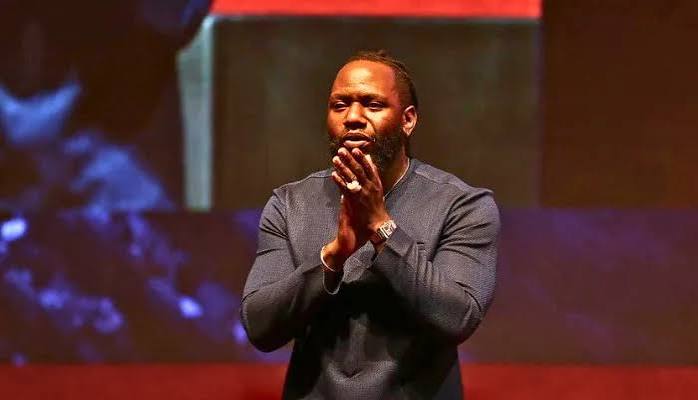
Court Restrains Jimmy Odukoya From Acting as Fountain of Life Senior Pastor
A Lagos court has barred Jimmy Odukoya from presenting himself as Fountain of Life Church’s pastor amid an escalating succession dispute.
.jpg) News
Tinubu Confers GCON on Wole Olanipekun
President Bola Tinubu has reportedly conferred the Grand Commander of the Order of the Niger (GCON) on renowned Senior Advocate of Nigeria, Chief Wole Olanipekun, in recognition of his contributions to the legal profession and Nigeria’s jurisprudence.
 News
South Korean Man Accused of AI Exam Cheating Found Dead
A 32-year-old South Korean university student, Lee Jin-woo, who faced allegations of using artificial intelligence to cheat in a law school entrance examination, has been found dead at a motel in Seoul. Police said they would continue investigating the allegations despite his death.
 News
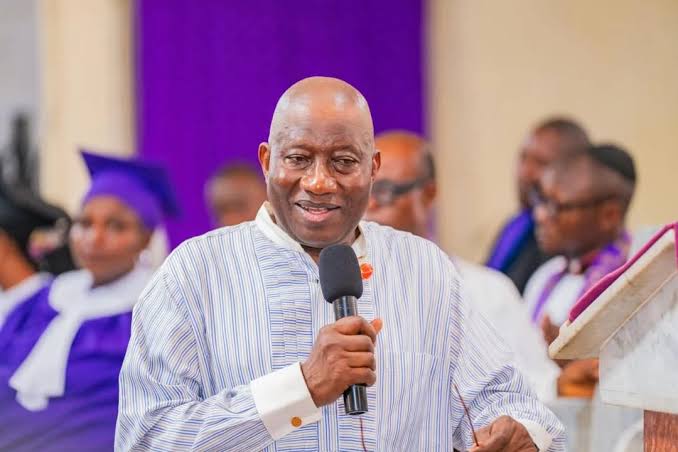
Jonathan Explains Why He Conceded Defeat to Buhari Without Resistance
Former President Goodluck Jonathan has explained that he conceded defeat to Muhammadu Buhari in the 2015 presidential election without resistance because he regarded him as a statesman who loved God and Nigeria, according to former Senate President Anyim Pius Anyim.
Comments (0)
Leave a comment
All comments are moderated before publishing. Your email is never published.