
Jonathan Explains Why He Conceded Defeat to Buhari Without Resistance
Former President Goodluck Jonathan has explained that he conceded defeat to Muhammadu Buhari in the 2015 presidential election without resistance because he regarded him as a statesman who loved God and Nigeria, according to former Senate President Anyim Pius Anyim.
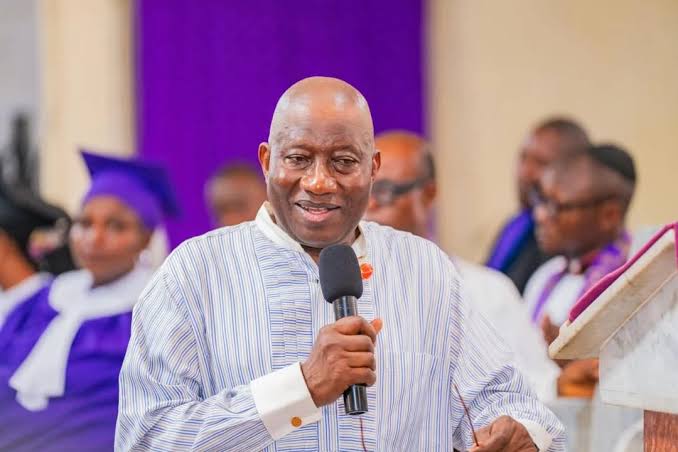
Former President Goodluck Jonathan has explained why he accepted defeat in the 2015 presidential election and handed over power to the late former President Muhammadu Buhari without contesting the outcome.
Jonathan, who was represented by former Senate President Anyim Pius Anyim, made the remarks through his representative on Thursday at the public presentation of Muhammadu Buhari: The Authorised Presidential Biography, a three-volume publication written by Dr Udu Yakubu in Abuja.
Anyim said Jonathan's decision was influenced by his personal understanding of Buhari as a statesman who genuinely loved God and Nigeria.
He explained that Nigerians had continued to recall the historic election in which Buhari became the first opposition candidate to defeat an incumbent president in Nigeria's democratic era, while Jonathan earned recognition for peacefully conceding defeat.
Anyim said Jonathan saw no reason to challenge the outcome because he believed Buhari would put the country's interests above partisan considerations.
“President Buhari is renowned for being that politician who was able to unseat a sitting incumbent. President Goodluck is renowned as that sitting African president who handed over power without any form of contention.
“It was easy for President Goodluck to say, ‘Look, this is a statesman that I know that will love Nigeria.’ So there was no need for any form of contention. That is the story,” he said.
Anyim disclosed that Jonathan had contacted him about two hours before the event to explain that he would be unable to attend, adding that the former President cancelled other engagements to ensure he was adequately represented.
He also shared his personal relationship with Buhari, tracing their association to 2003, when he said they developed a close bond that continued despite their different political affiliations.
“My relationship with General Buhari became that of a father and a son,” Anyim said.
He recalled that Buhari maintained their relationship even after he joined Jonathan's administration while the former military leader remained in the opposition.
“Despite the fact that he was in opposition, he took time to call on me,” he added.
Anyim said Buhari was accorded respect and recognition throughout Jonathan's administration, despite being the leading opposition figure at the time.
Jonathan conceded defeat to Buhari on March 31, 2015, before the Independent National Electoral Commission formally announced the final results of the March 28 presidential election.
His decision paved the way for Nigeria's first democratic transfer of presidential power from an incumbent ruling party to an opposition party since the country's return to civilian rule in 1999.
Sponsored

Related stories
 News
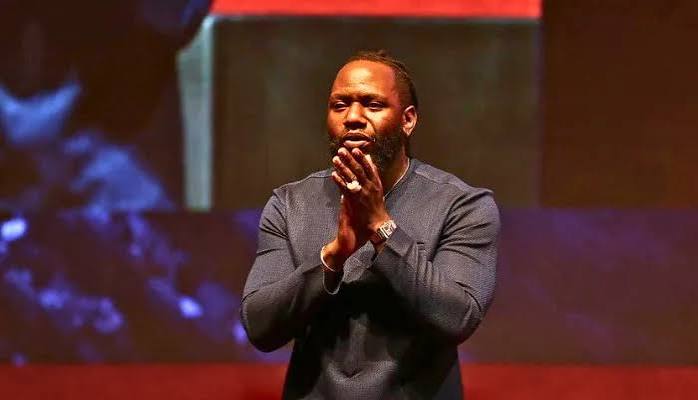
Court Restrains Jimmy Odukoya From Acting as Fountain of Life Senior Pastor
A Lagos court has barred Jimmy Odukoya from presenting himself as Fountain of Life Church’s pastor amid an escalating succession dispute.
.jpg) News
Tinubu Confers GCON on Wole Olanipekun
President Bola Tinubu has reportedly conferred the Grand Commander of the Order of the Niger (GCON) on renowned Senior Advocate of Nigeria, Chief Wole Olanipekun, in recognition of his contributions to the legal profession and Nigeria’s jurisprudence.
 News
South Korean Man Accused of AI Exam Cheating Found Dead
A 32-year-old South Korean university student, Lee Jin-woo, who faced allegations of using artificial intelligence to cheat in a law school entrance examination, has been found dead at a motel in Seoul. Police said they would continue investigating the allegations despite his death.
 News
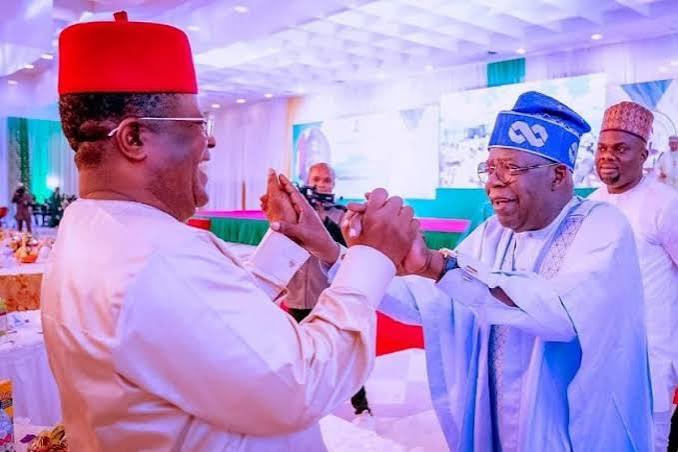
Umahi Says Tinubu Has Ended South-East Marginalisation, Urges Support for 2027 Re-election
Minister of Works, David Umahi, has declared that President Bola Tinubu has ended the marginalisation of the South-East through political inclusion and infrastructure projects, urging residents of the region to support his re-election in 2027.
Comments (0)
Leave a comment
All comments are moderated before publishing. Your email is never published.